
The Akitti Jātaka: Boons That Ask for a Better Mind
AkittijātakaṃSakka offers the ascetic Akitti whatever boon he wishes, but Akitti asks for neither wealth nor heaven. Instea…


Mucalindavaggo
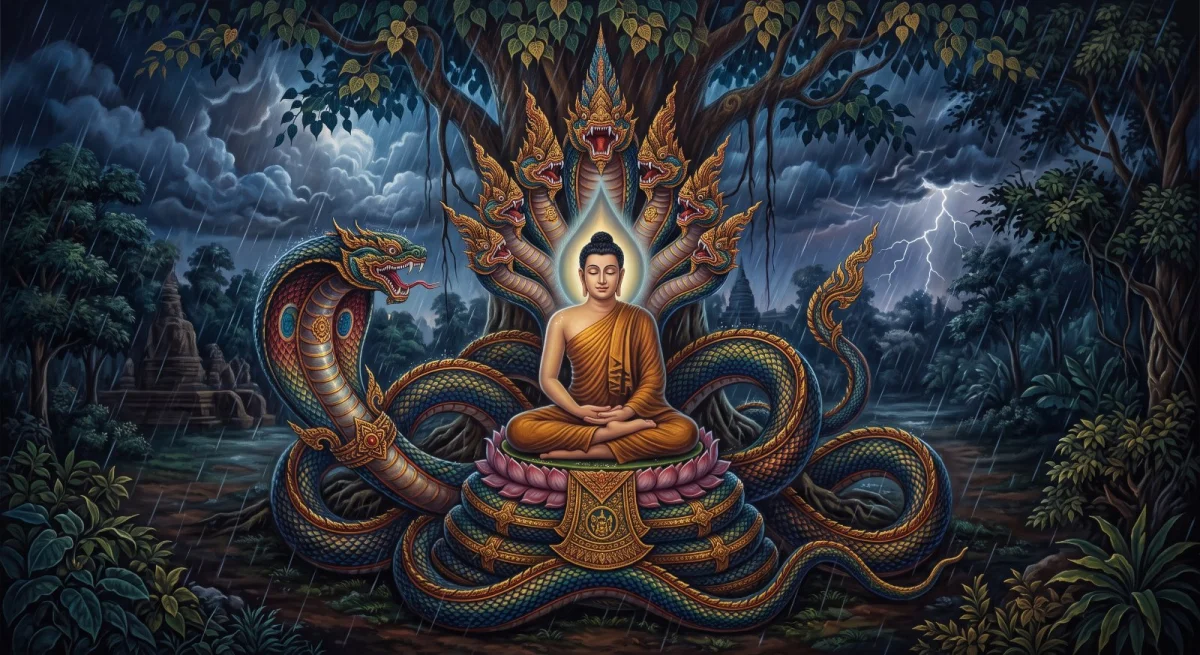
The nāga king Mucalinda coils around the Buddha to shelter him from the rain, and the Buddha utters a verse on levels of happiness: seclusion, non-harming, dispassion, and finally the removal of the conceit "I am," the highest happiness. Other discourses in the chapter show that one who seeks happiness by harming others will not find it.
In the Mucalinda Chapter of the Udāna, Khuddaka Nikāya, the first discourse tells that soon after his awakening the Buddha sat enjoying the bliss of liberation at the foot of the Mucalinda tree near the Nerañjarā River for seven days. An unseasonal great cloud arose, with drizzle and cold winds for seven days. The nāga king Mucalinda came out, wrapped his coils seven times around the Buddha and spread his great hood over his head, so that cold, heat, gadflies, mosquitoes, wind, sun and creeping things would not trouble him. When the sky cleared, the nāga unwound himself, took on another form and stood before the Buddha with joined palms in homage.
The Buddha uttered this verse: seclusion is happiness for one who is content, who has heard the Dhamma and sees; non-ill-will, restraint toward living beings, is happiness in the world; dispassion, the overcoming of sensual pleasures, is happiness in the world; and the removal of the conceit "I am" is the highest happiness.
Several other discourses in the chapter also concern happiness: boys beating a snake, monks discussing which king is wealthier, and Venerable Bhaddiya exclaiming, "What happiness!" This page brings them together into a single picture of where true happiness lies.
Seclusion is happiness for one who is content with what they have, who has heard the Dhamma and sees clearly. Seclusion here isn't just a quiet place; it comes together with contentment and understanding of the Dhamma.
Spend fifteen minutes a day alone without a screen, and notice how content the mind can be with silence.
Non-ill-will, restraint toward living beings, is happiness in the world. One who neither intends nor does harm need not fear retaliation or carry resentment around.
Before bed, review whether anything you said or did today caused someone trouble, and resolve to reduce one such thing tomorrow.
Dispassion, the overcoming of sensual pleasures, is happiness in the world. In the Rāja Sutta of the same chapter, the Buddha says that sensual happiness in the world and heavenly happiness are not worth a sixteenth part of the happiness of the destruction of craving.
Try giving up one thing you do purely for pleasure for a day, such as sweets or scrolling your feed, and see what the ease of not chasing it feels like.
The last line of the verse says that removing the conceit "I am" is the highest happiness. The other kinds of happiness still have someone experiencing them; this one loosens the one who clings.
When it hurts to be overlooked or not given credit, notice that what hurts is the "me" wanting recognition. Just seeing it can lighten the load.
In the Daṇḍa Sutta, going for alms, the Buddha sees a group of boys beating a snake with sticks between Sāvatthī and Jeta's Grove. He utters a verse: whoever seeks happiness for themselves by harming with a stick beings who also want happiness will not find happiness after death; whoever does not harm them will find happiness after death.
If you see a child or anyone tormenting an animal or a friend for fun, invite them to consider that the other being wants to be happy just as we do.
In the Rāja Sutta, some monks discuss whether King Bimbisāra or King Pasenadi has greater wealth and power. The Buddha says such talk isn't fitting for those who have gone forth out of faith; when gathered, they should do one of two things: talk on Dhamma, or keep noble silence.
When a conversation drifts into comparing who is richer, steer it towards something useful, or choose to listen quietly instead of joining in.
Venerable Bhaddiya, son of Kāḷigodhā, living in the forest, at the foot of trees and in empty huts, keeps exclaiming, "What happiness! What happiness!" Other monks assume he misses his royal life. He explains that as a king, guarded inside and outside the palace, he still lived in fear, but now alone he is unafraid and unanxious, living on what others give, with a mind like a wild deer.
Notice which of your possessions you constantly worry about losing. Sometimes having less means worrying less.
Most people seek happiness by adding: more things, more praise, more new experiences. The verses in this chapter point another way: deeper happiness comes from reducing — less turmoil, less harming, less craving, and less feeling that "I" must be at the centre.
The snake story warns that fun gained by hurting others — bullying, contempt, taking advantage — is not a path to happiness. The story of Bhaddiya shows that someone who has everything but must be on guard all the time may be less happy than someone who has little but fears nothing.
Tap to read the actual passage on the page cited.
Sakka offers the ascetic Akitti whatever boon he wishes, but Akitti asks for neither wealth nor heaven. Instea…
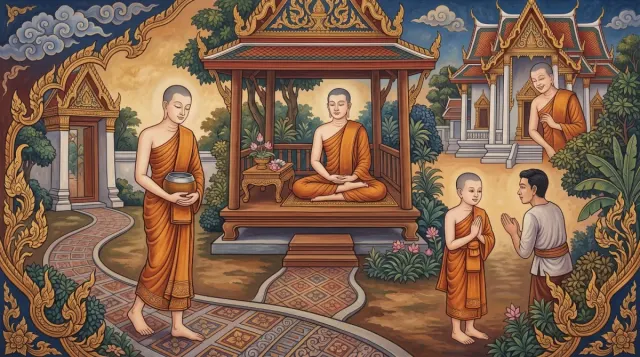
The twenty-six training rules on proper behaviour in the Sekhiya section teach monks to dress neatly, restrain…
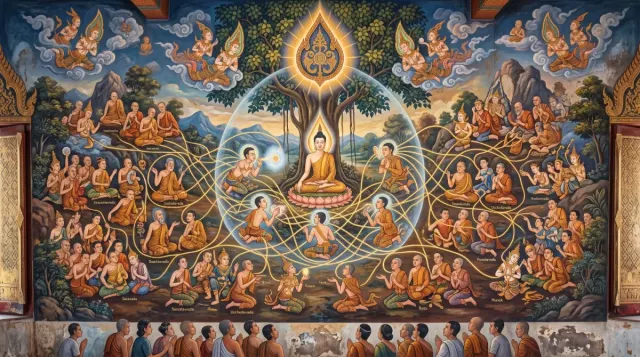
At the end of the Brahmajāla Sutta, the Buddha doesn't rule on the sixty-two views one by one. He shows that e…

Busy with robe-making, the group of six sent their consent with one companion. When the Saṅgha imposed an act …