
The Khemaka Sutta: The Scent of a Lotus and the Lingering Sense of "I Am"
KhemakasuttaṃVenerable Khemaka is gravely ill. The elder monks send Dāsaka back and forth with questions. Khemaka says he s…


Naḷakapānasuttaṃ
The Buddha asks clansmen who have gone forth, such as Anuruddha, whether they still delight in the holy life; he shows what overwhelms the mind before one gains the rapture and happiness of seclusion, and explains that he declares the destinations of deceased disciples to inspire people, not for gain or fame.
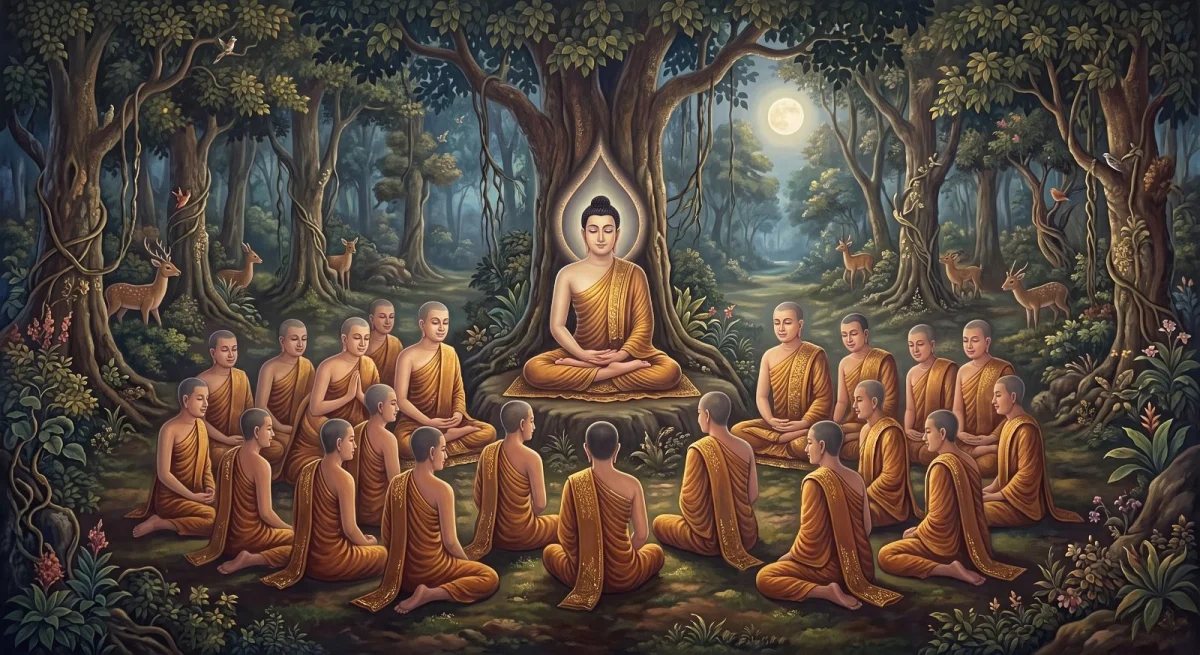
In the Naḷakapāna Sutta of the Majjhima Nikāya, the Buddha is staying at Naḷakapāna in Kosala. Many well-known clansmen have recently gone forth, such as Anuruddha, Bhaddiya, Kimbila, Bhagu, Koṇḍañña, Revata and Ānanda. He asks whether they delight in the holy life. The monks stay silent until he asks Anuruddha directly, who answers that they do.
The Buddha says they did not go forth because they were forced, in debt, afraid or unable to make a living, but out of faith, hoping to be free of all suffering. He then points out that as long as one has not gained the rapture and happiness born of seclusion from sensual pleasures and unwholesome states, or something more peaceful than that, covetousness, ill will, sloth and torpor, restlessness and worry, doubt, discontent and lethargy can overwhelm the mind.
Finally he explains that when he declares where deceased disciples were reborn or what they attained, it is not to deceive people, nor for gain, honour or fame, but so that faithful clansmen who hear it may direct their minds towards that same state.
The Buddha says these clansmen did not go forth because a king forced them, because of thieves, debt or fear, or because they couldn't make a living. They went forth seeing themselves beset by birth, ageing, death and suffering, hoping to make an end of suffering.
Review whether you chose the important thing you're doing because you saw real value in it or because circumstances pushed you. A clear original reason helps you not give up easily.
The Buddha asks the monks whether they delight in the holy life. When no one answers, he asks Anuruddha, who says they do. The Buddha approves, saying this befits clansmen who went forth out of faith.
Ask yourself from time to time whether you still find happiness in your work or practice. If the answer is no, look for the cause instead of silently forcing yourself on.
As long as one has not gained the rapture and happiness born of seclusion from sensual pleasures and unwholesome states, or something more peaceful, covetousness, ill will, sloth and torpor, restlessness and worry, doubt, discontent and lethargy can overwhelm the mind. Once that happiness is gained, they cannot.
If starting meditation or dropping a bad habit feels dry, find a blameless happiness to take its place, such as quiet mornings, a walk, or focused work.
The Buddha asks Anuruddha what he thinks about the Tathāgata using some things after reflection, enduring some, avoiding some and removing some. Anuruddha says he understands it is because the Tathāgata has abandoned the taints, and the Buddha confirms this.
Before accepting, enduring, avoiding or removing something from your life, pause to reflect instead of acting at once on liking or disliking.
When the Buddha declares where deceased disciples were reborn or what state they are established in, it is not to deceive people, not to flatter them, not for gain, honour and fame, and not out of wanting people to know him that way.
Before posting or telling something that makes you look knowledgeable or special, ask whether you're telling it for the listener's benefit or for your own image.
He speaks because there are faithful clansmen, full of joy and gladness, who on hearing it direct their minds towards that state. For example, a monk hears that a certain monk died and attained arahantship. Having seen or heard that this venerable was of such virtue, such qualities and such wisdom, he recollects that person's faith, virtue, learning, generosity and wisdom, directs his mind towards that state, and so abides in comfort.
When someone you respect passes away, recall the good qualities they had and choose one to carry on in your own life, rather than only sinking into grief.
The discourse says the same for monks, nuns, laymen and laywomen, and speaks of several levels of attainment, from arahant and non-returner to once-returner and stream-enterer. Hearing of those who practise well is thus encouragement for everyone, not only renunciants.
Collect true stories of ordinary people who live the Dhamma well, such as older relatives or colleagues, and use them as tangible examples.
The question "Do you still delight in what you chose?" applies to any path chosen wholeheartedly: a career, studies, or self-training. This discourse shows that if a path gives no inner happiness at all, boredom, irritation and hesitation will gradually move in. Finding wholesome happiness along the way is not a luxury; it is what lets you keep going.
Another interesting point is the reason for telling stories of good people. The Buddha didn't tell them to make himself look credible, but to give listeners an example. Those who once saw or heard how virtuous and wise the departed person was recall it and want to become like that too.
When you tell of someone's achievements or share an inspiring story, ask yourself the same question: am I telling it so listeners feel encouraged to do good, or so I look good?
Tap to read the actual passage on the page cited.
Venerable Khemaka is gravely ill. The elder monks send Dāsaka back and forth with questions. Khemaka says he s…

Dhaniya, a former potter, built a fired clay hut and was told to tear it down for lacking compassion for livin…

Ten things everyone wants but that are hard to find in the world — wealth, beauty, health, virtue, friends, le…
Criticising a badly sewn robe and promising to resew it but never doing so, agreeing to help settle a dispute …