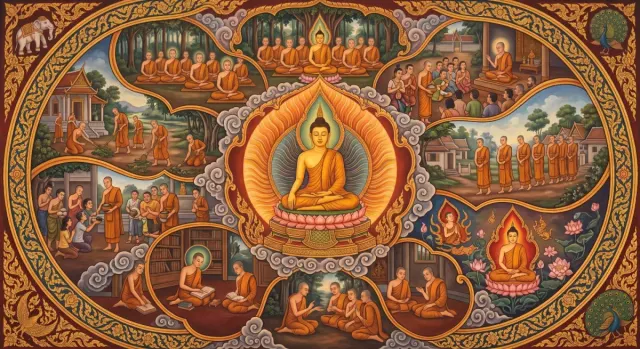
Ten Reasons: Why the Buddha Laid Down Training Rules
Dasa kho upāli atthavase paṭiccaVenerable Upāli asks for how many reasons the Tathāgata laid down training rules. The Buddha says ten: from th…


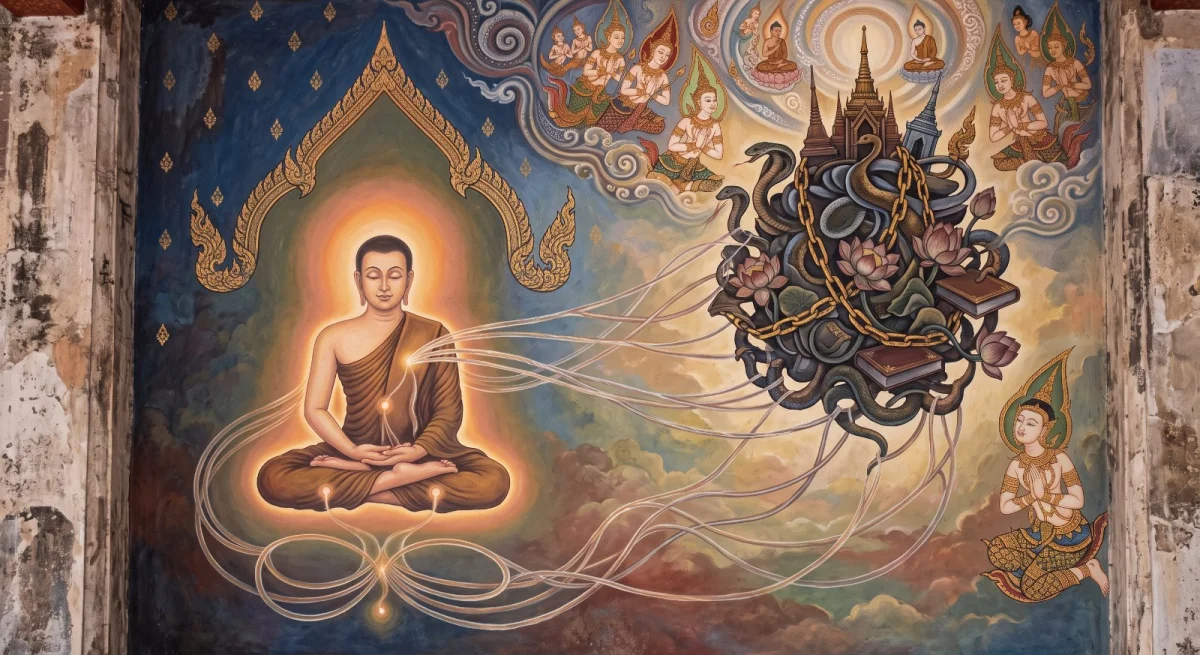
Posālamāṇavakapañhāniddeso
Posāla asks how one who has reached the meditation in which nothing at all is seen, inside or out, should be guided further. The Buddha says to know that delight is the fetter, then emerge and see that state as it truly is. The Cūḷaniddesa expands this with a list of what people's minds incline to, from gain and fame to ascetic practices and jhāna.
The Cūḷaniddesa of the Khuddaka Nikāya is a canonical text that explains the verses of the Pārāyanavagga of the Sutta Nipāta, and the Khaggavisāṇa Sutta, word by word. The Posāla Niddesa explains the verses of Posāla's Question, the fourteenth question of the Pārāyanavagga.
Posāla begins by praising the Buddha as unstirred, with doubt cut off, and able to reveal the past. He then asks about the knowledge of one for whom perception of form has passed, who has abandoned the whole body and sees that there is nothing at all, inside or out. The Niddesa explains that this refers to one who has attained the base of nothingness, a high immaterial attainment, and asks how such a person should be guided.
The Buddha replies that the Tathāgata knows all the stations of consciousness and knows that person as he stands and where he is inclined. Knowing that the kamma leading to that existence has delight as its fetter, the person emerges from the attainment and sees it as it truly is. That is true knowledge.
Posāla praises the Buddha as unstirred. The Niddesa explains that "stirring" is craving, which he has fully abandoned, so he is not shaken by gain or loss, fame or disrepute, praise or blame, pleasure or pain, and has cut off doubt with the fire of knowledge.
When you receive praise or criticism at work, notice how long your mind keeps rippling. That rippling is what needs training, not the praise or criticism itself.
The Niddesa explains that the Buddha can reveal past, future and present, his own and others'. It then quotes his words to Cunda: what is untrue, or true but unbeneficial, the Tathāgata does not declare; what is true and beneficial, he knows the right time to declare. And as the Tathāgata speaks, so he acts; as he acts, so he speaks.
Before retelling someone's past, ask two questions: is it true, and will telling it help anyone? If it fails either one, leave it untold.
Posāla asks about the knowledge of one whose perception of form has passed, who has abandoned the whole body and sees that there is nothing. The Niddesa explains "nothing at all" as the attainment of the base of nothingness: having entered the base of infinite consciousness and emerged, one no longer attends to that consciousness and sees that there is nothing. The question is how such a person should be guided and how higher knowledge can arise.
When you feel you have done something as well as it can be done, ask as Posāla did what you still cannot see, rather than stopping there. This point is for overall understanding.
The Buddha says he knows all the stations of consciousness. The Niddesa divides them into four by way of volitional formations and seven by way of rebirth, and explains that he knows a person standing in this world through the kamma he is forming: that he practises thus, goes along that path, and where he will go after death, or that he will realise liberation.
Read the direction of your life from what you do every day rather than from what you intend. Today's habits are the map of the days ahead.
The Niddesa explains "liberated" in this verse as inclined to that attainment, with that attainment as dominant. In another sense, it says the Buddha knows that this person is inclined to forms, sounds, smells, tastes and touches; to family, group, residence, gain, fame, praise and pleasure; to the four requisites; to the Suttas, the Vinaya or the Abhidhamma; to each of the ascetic practices; and to each jhāna and attainment.
List the three things your mind returns to most often, including good things like knowledge or strictness, and see which is starting to become something to cling to.
The Buddha's answer begins with knowing that the kamma leading to existence in the base of nothingness has delight as its fetter. The Niddesa explains that delight here is lust for the immaterial, to be known as a snag, a bond and an impediment, however refined and peaceful the state may be.
When you feel satisfied with the goodness or calm you have achieved, notice how that satisfaction can turn into wanting more and wanting to guard it.
Knowing this, the practitioner enters the attainment, emerges, and sees the mind and mental factors that arose in it as impermanent, suffering and a disease. The Niddesa calls this true, undistorted knowledge. On "one who has lived the holy life", it explains that the good ordinary person and the seven kinds of trainee still live it to attain what they have not attained, while the arahant has completed it.
After a period of calm, don't rush on. Take a moment to see that the calm too arose and is fading like everything else.
Most people never practise up to the immaterial attainments, but the principle in this answer works at every level. Calm, success or goodness we have achieved becomes one more tether if we delight in it and hold on.
The Niddesa's list of what the mind inclines to invites honest self-examination. It isn't only gain, fame and praise, which people know can be sticky, but also community, residence, knowledge of the Suttas, Vinaya and Abhidhamma, and strict ascetic practices.
The method the answer points to isn't to throw away good things, but to step back and see them as they are: impermanent and not under our control.
Tap to read the actual passage on the page cited.
Venerable Upāli asks for how many reasons the Tathāgata laid down training rules. The Buddha says ten: from th…
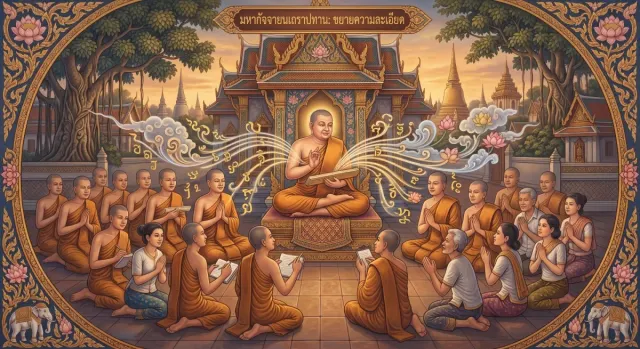
The past lives of Venerable Mahākaccāna in two Apadāna passages: a hermit who heard the Buddha praise a discip…

A skilled cook watches which flavours his master prefers; a skilled meditator watches his own mind. And when t…

Venerable Bhaddiya, son of Kāḷigodhā and formerly a ruler, compares palace life, guarded by men with swords ye…