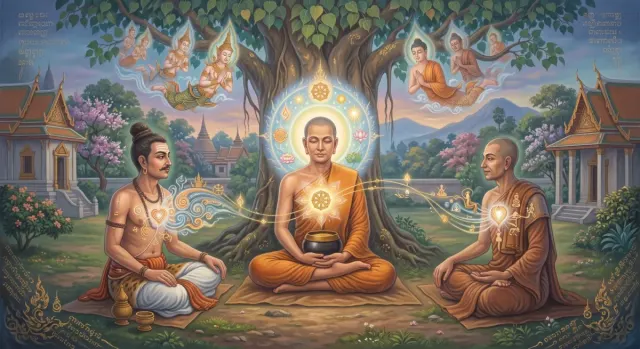
The Discourse to Sabhiya: A True Monk, Ascetic or Brahmin Is Measured by the Mind
SabhiyasuttaṃThe wanderer Sabhiya brings questions that famous teachers couldn't answer to the Buddha: what makes one a bhi…


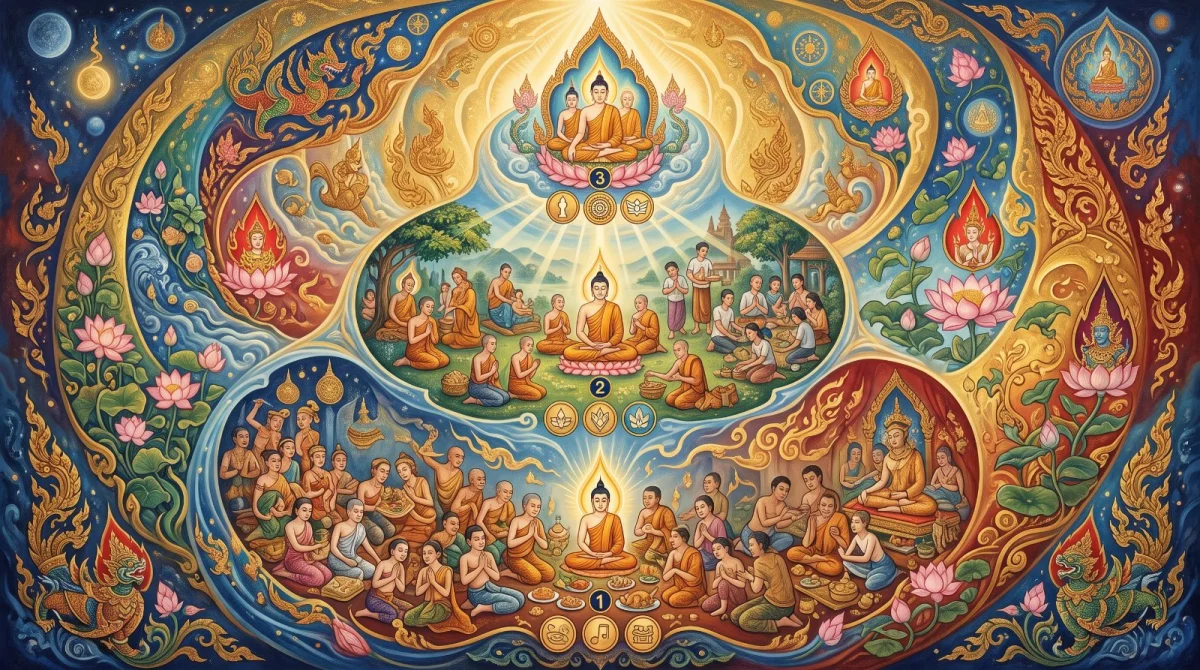
Nirāmisasuttaṃ
Rapture, happiness and equanimity each come in three levels — dependent on sense pleasures, independent of them, and more independent still. Happiness isn't just one kind.
In the Nirāmisa Sutta of the Vedanā Saṁyutta, the Buddha teaches that rapture, happiness and equanimity each have three levels: carnal (dependent on the five strands of sense pleasure), spiritual (not carnal, arising from the calm of jhāna), and more spiritual still (arising in one whose taints are destroyed, reviewing the mind liberated from lust, hatred and delusion).
Spiritual rapture arises in the first and second jhānas; spiritual happiness in the first through third jhānas; and spiritual equanimity in the fourth jhāna.
The discourse implies that the happiness most people know is only the first level, and that there are two further levels of happiness that don't depend on getting anything.
Rapture, happiness and equanimity arising dependent on the five strands of sense pleasure: desirable sights, sounds, smells, tastes and touches.
Enjoy this kind of happiness mindfully, noticing that it always needs replenishing and disappears when its object is gone.
Rapture and happiness born of seclusion from sense pleasures in jhāna, and equanimity in the fourth jhāna, needing nothing external.
Even calm from meditation that doesn't reach jhāna shows that happiness needn't come from getting something.
Rapture, happiness and equanimity arising in one whose taints are destroyed, when reviewing the mind liberated from lust, hatred and delusion.
This is here for understanding the overall picture: the highest happiness comes not from meditative experiences but from the mind's freedom from defilements. Read alongside "Nibbāna".
Most people know only carnal happiness — happiness that depends on seeing, hearing, tasting or touching what they like. It isn't wrong, but it always needs topping up and vanishes when its object is gone.
Notice moments when you feel good without needing anything added: the relief after forgiving someone, the calm after sitting quietly for a while, the lightness when nothing is weighing on your mind. That's a small taste of the other levels of happiness this discourse describes.
Tap to read the actual passage on the page cited.
The wanderer Sabhiya brings questions that famous teachers couldn't answer to the Buddha: what makes one a bhi…

One school taught that developing the faculties means not seeing and not hearing. The Buddha replied that then…

The second debate of the Kathāvatthu. One side holds that an arahant can fall away; the other refutes it — wha…
Hatthaka argued with followers of other sects to win at any cost, denying then admitting, admitting then denyi…