Dhammasaṅgaṇī: Calm, Insight, and Never Content with Wholesome States
Asantuṭṭhatā ca kusalesu dhammesuThe last pairs of the Suttanta mātikā run from calm and insight, the sign of calm and the sign of exertion, ri…


Anujānāmi bhikkhave vassaṃ vutthānaṃ bhikkhūnaṃ tīhi ṭhānehi pavāretuṃ
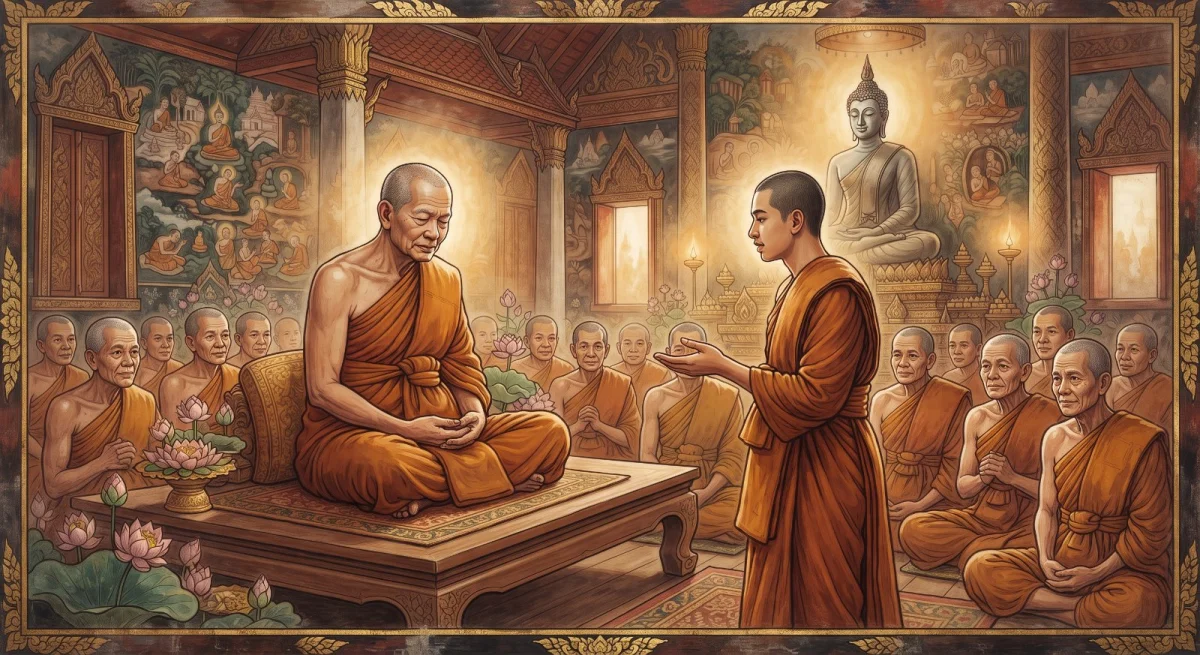
A group of monks agreed not to speak to each other all through the rains so they would not quarrel. The Buddha rebuked them: this was not living in comfort but living together like cattle. He had monks hold the Pavāraṇā instead, inviting others to admonish them about anything seen, heard or suspected.
The Chapter on the Invitation (Pavāraṇākkhandhaka) of the Mahāvagga in the Vinaya Piṭaka tells of several monks who knew each other well and spent the rains together in Kosala. They discussed how to live in harmony, without quarrelling, and without trouble getting alms. They agreed not to greet or talk to each other at all. Whoever returned from alms first set out seats and water; whoever returned last cleared up. If a task was too much for one, he beckoned a companion with his hand, but never broke silence.
After the rains they went to the Buddha and said they had lived in comfort. He asked how, then rebuked them: they had not lived in comfort but claimed they had; they had lived together like cattle, like goats, like heedless people. He forbade the vow of silence practised by other sects, and allowed monks who had completed the rains to invite admonition on three grounds: what was seen, heard or suspected. This would be a way of speaking to one another, a way out of offences, and a way of giving the Vinaya priority.
The Pavāraṇā is a formal act of the monastic Saṅgha at the end of the rains, still held today. For lay people, the principle can be used as openness to kindly meant feedback, not as licence for harsh criticism.
These monks wanted to live in harmony, on friendly terms, without quarrelling, so they set up a system of dividing work without speaking; anyone who couldn't manage beckoned a companion. It looked orderly and free of friction, but a good aim does not always make the method right.
When your team or family agrees "Better not to talk about that", ask whether silence actually solves the problem or only postpones it.
When the monks said they had lived in comfort, the Buddha asked how. The Vinaya explains that Tathāgatas sometimes ask about what they know and sometimes do not; they know the right time to ask, and ask only about what is beneficial, in order to teach the Dhamma or lay down a training rule.
Before criticising someone, first ask what they did and why, let them explain in their own words, and understand the real picture before you speak.
The Buddha said these foolish men had not lived in comfort but claimed they had; they had lived together like cattle, like goats, like heedless people. Living together without communicating, admonishing or helping each other improve is no different from animals sharing a pen.
Notice whether there is someone you live with every day but hardly ever talk to about anything important, and start with a short, sincere conversation.
He forbade monks from undertaking the vow of silence practised by other sects; doing so is an offence of wrongdoing. From the context, the prohibition targets using silence in place of living together according to the Dhamma, not restraint of speech.
Refraining from talk to rest or meditate is good, but if you use silence to punish or avoid problems with people close to you, turn back and talk.
He allowed monks who had completed the rains to invite admonition on three grounds: what was seen, what was heard, and what was suspected. Others need not wait for clear evidence; even a suspicion may be raised, so the person can examine themselves.
When asking for feedback, say clearly that you welcome what others have seen themselves, heard, or merely suspect, because the small things people hesitate to mention are often what we cannot see.
He said the Pavāraṇā would be a suitable way to speak to one another, a way out of offences, and a way of giving the Vinaya priority. It serves relationships, the correction of wrongs, and the upholding of shared principles.
In a work review meeting, set the same three aims: speak with each other comfortably, genuinely fix mistakes, and keep to agreed standards, not to find someone to blame.
The words of invitation are: I invite the Saṅgha regarding what has been seen, heard or suspected. May the venerable ones speak to me out of compassion; seeing it, I will make amends. This is said three times. The senior monks speak first; newly ordained monks use the same words. Even the most senior invite those junior to them to admonish them.
If you are a manager or parent, be the first to ask your staff or children what you should improve, and listen without arguing back straight away.
Later, an elderly, frail monk squatted waiting until everyone had made the invitation and fainted. The Buddha allowed monks to squat only while making their own invitation, then sit on a seat. When a sick monk could not attend, he allowed him to give his invitation through another monk; if moving the patient would make him worse, the Saṅgha must go and hold the invitation where he is.
When organising a meeting or feedback session, make sure the elderly, the sick, or anyone unable to attend still has a way to share their views.
Many families and teams take the same approach as these monks: keep quiet and don't raise anything that might cause friction. It looks peaceful, but problems never get solved and no one grows.
Pavāraṇā offers a better way: set a clear time for each person to invite others to say what they should improve, with the one inviting opening the door and the one speaking doing so with kindness. Examples include a review after a project ends, or a family conversation at the end of the year.
What matters most is the listener's attitude. If you ask for feedback and then get angry or defensive every time, people will stop speaking. Answering "Thank you; if I see it's true, I'll put it right" is the heart of the invitation.
Tap to read the actual passage on the page cited.
The last pairs of the Suttanta mātikā run from calm and insight, the sign of calm and the sign of exertion, ri…

One who still sees any formation as permanent or pleasant, or any phenomenon as self, cannot gain conformity-a…

One side held that penetration of the four noble truths happens in instalments, one quarter at a time. The The…

A man flees four vipers, six murderers and village-raiding bandits, reaches a great expanse of water, and bind…