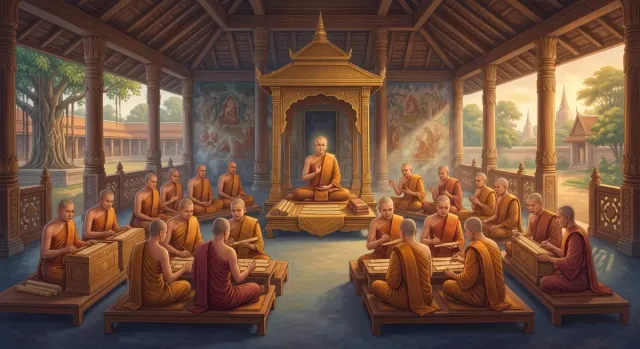
The Second Council: Preserving Standards Through Careful Process
SattasatikakkhandhakaṃA hundred years after the Buddha's final passing, the Vajjian monks of Vesālī declared ten points allowable, i…


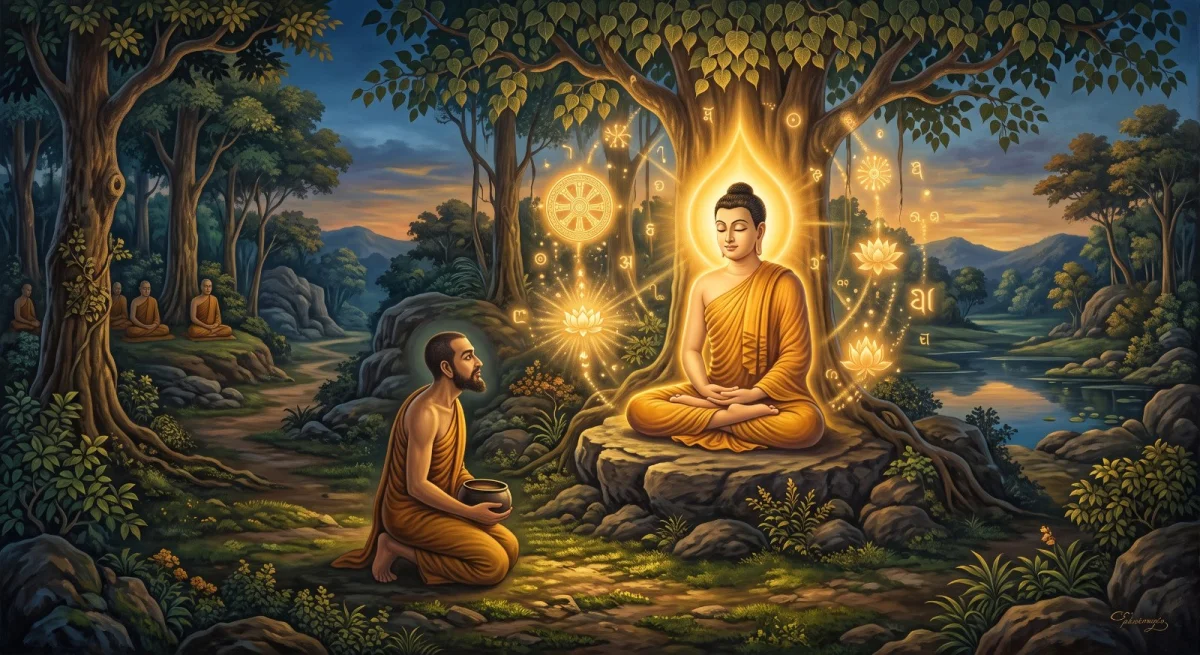
Vakkalisuttaṃ
Visiting the gravely ill Vakkali, the Buddha said: what use is it to see this foul body? Whoever sees the Dhamma sees me.
In the Vakkali Sutta of the Khandha Saṃyutta, the monk Vakkali is gravely ill and wishes to see the Buddha, who comes to visit him. When Vakkali says he has long wanted to see him, the Buddha replies: "Enough, Vakkali. What use is it to see this foul body? Whoever sees the Dhamma sees me; whoever sees me sees the Dhamma."
He then asks whether form, feeling, perception, formations and consciousness are permanent or impermanent, whether what is impermanent is suffering or happiness, and whether it is fit to regard it as "mine, I, my self". Vakkali answers each rightly.
In the Etadagga list of the Aṅguttara Nikāya, Vakkali is foremost among those liberated through faith. The commentaries and the Apadāna add that he went forth because he loved gazing at the Buddha's physical form. This discourse carries a faith tied to a bodily form over to a wisdom that sees the Dhamma.
The Buddha called his own body a foul body, showing that even a Buddha's body is subject to impermanence. Clinging to a teacher's physical form is therefore not a true refuge.
Notice whether you respect a teacher or someone you admire because of what they teach, or because of their image and personality.
A Buddha in the true sense is one awakened to the Dhamma. Whoever understands the Dhamma meets what made him a Buddha, even without ever seeing him with the eyes.
Those of us born long after the Buddha can still "see the Buddha" by understanding the Dhamma through study and practice.
He asks about each aggregate in turn: permanent or impermanent? Vakkali answers impermanent; what is impermanent is suffering; and what is impermanent and suffering is not fit to be regarded as mine, I, my self. Seeing this way loosens clinging.
When ill or when the body declines, ask yourself the same questions: is this body permanent? Is it fit to take all of it as me?
Vakkali was foremost among those liberated through faith, yet the Buddha did not leave faith on its own; he led it into contemplating the five aggregates with wisdom. Strong faith is a force that carries one to understanding, not the destination.
If you are strong in faith, add study and questioning. If you think a lot, add confidence that this path can be walked.
After leaving, the Buddha sent monks to tell Vakkali: do not be afraid; your death will not be a bad one. Vakkali sent word back that he had no doubt the five aggregates are impermanent and suffering, and had no desire for them. The Buddha comforted a gravely ill man with both kindness and Dhamma.
When visiting someone seriously ill, the words that help most are often those that ease fear and let the heart settle, rather than long instruction.
Many people become attached to a teacher, an image or a place, and forget that what the teacher wants them to see is the Dhamma taught, not the teacher. The discourse doesn't forbid reverence; it warns that reverence which doesn't lead to understanding hasn't yet reached its goal.
The discourse ends by recounting that Vakkali ended his own life while gravely ill, and that the Buddha declared he had attained final nibbāna. This is a particular case recorded in the text, not an example to follow; Buddhism does not endorse self-harm. If you or someone close to you has such thoughts, please talk to someone you trust or contact a local crisis line (in Thailand, the mental-health hotline 1323).
Tap to read the actual passage on the page cited.
A hundred years after the Buddha's final passing, the Vajjian monks of Vesālī declared ten points allowable, i…

Three rules on robe cloth obtained from lay people. The group of six asked for robes on behalf of monks whose …

In the Buddhavaṃsa, the Buddha briefly tells his own life: his city, parents, going forth, the tree of awakeni…
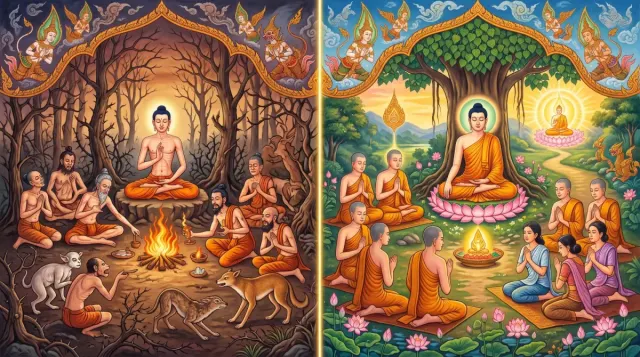
The Buddha asks Ānanda whether every observance, way of life and holy life that is properly kept up is fruitfu…