
The Bhikkhunī Vibhaṅga: Winning the Case and Still Not Stopping
Usuyyavādikā vihareyyaA lay follower gave a storehouse to the bhikkhunī Saṅgha; one of his sons later claimed it back. The case went…


Yathā dhammo tathā patiṭṭhāhi
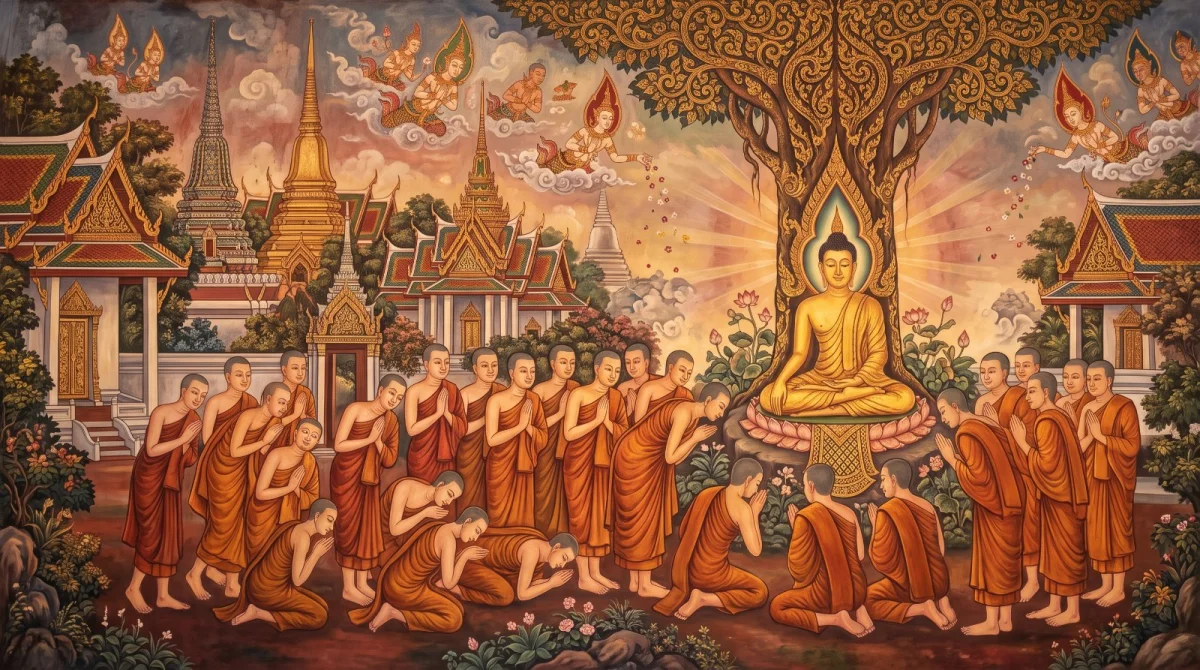
The monks of Kosambī split into two factions and would not listen even to the Buddha, so the lay people withdrew their support. The Buddha taught how to tell which side speaks according to the Dhamma, to listen to both sides and to share things equally, until the monk at the centre of the dispute admitted his fault himself. Only then did the Saṅgha restore unity, and unity counts only once the matter has been traced to its root.
In the Kosambī Chapter of the Mahāvagga in the Vinaya Piṭaka, the monks of Kosambī split into two factions. One side had suspended a monk (an act of suspension, ukkhepanīya-kamma) for not seeing an offence; the other side supported the suspended monk. Each side held its own Uposatha. Later they quarrelled to the point of coming to blows in the refectory and among the houses, and people criticised them. The Buddha went to them and said, "Enough, monks. No arguing, no quarrelling, no disputing." But one monk who spoke contrary to the Dhamma told him to be at ease and live happily, saying they would be known for this quarrel themselves. In the end the Buddha left.
The lay people of Kosambī saw that these monks had caused the Buddha to leave, so they agreed not to bow to them, not to rise for them and not to give them alms. The monks then went to Sāvatthī to have the matter settled before the Buddha. Sāriputta, many other senior monks, Mahāpajāpatī Gotamī, Anāthapiṇḍika and Visākhā all asked how they should treat these monks.
The Buddha did not announce who was right. He gave them a way to tell, told them to listen to both sides and to handle lodgings and shares fairly, until the suspended monk reflected on the Dhamma and Vinaya and admitted himself that he really had committed an offence. The Saṅgha then took him back and restored unity. At the end of the chapter Upāli asks, and the Buddha distinguishes unity in the letter only from unity in both spirit and letter.
When monks came to blows in the refectory, the Buddha laid down a practice: when the Saṅgha is split but still acting according to the Dhamma, if the talk is not friendly, sit with the resolve not to act or speak improperly towards each other; if the talk is still friendly, sit with one seat left empty in between.
When you're still in conflict but must meet or eat together, resolve before you walk in that you won't hurt each other in word or deed, and keep enough distance that the atmosphere doesn't get too tense.
The lay followers of Kosambī agreed that these monks had done them great harm, since the Buddha had been troubled until he left. So they would not bow, rise, show respect or give alms, reasoning that without honour the monks would leave, disrobe or go to seek the Buddha's pardon. The monks then set out for Sāvatthī to settle the matter.
When someone in your group is causing division, you don't have to take sides or pass the news on. Stop being the audience that keeps the drama going, without ganging up on the person.
Sāriputta asked how to treat the Kosambī monks. The Buddha told him to stand by the Dhamma, then gave eighteen marks, such as presenting what is not Dhamma as Dhamma, presenting what the Tathāgata did not say as said by him, presenting a light offence as heavy or a heavy one as light. One who distorts in these ways speaks contrary to the Dhamma; one who presents all eighteen accurately speaks according to the Dhamma. Many other senior monks asked and received the same answer.
When judging a dispute, ask whether each side's account matches the facts and the rules, and whether they are blowing up small things or shrinking big ones — rather than who is louder or on our side.
When Mahāpajāpatī Gotamī asked, he told her to hear the Dhamma from both sides and then favour the views of those who speak according to the Dhamma. To Anāthapiṇḍika and Visākhā he said first to give to both sides, then hear the Dhamma from both, and then favour the views of those who speak according to the Dhamma.
When two friends quarrel and each comes to tell you their side, keep treating both as usual, hear both sides fully, and only then side with the account that matches the truth.
When the Kosambī monks arrived at Sāvatthī, Sāriputta asked about lodgings. The Buddha said to give them vacant lodgings, and if there were none, to make some vacant and give them — but under no circumstances to deny lodging to a more senior monk. Food and other gifts were to be shared equally among all the monks.
Even someone who is currently the source of a problem still gets the same basic necessities as everyone else. Settling the dispute is kept separate from looking after people's needs.
The suspended monk reflected on the Dhamma and Vinaya and realised: that was an offence, he had committed it, and he had been suspended by a proper act. He told the monks who supported him and asked to be taken back. The Buddha said that since he had committed the offence, been suspended and now saw the offence, they should take him back.
Many conflicts end when one person dares to say, "Yes, I really was wrong." If that's us, admitting it plainly opens the way for the whole group to live together again.
The Saṅgha restored unity with every monk present, sick or well, and no consent sent by proxy, then held the Uposatha and recited the Pātimokkha right away. Later Upāli asked, and the Buddha answered: if the Saṅgha makes unity without investigating the matter and tracing it to its root, that unity has the letter but lacks the meaning, and is not in accordance with the Dhamma; if it investigates and traces the matter to its root first, that unity has both meaning and letter.
Shaking hands for a photo without ever discussing the cause is often unity on paper only. Before declaring it over, make sure the real cause has been talked through and everyone involved was in the room.
This story is a practice guide for handling conflict in a group that still has to live together — a family, a team or a community. The Buddha did not order people to make up. He set conditions that gave whoever was in the wrong space to come back and admit it, and kept outsiders from fanning the flames.
What applies at once: listen to both sides before judging; look at whose account matches the facts, not who speaks better or who is closer to us; and while the matter is unresolved, keep looking after everyone's basic needs equally.
The lay people's withdrawal of support was a withdrawal from behaviour that harmed everyone, not public shaming or harming anyone. Use it carefully today: don't reward behaviour that causes division, but don't pile on the person either.
Tap to read the actual passage on the page cited.
A lay follower gave a storehouse to the bhikkhunī Saṅgha; one of his sons later claimed it back. The case went…

However good a seed is, without earth and water it won't grow. The four stations of consciousness are like ear…
Ānanda says dependent origination seems quite clear to him. The Buddha tells him not to say so: because beings…

In several Apadāna stories, elders tell how in one life they were a ruddy goose, a king of the garuḍas, a monk…