
Dhammasaṅgaṇī: Shame and Fear of Wrongdoing, the Line Between Fool and Wise
Hiri ca ottappañcaThe Dhammasaṅgaṇī uses shamelessness and fearlessness of wrongdoing to define the foolish and dark states, and…


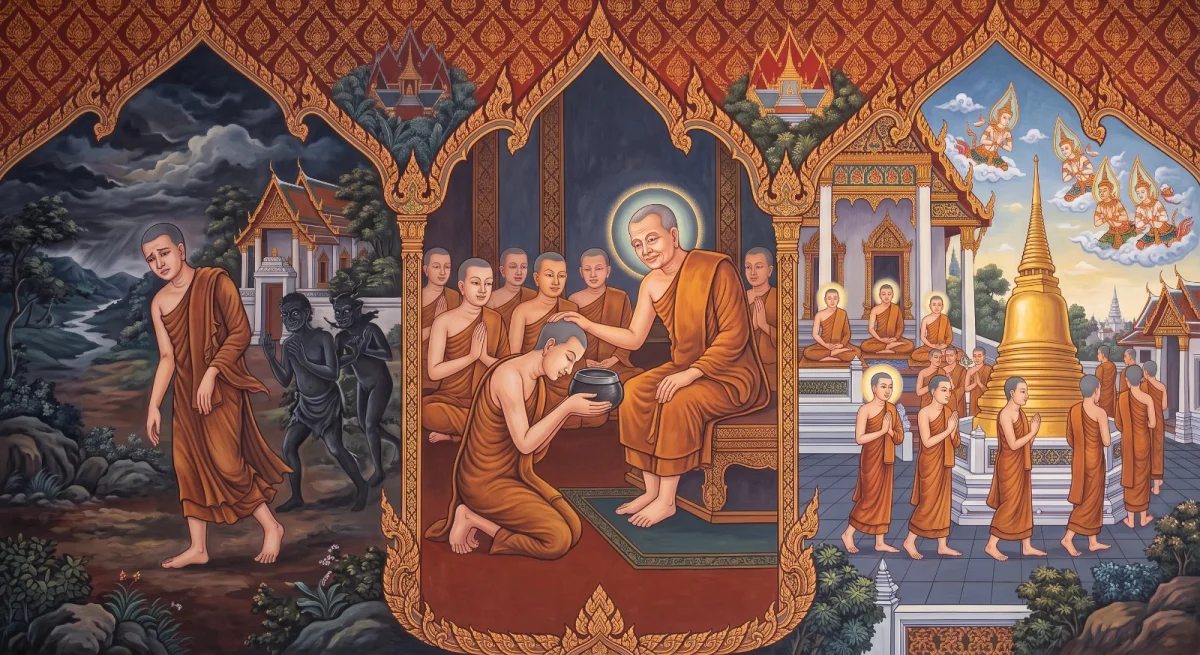
Niyassakammaṃ
Venerable Seyyasaka offended so often that others constantly had to sort things out for him, so the Saṅgha placed him back under a mentor. He sought out good friends, asked to be taught, questioned them, became learned in Dhamma and Vinaya, and the act was then revoked.
In the Kammakkhandhaka of the Cullavagga, Vinaya Piṭaka, Venerable Seyyasaka is described as foolish, unintelligent, full of offences, of improper conduct, and living in unsuitable association with lay people, so that ordinary monks were constantly having to grant him probation, send him back to the beginning, grant mānatta and rehabilitate him.
The Buddha questioned the monks, then told the Saṅgha to carry out the act of dependence on him: to place him back under a mentor, as though returning him to the status of one who still needs supervision. Eighteen duties come with it, such as not giving full ordination to others, not giving dependence, and not criticising the act or those who performed it.
The finest part comes at the end. Once the act had been carried out, he did not grow angry or run away. He kept company with good friends, sat near them, asked to be instructed and questioned them, until he became very learned, a bearer of the Dhamma, the Vinaya and the summaries, conscientious, scrupulous and eager for the training. He then approached the monks and asked what he should do next, and the Saṅgha revoked the act.
The Vinaya describes Seyyasaka as unintelligent, full of offences, of improper conduct, and unsuitably close to lay people. The problem was not a single mistake but a frequency that left his fellow monks endlessly dealing with the consequences.
If colleagues have to pick up someone's work every week, treat it as a systemic problem to redesign rather than something to keep grumbling about.
The Buddha told the Saṅgha to perform the act of dependence: he was to live under a mentor again. This was not expulsion from the community but a reduction of what he could not yet carry, together with someone to steady him.
When someone takes on more than they can handle and keeps failing, narrow their scope temporarily and give them a mentor, rather than letting both person and project collapse.
The procedure begins by charging the monk himself, then letting him give his account, then recording the offence; only afterwards does a competent monk announce it to the Saṅgha. This order means no one is judged in their absence without speaking.
Before deciding anything about someone in a meeting, speak with them privately first and let them tell their side to the end.
While under the act, he may not give full ordination, may not give dependence, may not accept the role of instructing nuns, may not criticise the act or the monks who performed it, may not bring a charge against others, and may not set monks against one another. Roles that require standing are suspended.
If your role is reduced, actually set it down. Carrying on as before, or criticising those who decided, only lengthens the period.
The Vinaya says that once the act had been carried out he kept company with good friends, sat near them, asked for instruction and questioned them, until he became very learned, skilled in the texts, a bearer of Dhamma, Vinaya and the summaries.
When your workload or role shrinks, use the time to sit regularly with people who know more, and ask the questions you did not dare ask while you had to look capable.
The Vinaya lists his new qualities: conscientious, scrupulous about what is unfitting, and eager for the training. This kind of shame is not self-hatred; it is the energy that makes a person want to learn properly.
When you feel ashamed of a mistake, convert the feeling into the question of what you still need to learn, instead of sinking into self-blame.
Once he behaved properly, became humble and made amends, he approached the monks and asked what he should do next. The Buddha then told the Saṅgha to revoke the act, which he had to request three times before the assembly.
Restoring someone to their former role should have a clear ending that is spoken aloud, rather than leaving a person quietly sidelined forever.
This episode changes what the word punishment means. The act of dependence expels no one. It temporarily reduces responsibility and puts the person back under someone who can actually teach them. The aim is that they can work with everyone again, not that they disappear.
At work or in a family there is often someone like Seyyasaka: someone whose mistakes repeat until others are constantly cleaning up after them. A more durable answer than complaint is to give them a mentor, reduce for a while the work they cannot yet carry, and state clearly what they need to be able to do before they come back fully.
Seen from the other side, the discourse shows the way. He did not spend that period feeling wronged. He spent it finding good people to advise him and studying again. The season of reduced responsibility became the season in which he grew the most.
Tap to read the actual passage on the page cited.
The Dhammasaṅgaṇī uses shamelessness and fearlessness of wrongdoing to define the foolish and dark states, and…

King Pasenadi kisses the Buddha's feet, then describes what he has seen with his own eyes that gives him confi…
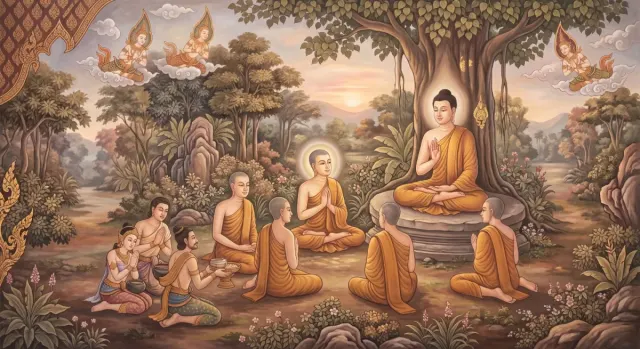
Aññā Koṇḍañña's past life according to the Apadāna: he was the first to offer alms to the Buddha Padumuttara a…

One side holds that the Tathāgata's powers are shared by disciples. The Theravāda points out that disciples ar…