
Suttas often chanted
Ādittapariyāya Sutta — The Fire Sermon
ĀdittapariyāyasuttaṃThe Buddha's third great teaching, given to a thousand former fire-worshippers at Gayāsīsa: eye, ear, nose, to…


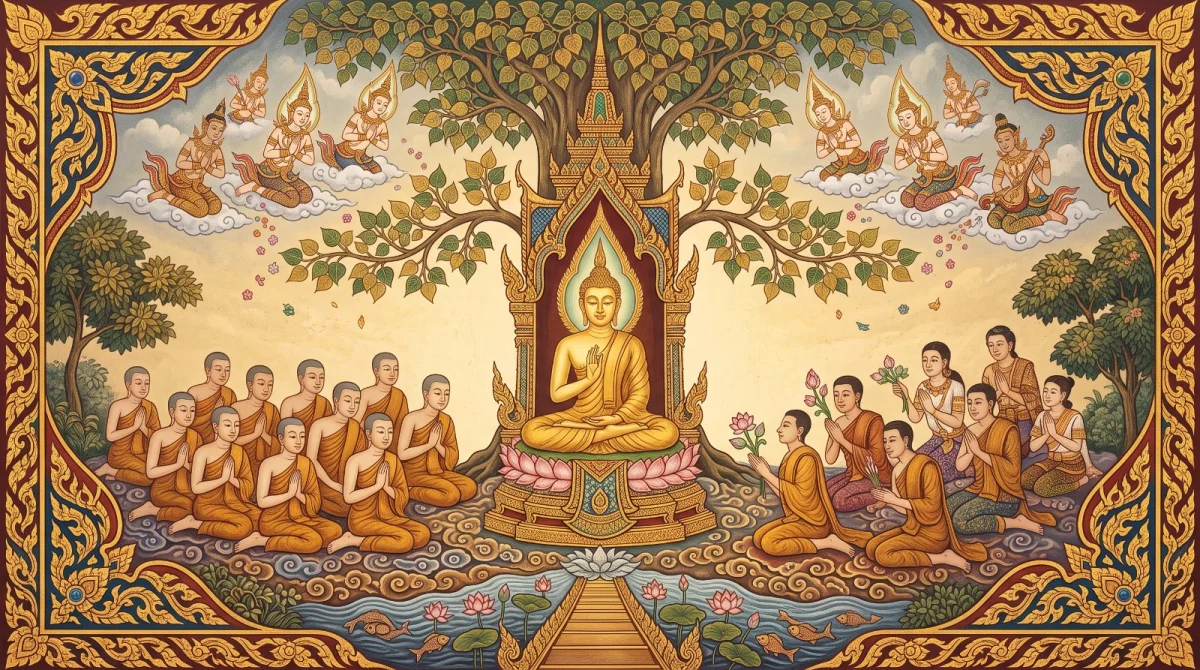
Khemākhemasaraṇadīpikagāthā
Dhammapada verses: mountains, forests and sacred trees are not a safe refuge — the safe refuge is the Triple Gem and the four noble truths.
Chanted when the pull to look for safety outside yourself is strong: in fear, or when facing something you cannot control.
Some temples chant it after the Three Refuges, since it explains what taking refuge in the Triple Gem actually means.
These verses are in the Buddha chapter of the Dhammapada. They begin by describing what people actually do: when fear presses in, they go to mountains, forests, parks and trees held to be sacred.
The Buddha does not scold them for it. He points out that such refuges do not end suffering, because they change nothing in the mind of the person who runs to them. The one who goes to the Buddha, the Dhamma and the Saṅgha for refuge, and then sees the four noble truths with right understanding — that is the safe refuge.
The key phrase is seeing the four noble truths. Taking refuge in this sense is not placing your hopes in someone else; it is understanding suffering, its cause, its ending, and the path that leads there.
Click to read the actual page it refers to
The Buddha's third great teaching, given to a thousand former fire-worshippers at Gayāsīsa: eye, ear, nose, to…

The Buddha's second teaching to the five monks: the five aggregates are not a self we can command, so they sho…

The Buddha's first teaching to the five monks — the middle way and the four noble truths — chanted in full on …

Verses from the Khuddakapāṭha on giving in memory of departed relatives, chanted at memorial merit-making and …