
The Discourse at Cātumā: Four Dangers for One Who Has Gone Forth
CātumasuttaṃThe Buddha dismisses newly arrived monks for being noisy; the Sakyans and Brahmā plead for them with the simil…


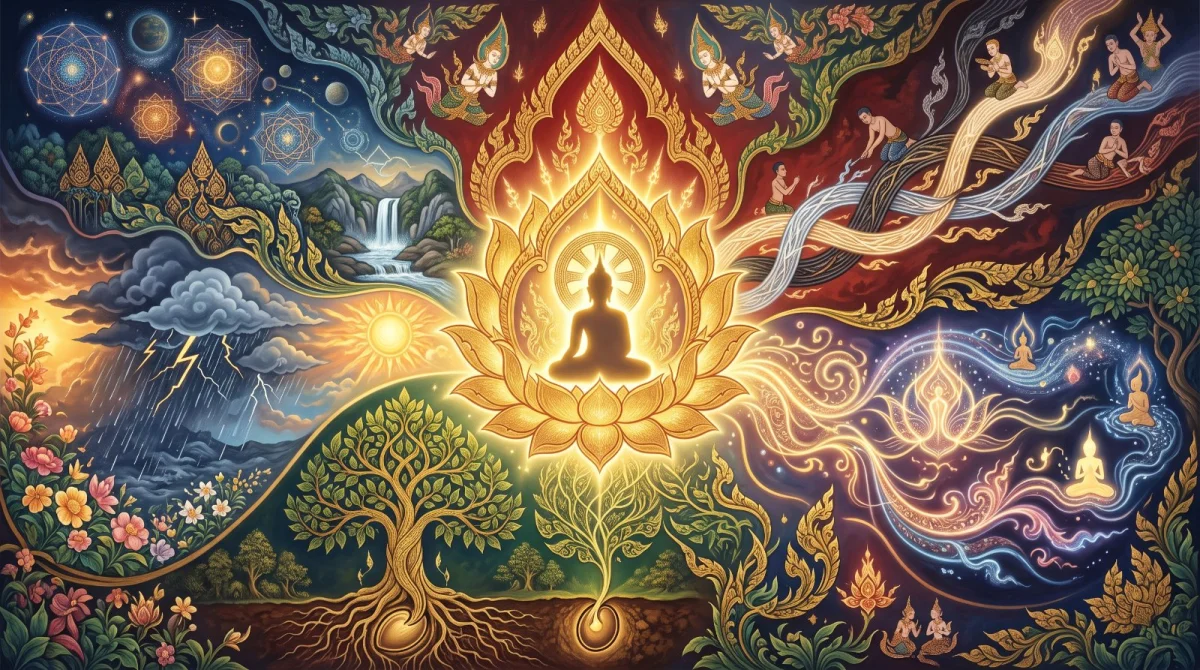
Sabbamidaṃ kammatotikathā
One side proposes that all this is due to kamma. The Theravādin asks briefly in return: then is kamma itself due to kamma? And if a person kills because of a result, then a result would itself bear fruit, which contradicts what the word result means.
In the Sabbam Idaṃ Kammato Kathā of the Kathāvatthu, volume 37 of the Tipiṭaka, chapter seventeen, the opponent proposes that all this is due to kamma. The Theravādin does not answer by denying kamma; he questions the proposal step by step until it collapses on its own.
The first question is: then is kamma itself due to kamma? The opponent says that cannot be said, which means there is at least one thing not due to kamma, so the claim that all this is due to kamma already fails at the first question. The Theravādin then asks whether all this is due to what was done before, and whether all this is due to the result of kamma.
When the opponent accepts that it is due to the result of kamma, the Theravādin shows the contradiction: if a person kills because of a result, and killing bears fruit, then the result itself bears fruit — yet a result is the end of a chain, not a cause that gives further fruit. The same applies to giving a gift, a robe, alms food or medicine for the sick: if these are done because of a result, then the result again bears fruit. The opponent can accept neither alternative.
At the end the opponent quotes the verse: the world turns by kamma, mankind turns by kamma, beings are bound by kamma as the linchpin of a rolling chariot. That verse is genuine, and it says that kamma exists and matters; it does not say that nothing else is a cause. The commentary (aṭṭhakathā) names the school holding this view, but the name is not in the text itself.
The opponent accepts this fully, so the whole debate is a test of whether such a short sentence can stand repeated questioning. This point is for overall understanding.
A sentence that explains everything usually explains nothing in particular. Test it against a specific case.
This is the Theravādin's first question, and the opponent says it cannot be said. Once he admits there is one thing not due to kamma, the word all can no longer stand.
When someone says everything comes down to one thing, ask what that one thing comes from.
The Theravādin separates three different statements: that all this is due to kamma, that it is due to what was done before, and that it is due to the result of kamma. The opponent accepts the last, which opens him to the next question.
Separate cause, result and condition from one another and a tangled problem often unravels.
The Theravādin asks whether a person kills because of the result of kamma. The opponent agrees, and agrees that killing bears fruit. Asked whether the result of kamma therefore bears fruit, he denies it; but if a result bears no fruit, he must say killing bears no fruit, which he cannot accept either.
Claiming an act was entirely forced by the past is the same as saying the act has no consequences, which we ourselves do not believe.
The Theravādin applies the same logic to good deeds: if a person gives a gift, a robe, alms food, lodging or medicine for the sick because of the result of kamma, and giving medicine bears fruit, then the result bears fruit again. The opponent is stuck on both the unwholesome and the wholesome side.
The good you do today is a fresh cause you create yourself, not a result already fixed in advance.
The verse the opponent quotes says that the world turns by kamma and mankind turns by kamma; that one gains honour and praise by kamma, and loss, killing and bondage by kamma; and that knowing kamma to be what makes beings differ, how could one say there is no kamma in the world? The verse affirms that kamma is real, which the Theravādin never denied.
Be confident that your actions really do have results, without concluding that everything that happens comes from your actions alone.
The simile in the same verse compares kamma to the linchpin holding the wheel of a chariot in motion. It says that kamma is what binds a life together; it does not say that kamma is the sole cause of everything that happens on the road.
Look after the linchpin of your own life, which is your daily intention and action, while staying alert to the road and the other vehicles on it.
This debate applies at once to a phrase heard everywhere: it is all old kamma. This part of the Tipiṭaka does not support explaining everything by kamma alone. Illness, accidents, natural disasters and poverty have many layers of cause — the body, the environment, the systems around us, and other people's actions too.
The important caution is not to use the phrase old kamma to judge someone who is suffering. Telling a sick or grieving person that it is their own kamma helps no one, and it is not what this text teaches. What is worth doing is helping where help is possible and addressing the causes that can be addressed now.
At the same time this debate does not deny kamma. Our intentions and actions really are causes with real results. The point is that kamma is one important cause, not the single cause that explains everything. Understanding it this way lets you take responsibility for your part without blaming yourself beyond it.
Tap to read the actual passage on the page cited.
The Buddha dismisses newly arrived monks for being noisy; the Sakyans and Brahmā plead for them with the simil…

The Parivāra sets out five ways a formal act of the Saṅgha fails: in its subject matter, its motion, its annou…
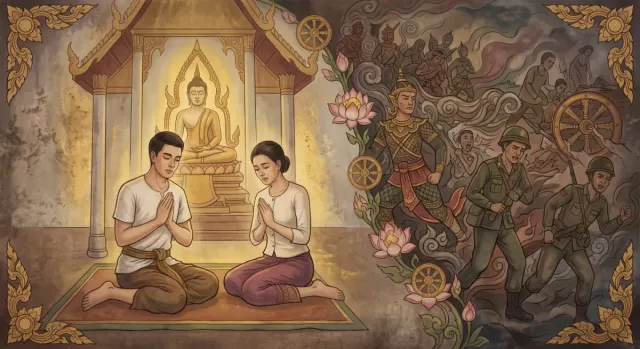
The group of six monks went to watch King Pasenadi's army on the march. The king asked what use it was to look…

A king sends his minister Sayha to invite a friend who has gone forth to return and take high office, but he d…