
The Discourse at Kaṇṇakatthala: No One Knows Everything at Once
KaṇṇakatthalasuttaṃKing Pasenadi asks about knowing and seeing everything, the four castes, devas and Brahmā. The Buddha says no …


Sīlaṃ acetasikantikathā
A group of debates on virtue in chapter 10 of the Kathāvatthu asks whether virtue is a mental factor, whether it arises along with the mind, whether it keeps growing by itself once undertaken, and whether bowing or non-expression counts as virtue or immorality. The Theravādin's questions show that virtue is the intention to abstain, arising in the mind moment by moment.
In the Kathāvatthu, Tipiṭaka volume 37, chapter 10, several debates on virtue follow one another: whether one on the path is endowed with two kinds of virtue, whether virtue is not a mental factor, whether virtue does not arise along with the mind, whether virtue caused by undertaking grows, whether intimation is virtue, and whether non-intimation is immorality. In each, the opponent (paravādī) accepts a thesis and the Theravādin (sakavādī) asks what else would then have to be accepted.
The opponent holds that virtue is not a mental factor and does not follow the mind. The reason given is that if virtue arose and ceased with the mind, a virtuous person would become immoral the moment that virtue ceased. One side also holds that virtue caused by undertaking keeps growing even while one thinks of other things, and that bowing, rising to greet and offering a seat are virtue.
The Theravādin answers with the same set of questions again and again: virtue has desirable results like faith, mindfulness and wisdom, which are mental factors; virtue in the discourses is the intention of abstaining from killing and so on; and wholesome and unwholesome states do not meet in a single mind-moment, as in the discourse that the Dhamma of the good is as far from that of the bad as sky from earth. The text closes each debate with the opponent's argument and gives no final definition.
The opponent holds that one possessed of the path has two kinds of virtue, mundane and supramundane. The Theravādin asks: then are there two contacts, two minds and two kinds of wisdom at once? And if mundane virtue is present, is that person an ordinary worldling? The opponent cannot agree. The opponent asks back: if the path arises only after mundane virtue has ceased, can an immoral person give rise to the path? The Theravādin also says no. This point is for overall understanding.
Everyday virtue is the ground that readies the mind for meditation, even if we don't think of the precepts while sitting. Keeping precepts is not separate from training the mind.
The opponent holds that virtue is not a mental factor. The Theravādin asks: then is virtue form, nibbāna, or a sense base like the eye or ear? This cannot be accepted. He points out that virtue has a desirable result and a ripening, like faith, energy, mindfulness, concentration and wisdom, which are mental factors, while the eye base, which is not a mental factor, has no ripening.
When you say "I keep the precepts", remember that virtue is not in a blessed thread or a registration card, but in the mind's intention not to harm in each situation.
The opponent's reason in both the debate on virtue not being a mental factor and the debate on virtue not following the mind is the same: when virtue arises and ceases, is that virtuous person then immoral? The Theravādin says this should not be said. The Theravādin in turn asks: contact, feeling, faith, mindfulness and wisdom arise along with the mind, yet virtue does not? And how would right speech, right action and right livelihood differ from the other path factors?
Being a person of virtue is a direction in life; it does not vanish every time the mind thinks of something else. But it needs renewing with fresh intention each day, like a journey taken step by step.
The opponent holds that virtue caused by undertaking grows. The Theravādin asks: does it grow like a creeper, a tree or grass? And if, after undertaking the precepts, one is thinking sensual, hostile or cruel thoughts, does virtue still grow? Accepting this would mean wholesome and unwholesome meet in one moment, contradicting the discourse on four things very far apart. The opponent quotes the verse that those who plant groves and forests, established in Dhamma and endowed with virtue, go to heaven.
A New Year resolution or taking precepts on a holy day is a good start, but virtue really grows each time we choose not to lie or take advantage, again and again. It does not grow by itself while we complain or fume.
The opponent holds that intimation, bodily and verbal expression, is virtue. The Theravādin asks: are bowing, rising to greet, joining the palms, offering a seat or water to wash the feet the intention of abstaining from killing or from lying? This cannot be accepted. The opponent asks back: if not virtue, are these expressions immorality? The Theravādin says no.
Courtesy and not harming are two different things, and we need both. Greeting elders respectfully is fine, but it does not replace being honest with them about money or in what we say.
The opponent holds that non-intimation, what is not expressed, is immorality. The Theravādin asks: if someone has undertaken an evil deed and is now offering robes and almsfood, bowing to those worthy of it or making way for those worthy of it, do both merit and demerit grow together? Accepting this would mean two minds coming together, and wholesome and unwholesome meeting, contradicting the discourse on sky and earth.
If you once intended something bad and today help someone sincerely, the good of that moment is real. Use it as the chance to drop the old intention, rather than thinking you can no longer be good.
These debates answer a question people who keep precepts often ask: if I take the precepts in the morning, is the virtue with me all day? The answer that emerges is that virtue bears fruit at the moments when the mind really sets the intention to abstain. It does not grow by itself like a creeper while the mind thinks of something else. On the other hand, someone committed to the precepts does not become immoral just because they are asleep or thinking about work.
The point about bowing and rising to greet is also useful. Good manners are good, but they do not replace refraining from harm. Someone polite to your face who cheats behind your back has not kept virtue in this sense.
The last point is encouraging. If you once intended something bad and one day actually do good, the good of that moment is not erased by the old intention. A good mind now is real now.
Tap to read the actual passage on the page cited.
King Pasenadi asks about knowing and seeing everything, the four castes, devas and Brahmā. The Buddha says no …

Citta of Macchikāsaṇḍa explains that the eye is not bound to forms; desire is the rope that binds. He tells Ni…
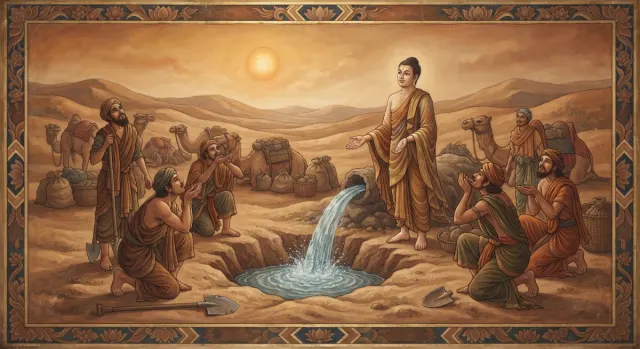
People who were not lazy dug in the sandy track until they found water; so too a practitioner with energy and …

The prenascence condition is something that arose earlier and is still present, so it supports what comes afte…