
The Debate on 'Everything Exists': Do the Past and Future Still Exist?
SabbamatthītikathāOne side holds that everything exists, including the past that has ceased and the future not yet arisen. The T…


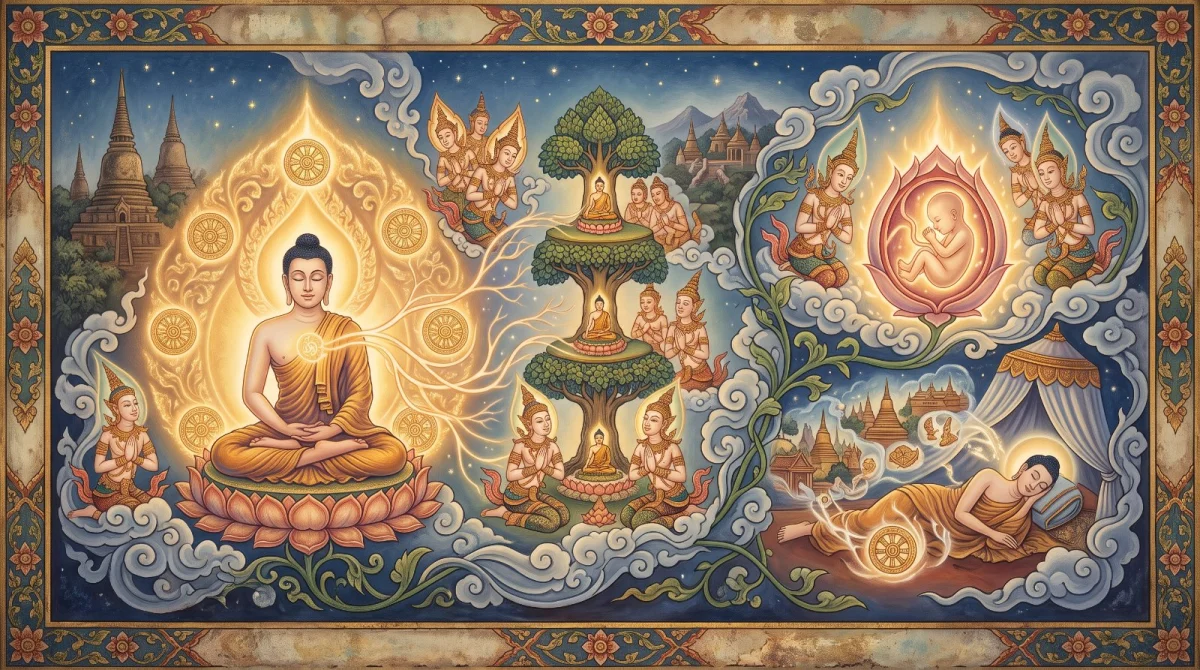
Dhammābhisamayakathā
A group of debates in chapter 22 asking whether a being in the womb can realise the Dhamma or attain arahantship, whether one can awaken while dreaming, and whether all the mind of a dreamer is indeterminate. The Theravādin points out that seeing the Dhamma depends on the voice of another, wise attention and mindfulness that is awake.
In the Dhammābhisamaya Kathā of the Kathāvatthu, Abhidhamma Piṭaka, Tipiṭaka volume 37, chapter 22, the opponent (paravādī) holds that a being in the womb can realise the Dhamma. The Theravādin (sakavādī) asks whether teaching the Dhamma, hearing the Dhamma, discussing the Dhamma, questioning, undertaking precepts, guarding the senses, moderation in eating and devotion to wakefulness in the first and last watches of the night exist for a being in the womb. He then cites the principle that there are two conditions for the arising of right view: the voice of another and wise attention (yoniso manasikāra).
The next debate, which the text calls the set of three, asks further whether a being in the womb can attain arahantship, and whether one who is dreaming can realise the Dhamma or attain arahantship. The Theravādin uses the same question each time: is there realisation for one who is asleep, heedless, of muddled mindfulness, without clear comprehension? The opponent says no.
The Abyākata Kathā asks whether all the mind of a dreamer is indeterminate, that is, neither wholesome nor unwholesome. The Theravādin gives examples: a person may dream of killing or lying, or dream of giving gifts and paying homage at a shrine, so one should not say that all the mind in a dream is indeterminate. The opponent cites the Buddha's statement that the mind of a dreamer is abbohārika.
The Theravādin asks whether teaching, hearing and discussing the Dhamma, questioning, undertaking precepts, guarding the senses, moderation in eating and devotion to wakefulness exist for a being in the womb. Since they don't, one should not say that a being in the womb realises the Dhamma.
This list is like a list of what helps one see the Dhamma. Pick one item and make it a routine, such as listening to ten minutes of Dhamma before bed.
The Theravādin cites the principle that there are two conditions for the arising of right view: the voice of another and wise attention. The opponent accepts this, so the Theravādin points out that one should not say a being in the womb realises the Dhamma.
After hearing or reading something, take time to reflect further: is it true, and how does it apply to my life? Don't just take it in and pass it on.
The question the Theravādin repeats in these debates is: is there realisation of the Dhamma for one who is asleep, heedless, of muddled mindfulness, without clear comprehension? The opponent says no every time.
It's fine to play Dhamma talks at bedtime, but real learning needs times when you listen with an alert mind, not while dozing off or doing something else.
The set of three asks whether a being in the womb can attain arahantship, and whether one who is dreaming can realise the Dhamma or attain arahantship. The Theravādin answers with the question about one who is asleep and unmindful, and the opponent says no.
If you dream of something that seems like a spiritual sign, treat it as just one experience, and measure results by waking life: have greed, anger and delusion lessened?
The Theravādin asks: may one not dream of killing, stealing, lying, slandering or harsh speech, or dream of giving gifts, offering robes, paying homage at a shrine and circumambulating it? The opponent agrees, so the Theravādin points out that one should not say all the mind in a dream is indeterminate.
When you wake from a dream full of strong anger or desire, don't blame yourself harshly, but take it as a sign that something is still unresolved in your mind.
The opponent cites the Buddha's statement that the mind of a dreamer is abbohārika, that is, not to be taken into account, and so holds that all the mind in a dream is indeterminate. The Theravādin agrees that this statement exists. The text ends with this claim. This point is for overall understanding.
Dreams needn't be treated as a big deal or a cause of worry. What deserves serious care is what we intend to think, say and do while awake.
This debate answers a common belief that reaching the Dhamma might happen by itself without doing anything — being born with it, or receiving it in a dream. The Theravādin answers that the wisdom that sees the Dhamma comes from tangible causes: hearing what is right, reflecting on it wisely, with mindfulness awake.
This is good news for ordinary people, since the causes of wisdom are things anyone can build: reading or listening to a little Dhamma each day, talking with friends who share the interest, asking when you don't understand, and practising mindfulness in daily life.
The debate doesn't treat dreams as omens; it looks at the mind of the dreamer. Recurring dreams may reflect what the mind has stored up while awake. If nightmares are frequent enough to disturb your sleep or daily life, consult a doctor or specialist.
Tap to read the actual passage on the page cited.
One side holds that everything exists, including the past that has ceased and the future not yet arisen. The T…

Mahāpajāpatī wishes to give the Buddha cloth she wove herself, but he suggests giving it to the Saṅgha — then …

The story of King Mahāsudassana, who ruled by Dhamma and owned eighty-four thousand of everything but used onl…
The complete map of practice — seven sets, thirty-seven factors, which the Buddha urged everyone to preserve t…