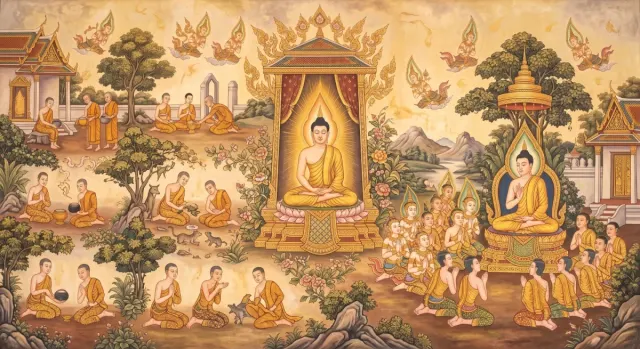
Mahālomahaṃsa and the Summary: Equanimity and the Conclusion on the Perfections
Sukhadukkhe tulābhūtoThe Bodhisatta lies in a charnel ground; some come to harm him, others bring gifts, and his mind stays even li…


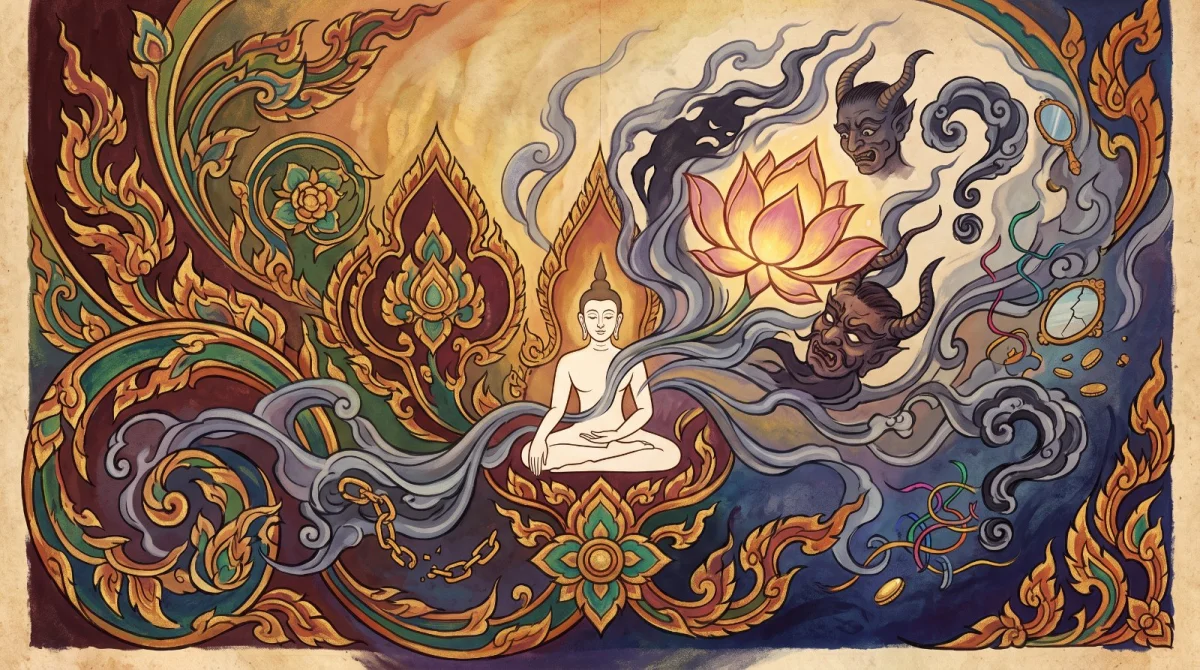
Khuddakavatthuvibhaṅgo
The seventeenth chapter of the Vibhaṅga gathers minor defilements and failings into groups: intoxication with health, youth and life; obstinacy and rivalry; sluggishness; conceit; and grudges, contempt for benefactors and envy.
In the Analysis of Minor Matters, the seventeenth chapter of the Vibhaṅga, the second book of the Abhidhamma Piṭaka, the matrix arranges minor topics in groups of one, two and so on up to ten, followed by the 108 currents of craving and the 62 views taught in the Brahmajāla Sutta. Each item is then defined. This page selects items from the groups of one and two that are easy to use for examining the mind.
Many definitions use monks as the example, such as the excessive wanting of a monk not content with robes, almsfood and lodging, or the scheming and flattery of a monk intent on gain and honour. Applying them to lay life on this page is an adaptation.
The Abhidhamma Piṭaka has seven books: Dhammasaṅgaṇī, Vibhaṅga, Dhātukathā, Puggalapaññatti, Kathāvatthu, Yamaka and Paṭṭhāna. Theravāda tradition holds them to be the Buddha's teaching, while many scholars consider them compiled later than the Suttas and the Vinaya. This catalogue is for examining your own mind, not for labelling others.
The group of one opens with many kinds of intoxication: with birth, clan, health, youth, life, gain, honour, following, wealth, learning, wit, fame and physique. All are defined the same way: intoxication, conceit, self-exaltation, flaunting oneself like a flag, on account of that thing.
Notice whether, while healthy, you put off important things. The thought "I'm still young, there's time" is an intoxication that is hard to see.
Obstinacy is defined as rigidity, harshness, stubbornness and lack of gentleness. Rivalry is vying and striving to get ahead. Alongside these is heedlessness, defined as letting the mind loose in misconduct or the five strands of sensual pleasure, and not applying oneself earnestly to developing wholesome states.
When you feel you must win a conversation, pause and ask whether you are seeking the truth or competing, then let the other person finish.
Evil wishes are defined as someone without faith wishing to be known as having faith; immoral, wishing to be known as virtuous; of little learning, wishing to be known as learned; lazy, wishing to be known as energetic; unwise, wishing to be known as wise; not yet free of the taints, wishing to be known as having destroyed them.
Before posting an image of yourself, ask whether it matches your real life. The gap between image and reality is what should shrink.
Discontent is restlessness and unease in secluded places or in developing calm and insight. Drowsiness is sleepiness and laziness. Lethargy is stretching, leaning and bodily discomfort. Drowsiness after meals is the dullness, heaviness and discomfort after eating. Sluggishness of mind is discouragement, shrinking back, dejection and unwieldiness of mind.
If every afternoon you are too sleepy to work, try eating less or taking a short walk first — the simplest remedy for drowsiness after meals.
The conceit "I am better" and "I am equal" is defined as conceit based on birth, clan, good looks, wealth, position, occupation, craft, knowledge, learning or wit. The conceit "I am worse" is defined as self-disparagement, self-hatred and self-contempt on the same grounds. So looking down on oneself is also classed as conceit.
When comparing yourself with others on social media, whether you feel superior or inferior, recognise it as the same kind of self-measuring, and set the comparison down.
The group of two begins with anger and grudge. Anger is being angry, wishing harm, and displeasure of mind. The text distinguishes them: the first anger is called anger; anger at a later time is called a grudge — setting it up, keeping it, storing it and clinging to it.
The first flash of anger may come too fast to stop, but going over the same story again at night is holding a grudge, and that you can choose to stop.
Contempt is disparaging others' virtues and belittling benefactors. Domineering is putting oneself on a par, citing one's own victories, competitiveness and refusal to yield. Envy is envying and begrudging the gain, honour, respect, esteem, salutation and veneration that others receive.
When a colleague is praised, notice whether your mind wants to diminish their success. Try saying one sentence of genuine congratulation.
Big defilements like greed, anger and delusion are usually easy to notice, but small ones — rivalry, wanting to be seen as good, drowsiness after meals — slip into ordinary days unnoticed. This catalogue helps you name them.
A simple way to use it is to pick one item a day and notice when it appears. There is no need to blame yourself; simply recognising it greatly weakens it.
A caution: discouragement and low mood, or self-contempt and self-hatred, that persist until they affect eating, sleep or daily functioning may be depression. Please consult a professional or call the Thai mental health hotline 1323; outside Thailand, contact a local helpline.
Tap to read the actual passage on the page cited.
The Bodhisatta lies in a charnel ground; some come to harm him, others bring gifts, and his mind stays even li…
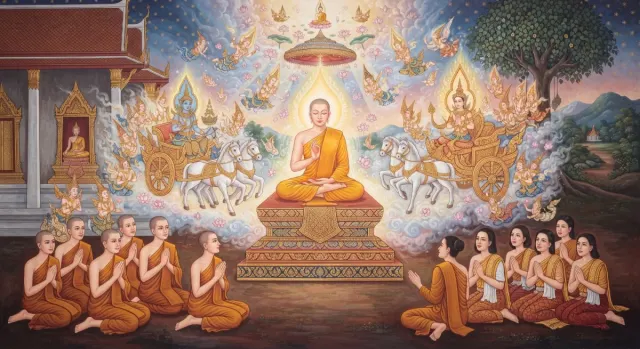
The nun Uppalavaṇṇā asks forgiveness before the Buddha, displays psychic power to cut off the doubts of the fo…

Vaṅgīsa, a former poet, felt lust on seeing women, felt discontent, and looked down on fellow monks because of…

A young brahmin asks whether brahmins can claim "only this is true". The Buddha distinguishes three stages: pr…