The Debates on the Teaching and on Power: What No One Can Remake, Even by Psychic Power
IddhikathāTwo debates in chapter 21 ask whether the Tathāgata's teaching has been made new, and whether the Buddha or hi…


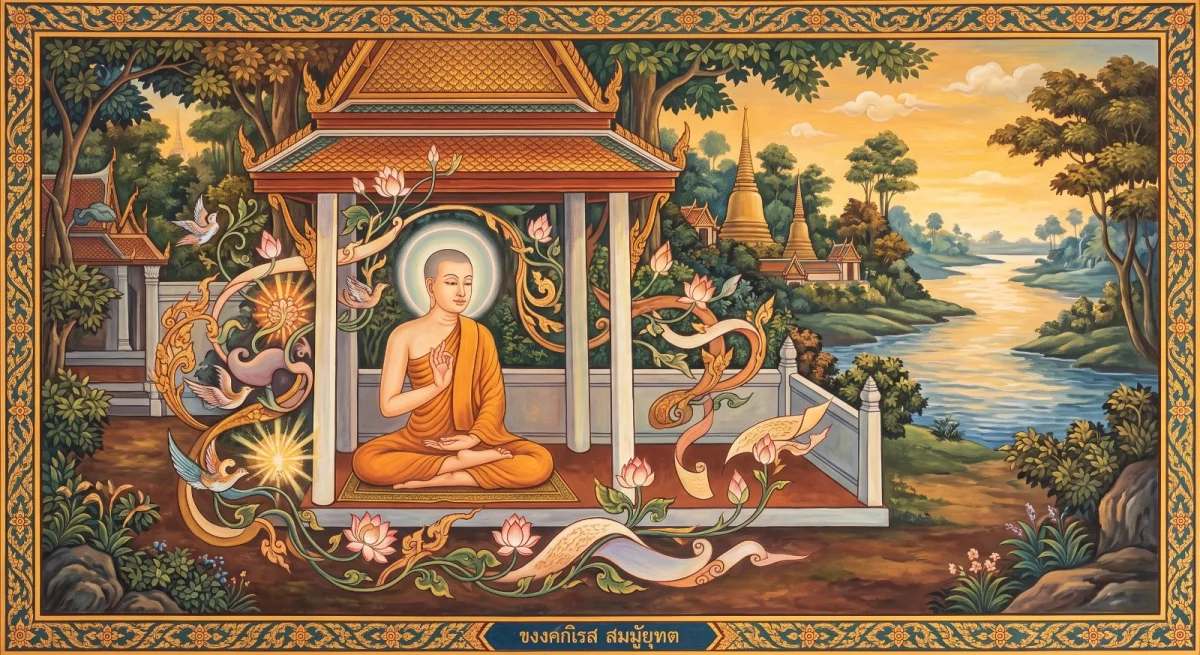
Vaṅgīsasaṃyuttaṃ
Vaṅgīsa, a former poet, felt lust on seeing women, felt discontent, and looked down on fellow monks because of his own brilliance. He admonished himself in verse, received advice from Ānanda, and became an arahant able to compose verses of praise on the spot.
The Vaṅgīsa Saṃyutta of the Saṃyutta Nikāya has twelve discourses about Vaṅgīsa, a monk who had wandered from village to village and town to town as a poet before meeting the Buddha and going forth.
The early discourses tell of his struggles while newly ordained. He felt lust when he saw well-dressed women visiting the monastery, felt discontent when left alone, and realised he had looked down on virtuous monks because of his own quick wit. Each time he thought, "It is a loss for me", and eased his mind by himself, speaking verses to admonish himself. Once he asked Ānanda for a way to extinguish lust.
The later discourses are verses praising the Buddha, Sāriputta, Moggallāna, Aññā Koṇḍañña and the Saṅgha, ending with verses spoken soon after he attained arahantship. Some of the same verses also appear in his verses in the Theragāthā.
When he saw well-dressed women visiting the monastery, lust troubled his mind. He thought, where could he expect someone else to ease it for him? So he eased it himself and spoke verses: even if more women came, they could not harm one established in the Dhamma, just as skilled archers scatter a thousand men.
When an unwanted thought pops up, don't wait for someone to rescue you. Tell yourself briefly, "I know which path I've chosen", and return to what you meant to do.
In the Arati Sutta, discontent arose in him while his preceptor had gone into his dwelling. He spoke verses: one who entirely abandons discontent, delight and thoughts tied to household life, and makes no thicket of defilement anywhere, is truly a monk.
Free time with no one around is often when the mind gets bored and looks for stimulation. Prepare some calm activities for those times, such as walking, reading or housework.
The verses go on: whatever form exists on the earth, in the sky or within the earth wears away and is impermanent. People are stuck in sights, sounds, smells, tastes and touches; one not stuck in these sensual pleasures is called a sage by the wise.
When you are captivated by someone's or something's looks, picture it twenty years from now. Beauty still has value, but you won't cling until the mind burns.
Realising he had looked down on virtuous monks because of his wit, he felt remorse and admonished himself: abandon conceit and the path of conceit entirely. Those struck down by conceit suffer and grieve for a long time, while one who practises rightly does not grieve.
People who speak well, write well or think fast easily slight those who are slower. When you notice you've just talked down to someone, admit it honestly to yourself and find a chance to treat them with respect.
He asked Ānanda for a way to extinguish lust. Ānanda replied that his mind burns because of distorted perception. He should avoid the beautiful sign that feeds lust, see formations as changing, suffering and not self, develop the perception of foulness until the mind is unified, keep mindfulness of the body, be full of disenchantment, develop the signless and uproot the underlying tendency to conceit.
When some feeling seems beyond control, consulting someone you trust is nothing to be ashamed of. The first thing you can do is stop staring at or replaying the image that inflames the mind.
After the Buddha taught the four factors of well-spoken speech, Vaṅgīsa added verses: speak only words that do not torment oneself and do not harm others. Truth is the deathless speech, and the Buddha's words that lead to the security of Nibbāna are the highest of all speech.
Before sending a message typed in anger, ask two questions: will I regret this tomorrow, and will the reader be hurt needlessly?
He spoke verses praising Sāriputta, the Saṅgha, Aññā Koṇḍañña and Moggallāna. Once the Buddha asked whether he had thought out his verses beforehand; he said they came to him on the spot. After attaining arahantship he said that he used to wander intoxicated with poetry, but on seeing the Buddha faith arose and he went forth.
Use your abilities to sincerely appreciate others, such as writing a thank-you that shows a colleague the value of what they did, rather than using those abilities to stand out.
Vaṅgīsa's story encourages anyone who feels they still have many defilements. He didn't hide his lust, boredom or pride, but admitted them plainly and found ways to deal with them himself.
His method is practical: when a bad feeling arises, talk to yourself in clear, reasoned words, and when you can't solve it alone, have the courage to tell someone you trust and ask for advice.
His special talent wasn't thrown away. It changed from something that made him proud into a way of appreciating the goodness of others.
Tap to read the actual passage on the page cited.
Two debates in chapter 21 ask whether the Tathāgata's teaching has been made new, and whether the Buddha or hi…

Monks lived in the forest, went for alms and walked up and down intending that people would esteem them. The B…

Things to be done come in four kinds: unpleasant and harmful, unpleasant but beneficial, pleasant but harmful,…

We come to love or hate someone just because they treat someone we love, or someone we dislike, well or badly.…