
The Discourse at Isigili: The Mountain That Swallowed Sages
IsigilisuttaṃThe mountains around Rājagaha once had other names, but Isigili has always had this one, because people saw fi…


Pañca abhiṇhapaccavekkhitabbaṭhānāni
Five facts to reflect on often — ageing, illness, death, separation and ownership of one's kamma — not to become gloomy, but to loosen heedlessness.
In the Ṭhāna Sutta of the Book of Fives, the Buddha teaches five facts that a woman or man, householder or monastic, should reflect on often: I am subject to ageing; I am subject to illness; I am subject to death; I will be parted from all that is dear and pleasing to me; and I am the owner of my kamma — whatever good or bad I do, I will be its heir.
For each he gives a clear reason: to abandon or reduce the intoxication of youth, of health and of life, the desire and lust for what is dear, and misconduct. The noble disciple then reflects further that not only I, but all beings are like this — and reflecting on it often, the path arises.
Reflect on this to abandon or reduce the intoxication of youth, which leads people into misconduct of body, speech and mind.
When you think "I'll do it when I'm older", recall this. The good you intend should begin while you still have the strength.
Reflect on this to abandon or reduce the intoxication of health.
Times of good health are the best time to train in meditation, so that when illness comes you already have a trained refuge of mind.
Reflect on this to abandon or reduce the intoxication of life.
Before sleep, ask "If today were my last, what would be left unfinished?" Then do that thing tomorrow.
Reflect on this to abandon or reduce desire and lust for what is dear, which leads people into misconduct to keep hold of it.
Use it when quarrelling with someone you love. This truth makes most issues too small to be worth staying angry over.
Born of kamma, related through kamma, with kamma as refuge — whatever I do, good or bad, I will be its heir. Reflect on this to abandon or reduce misconduct.
This makes you unwilling to do wrong even when unseen, and frees you from carrying what others have done as if it were yours.
Thai Buddhists chant this often as the "Abhiṇhapaccavekkhaṇa", but what's often forgotten is the reason given for each. Reflecting on ageing isn't meant to make you fear growing old, but to stop acting as though you'll be young forever and become careless.
Try using the fourth when you argue with someone at home: "One day I will be parted from this person." Most anger shrinks immediately. And use the fifth when tempted to do something wrong because no one will know.
Tap to read the actual passage on the page cited.
The mountains around Rājagaha once had other names, but Isigili has always had this one, because people saw fi…

Bhaddā Kāpilānī praises a pupil for serving her well and plans to give her a robe, but the pupil grasps it wro…

Mindfulness directed to the body — seven methods from the Kāyagatāsati Sutta. The body is always in the presen…
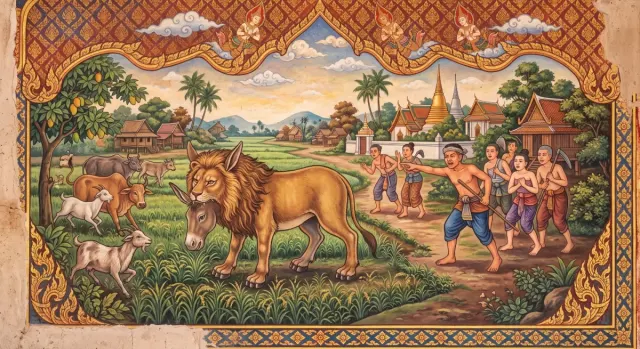
A donkey covered in a lion's skin grazed on green crops for a long time, but when it brayed it revealed itself…