
The Discourse on Truths: The Four Noble Truths as Gratification, Danger and Escape
SaccakathāThe Paṭisambhidāmagga explains that the four noble truths are real and not otherwise, analyses the meanings of…


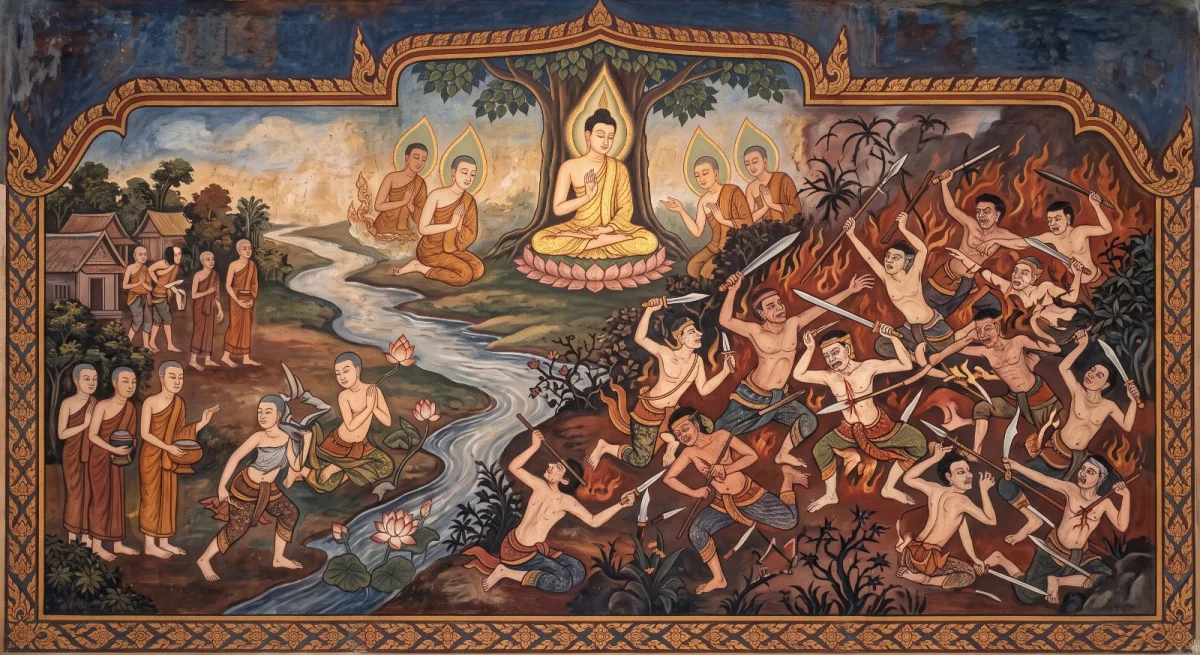
Attadaṇḍā bhayaṃ jātaṃ
Fear arises from the rod one takes up. The Buddha describes the sense of urgency he felt seeing people struggling like fish in shrinking water, and the hard-to-see arrow lodged in the heart, then lays out guidelines: be truthful, not deceitful, free of slander, anger and greed.
In the Attadaṇḍa Sutta of the Aṭṭhakavagga, Sutta Nipāta, Khuddaka Nikāya, the Buddha says that fear arises from the rod one takes up; look at people quarrelling. He then describes the sense of urgency he once felt, seeing beings struggling like fish in a shrinking pool, seeing people hostile to one another, the world around without essence, every direction shaken, and finding no place untouched by suffering. The commentary relates that this was spoken when the Sakyans and Koliyans were about to fight over water.
He then says he saw an arrow, hard to see, lodged in the heart. Those pierced by it run in every direction; those who pull it out don't run about and don't sink.
The rest sets out guidelines for the sage: be truthful, not insolent, without deceit, free of slander and anger; cross over greed and stinginess; don't look down on others; don't cling to past, future or present; and don't take name-and-form as "mine".
Fear arises from the rod one takes up; look at people quarrelling. The Buddha says he will describe the sense of urgency just as he himself felt it.
Before hitting back hard, at work or online, picture yourself picking up a weapon — and the other side picking one up too.
The Buddha saw beings struggling like fish in a pool of water drying up, and saw people hostile to one another, and fear came upon him.
When people scramble over scarce resources, see them with understanding: everyone is struggling out of fear of lack, not just out of badness.
The world all around is without essence; every direction is shaken. Wanting shelter for himself, he found no place not overrun by suffering such as old age.
When things that once seemed secure change, like a job or the economy, also invest in what goes with you anywhere: virtue, mindfulness and good relationships.
He saw the arrow of defilement, hard to see and lodged in the heart of beings. Those pierced by it run in every direction; those who pull it out don't run about and don't sink in the flood.
When you feel too restless to sit still, stop and ask what craving or resentment is lodged in your heart, rather than running around for an outside fix.
The sage should be truthful, not insolent, without deceit, rid of slander, free of anger, and cross over evil greed and stinginess. One should overcome drowsiness, laziness and discouragement, not dwell in heedlessness, not look down on others, and not incline towards false speech.
Pick one of these to practise this week, such as not passing on gossip about others, and see whether conflict around you decreases.
Let what was before dry up; let there be nothing for you afterwards. If you don't grasp at the middle, you will live at peace. One should not delight in what has passed, nor grieve over what is slipping away.
If you keep replaying past hurts or worrying about what hasn't happened, come back to doing what's in front of you as well as you can, one thing at a time.
One who has no sense of "mine" towards name-and-form in any way, and doesn't grieve over what doesn't exist, suffers no loss in the world. One who has no thought "this is mine" or "this is another's" doesn't grieve, "I have nothing."
When your body changes with age or your memory isn't what it was, take the best care you can, but don't add suffering by insisting it must stay the same.
The discourse's title points out that many dangers in life don't come purely from outside, but begin with what we ourselves take up — weapons, harsh words, the urge to win. Once we take them up, the other side does too, and fear arises on both sides.
The sense of urgency in the discourse is not despair; it leads to seeking a true refuge. If following news of conflict leaves you continually drained or low, take a break from the news and talk with someone you trust.
Some guidelines at the end, such as becoming fully disenchanted with sensual pleasures, belong to the renunciant's path. Householders can apply the basics right away: speak truthfully, don't deceive, don't stir up trouble, and don't look down on anyone.
Tap to read the actual passage on the page cited.
The Paṭisambhidāmagga explains that the four noble truths are real and not otherwise, analyses the meanings of…

The second Vibhaṅga analyses the twelve sense bases three times over: a single short paragraph saying all of t…

Citta of Macchikāsaṇḍa explains that the eye is not bound to forms; desire is the rope that binds. He tells Ni…

A poor labourer used his wages to feed the Saṅgha, but the monks had already eaten on alms round and took only…