
The Inquirer: Examining Even the Teacher
VīmaṃsakasuttaṃThe Buddha tells monks to examine him to see whether he is truly enlightened: by observing what can be seen an…


Dhammadāyādasuttaṃ
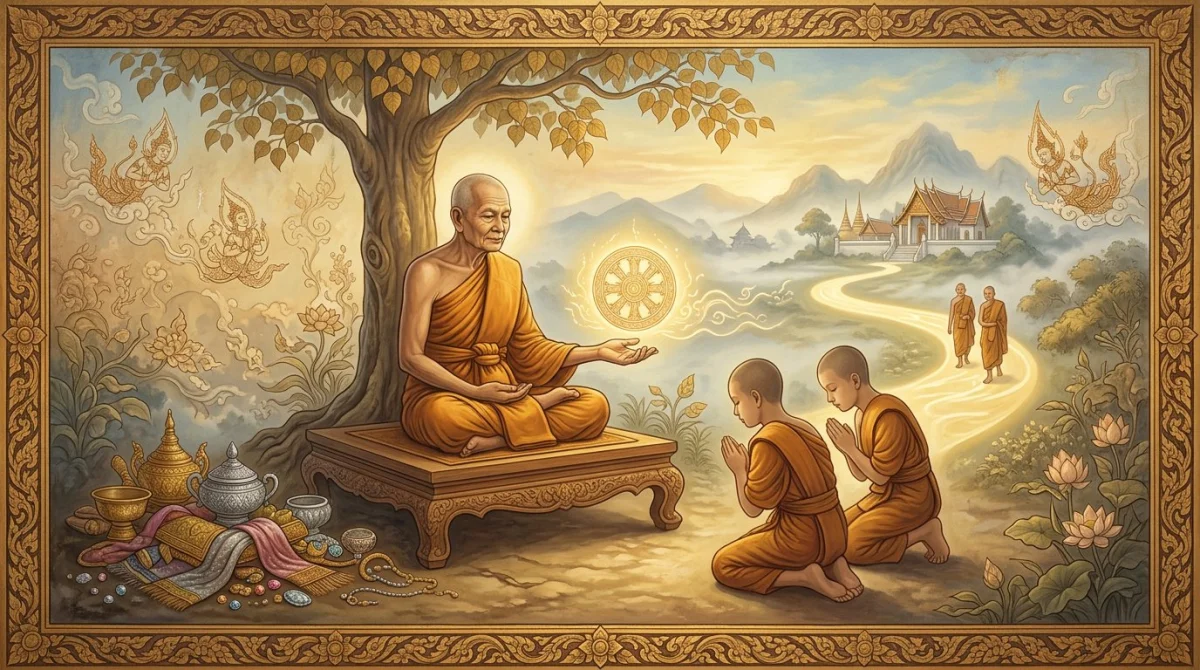
The Buddha wanted his disciples to inherit the Dhamma, not gain and honour — and Sāriputta lists sixteen defilements to abandon through the middle way, the noble path.
The Dhammadāyāda Sutta is the third discourse of the Majjhima Nikāya. The Buddha says: "Monks, be my heirs in Dhamma, not my heirs in material things." He gives an example: suppose he had eaten and some food was left over, and two hungry, weak monks arrived. One eats the leftover food; the other, thinking food is a material thing, doesn't eat and spends the night hungry. The second is more worthy of honour and praise, because that restraint leads to fewness of wishes, contentment, effacement, being easy to support and arousing energy.
When the Buddha retired to his dwelling, Sāriputta continued: how do disciples of a teacher who lives secluded fail to train in seclusion? He then listed sixteen evil defilements and the middle way that abandons them — the noble eightfold path.
The Buddha, out of compassion, hoped his disciples would inherit the Dhamma. If they were heirs in material things, both disciples and Teacher would be criticised for disciples receiving only material things.
Ask what you've received most from your teachers or parents. If the answer is only things or opportunities, go back and receive the values they offered too.
A hungry monk who doesn't eat the leftover food, seeing it as material, is more praiseworthy than the one who eats it, since that restraint leads to fewness of wishes, contentment, effacement, easy support and energy.
Sometimes not taking what you could rightfully take is good training in having few wishes — like declining unnecessary freebies.
Sāriputta explains: when the teacher lives in seclusion but disciples don't train in seclusion, don't abandon what the teacher says to abandon, are luxurious and careless, lead in backsliding and neglect seclusion, they are criticised whether elder, middle or new monks.
Being a good student isn't measured by how often you mention your teacher, but by actually doing what your teacher does.
Greed and hatred, anger and resentment, contempt and domineering, envy and stinginess, deceit and fraud, obstinacy and rivalry, conceit and arrogance, vanity and heedlessness — all sixteen are evil.
This list closely matches the sixteen defilements of the mind. Read alongside "The Sixteen Defilements of the Mind" for explanations and use of each.
To abandon these evils there is a middle way that gives vision and knowledge and leads to peace, direct knowledge, awakening and nibbāna — the noble eightfold path.
You needn't tackle all sixteen one by one. Steadily following the eightfold path gradually reduces them all together. Read alongside "The Noble Eightfold Path".
Being an heir in Dhamma applies to anyone with teachers, parents or an organisation they belong to: what should be carried forward is values and wisdom, not just property, position or the reputation that comes from being someone's student or child.
For those working in religion or teaching, this discourse is a very clear mirror. Ask whether what you gain from this work is more Dhamma or more material benefit.
Tap to read the actual passage on the page cited.
The Buddha tells monks to examine him to see whether he is truly enlightened: by observing what can be seen an…

Monks lived in the forest, went for alms and walked up and down intending that people would esteem them. The B…

A deity tells the Buddha that respect for the Teacher, the Dhamma, the Saṅgha and the training, being easy to …
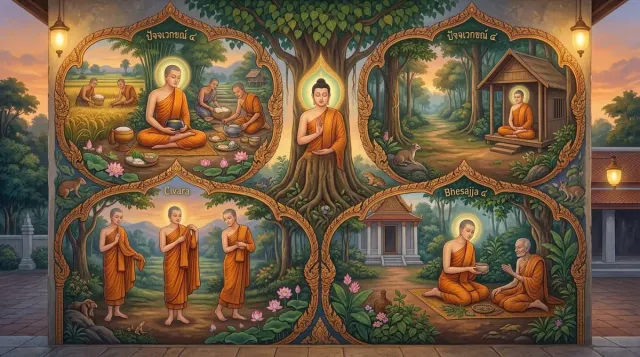
Reflecting before using the four requisites — clothing, food, dwelling and medicine — on what they are for. On…