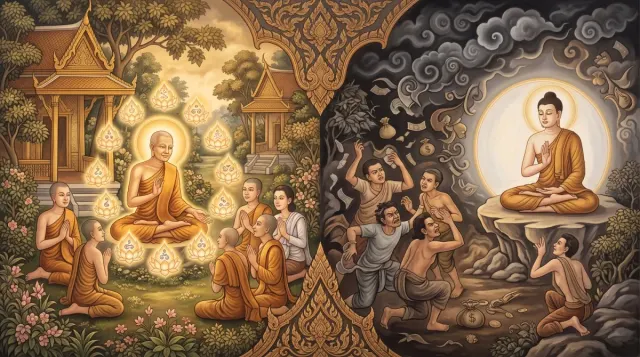
Puggalapaññatti: Whom to Associate With, and Whom to Regard with Equanimity
Sevitabbo bhajitabbo payirupāsitabboTwo sets from the section on threes: someone inferior in virtue, concentration and wisdom is not to be associa…


Mahāgovindasuttaṃ
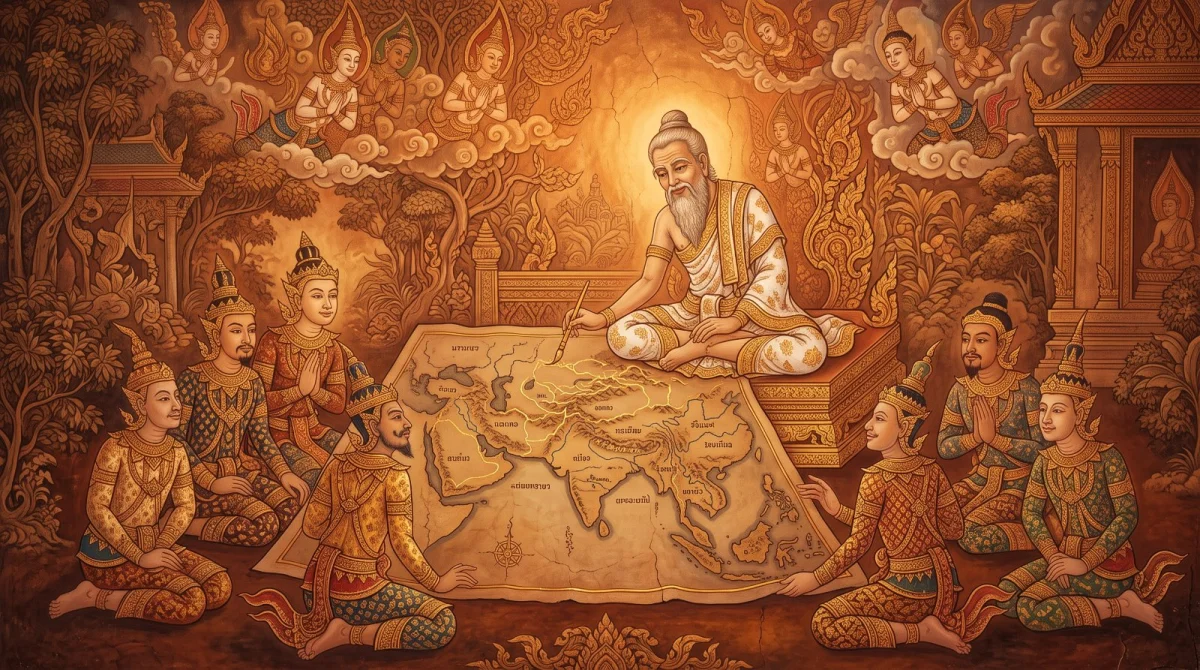
The brahmin Mahāgovinda helps King Reṇu keep his promise to share the kingdom with his friends and divides the land into seven equal parts. He admits frankly that he has never seen Brahmā as rumour claims, learns about the stench of defilements, and gives up his position to go forth without delay. The Buddha concludes that that path led only to the Brahmā realm, while the noble eightfold path leads to Nibbāna.
In the Mahāgovinda Sutta of the Dīgha Nikāya (Mahāvagga), the gandhabba Pañcasikha reports to the Buddha what he heard in an assembly of gods. Part of it is Sakka's account of eight qualities of the Buddha, such as doing as he says, and part is Brahmā Sanaṅkumāra's story of the brahmin Mahāgovinda long ago.
When the brahmin Govinda, chaplain to King Disampati, died, his son Jotipāla took over his post and did the work even better than his father, so that he became known as Mahāgovinda. He helped Prince Reṇu keep his promise to share the kingdom with six noble friends, and divided the land into seven equal portions.
Later, after meeting Brahmā Sanaṅkumāra and learning about the stench of defilements, he gave up his position and went forth, followed by kings, brahmins, students, wives and a great many others. At the end the Buddha says he himself was Mahāgovinda, but the path taught then led only to the Brahmā realm, not to Nibbāna like the noble eightfold path.
Before King Disampati died, six nobles asked Prince Reṇu to share the kingdom with them if he became king, and he agreed. When he took the throne and was enjoying sensual pleasures, Mahāgovinda, reflecting that sensual pleasures intoxicate, urged the nobles to ask whether he still remembered his word. King Reṇu said he did.
Promises made before you had power are a test of who you are once you have it. Write down important promises and review them when your position changes.
King Reṇu had Mahāgovinda divide the great earth, long from north to south, into seven equal portions shaped like the front of a cart, with Reṇu's own country in the middle. The six nobles were all delighted to have received what they had hoped for.
When dividing work, an inheritance or a budget, let someone all sides trust do the dividing, make the criteria clear, and check that everyone is satisfied before starting.
When word spread that Mahāgovinda could see Brahmā and converse with him, he reflected that he had never seen Brahmā at all. He told the kings, his students and his wives frankly, then went into retreat to practise the jhāna of compassion for the four months of the rains, seeing no one but the person who brought his food.
If people praise you beyond the truth, don't let the misunderstanding stand. Tell the truth, and if it is something worth doing, go and make it true.
When Brahmā Sanaṅkumāra appeared and invited him to ask, Mahāgovinda reflected that he was already skilled in welfare in this life, and others asked him about it, so he should ask about welfare in the life to come.
When you meet someone wise, don't waste the chance asking about what you're already good at. Ask about your blind spots.
Sanaṅkumāra answered that one who gives up the sense of "mine", lives in solitude, is intent on compassion, is free of stench and abstains from sex reaches the Brahmā realm. Mahāgovinda understood the first three points but not what "stench" meant, so he asked further.
When a teaching contains a word you don't understand, ask straight out as Mahāgovinda did, rather than pretending to understand and applying it wrongly.
Sanaṅkumāra explained the stenches: anger, lying, fraud, betraying friends, stinginess, arrogance, jealousy, wanting, doubt, harming others, greed, malice, intoxication and delusion. One bound up with these reeks and the Brahmā realm is closed to them. Mahāgovinda saw that these stenches are not easily overcome while living at home, so he decided to go forth.
Use this list as a mirror at the end of the day: which stenches showed up today? Then choose one to reduce tomorrow.
The six kings tried to win him back with wealth and women, and he declined. They asked him to wait seven years, gradually reducing it to years, months and half a month. Each time Mahāgovinda replied that it was too long: no one knows about life; one should do good and live the holy life, for no one born escapes death. Finally he agreed to wait seven days so the kings could teach royal duties to their sons and brothers. To the brahmins and students who warned that renunciants have little status and little gain, he replied that he would leave all that status behind and go forth.
For good things you intend to do, like breaking a bad habit or starting meditation, don't wait for "next year". But if responsibilities remain, set a short, clear handover period and start as planned.
The Buddha tells Pañcasikha that he was Mahāgovinda at that time. The holy life he taught then led only to rebirth in the Brahmā realm, not to disenchantment, dispassion, cessation and Nibbāna. The holy life he teaches now, the noble eightfold path, leads solely to disenchantment and all the way to Nibbāna.
Every kind of goodness has value, but also ask yourself: does what I do lead only to a more comfortable life, or also to real letting go?
This story holds lessons for working life: keeping your word once you have power, dividing resources so every side is satisfied, and being honest about your own reputation. Mahāgovinda didn't ride on the rumour that he could speak with Brahmā; he admitted he never had, and set out to practise for real.
Very relevant today is his refusal to procrastinate. The nobles asked him to wait seven years and kept bargaining the time down. He replied each time that no one knows about life, so one should do good now. Yet he agreed to wait seven days so the kings could train their sons and brothers first: decisiveness that still has reason.
Going forth as a renunciant was the path of that age. Lay people can apply it as loosening attachment to position, and handing over responsibilities properly when it is time to change direction.
Tap to read the actual passage on the page cited.
Two sets from the section on threes: someone inferior in virtue, concentration and wisdom is not to be associa…
The past life of Venerable Rāhula in the Apadāna: bedding that shone like a mirror, offered to the Buddha Padu…

The conduct expected of one appointed by the Saṅgha to settle a dispute: not asking the parties' names or fami…

Plants and animals differ in marks according to species, but humans have no such marks. A person is a farmer, …