Soṇa Kuṭikaṇṇa: Three Years' Wait and a Request for Remote Regions
Avantidakkhiṇāpatho appabhikkhukoA lay follower in Avanti asks Mahākaccāna for ordination but must wait three years because too few monks can b…


Sato bhikkhave bhikkhu vihareyya sampajāno
At Vesālī, Ambapālī will not sell her right to offer a meal even for the whole city, and the Buddha keeps his acceptance of her invitation. Then, during the rains at Beluva, he falls gravely ill but endures it mindfully, compares his eighty-year-old body to an old cart, and says there is no teacher's closed fist in the Dhamma.
In the Mahāparinibbāna Sutta of the Dīgha Nikāya, Mahā Vagga, on reaching Vesālī the Buddha stays in the mango grove of Ambapālī the courtesan and teaches the monks to be mindful and clearly comprehending. Ambapālī hears of it, comes to see him, listens to the Dhamma and invites him for the next day's meal, which he accepts by silence. On her way back she drives axle to axle against the young Licchavis, who offer her a hundred thousand for the privilege. She refuses, even if they were to give her Vesālī with its lands. When the Licchavis come and invite him, the Buddha says he has already accepted Ambapālī's meal. The next day, after serving the meal, she gives the park to the Saṅgha headed by the Buddha.
He then goes to spend the rains at the village of Beluva, sending the monks to spend the rains around Vesālī wherever they have friends. During that rainy season he falls gravely ill, close to death, but endures it mindfully and clearly comprehending. Reflecting that it would not be fitting to pass away without addressing his attendants and taking leave of the Saṅgha, he suppresses the illness by effort.
When he recovers, Ānanda says that because of the Buddha's illness his own body felt weak and he could not get his bearings. The Buddha says the Dhamma he taught has no inner and outer, no teacher's closed fist. He is old, eighty years of age, and he tells them to be an island to themselves, with the Dhamma as their island.
In the mango grove he teaches the monks that being mindful means contemplating body, feelings, mind and phenomena, and being clearly comprehending means acting with awareness when going forward and back, looking ahead and aside, bending and stretching, eating, drinking, relieving oneself, walking, standing, sitting, lying down, waking, speaking and keeping silent. This, he says, is his instruction.
Choose one routine you do on autopilot every day, such as brushing your teeth or walking to your car, and stay aware throughout it.
The Licchavis ask Ambapālī to give them the meal for a hundred thousand. She replies that even if they gave her Vesālī with all its lands, she would not give up that meal. The Licchavis snap their fingers, saying this woman has beaten them. When they invite the Buddha themselves, he says he has already accepted her meal.
When a better offer clashes with an existing appointment, keep the original one. Trustworthiness is built in moments like this.
After serving the meal with her own hands, Ambapālī sits on a low seat and says she gives this park to the Saṅgha headed by the Buddha. The Buddha accepts it, then instructs and gladdens her with a talk on the Dhamma.
What we're proudest of, such as our knowledge or our space, may become more valuable when opened to others to share.
During the rains at Beluva he falls gravely ill, with severe pains close to death. The discourse says he endured them mindful and clearly comprehending, without distress.
When ill, try to separate the pain of the body from the worry the mind adds, then gradually let go of the second. This is no reason to delay seeing a doctor.
He reflects that it would not be fitting for him to pass away without addressing his attendants and taking leave of the Saṅgha, so he suppresses the illness by effort and sustains his life.
Prepare what those left behind will need to know while you're still well, such as accounts, documents, or things you want to say, so your loved ones don't have to guess.
Ānanda takes some comfort that the Buddha will say something about the Saṅgha before passing away. The Buddha says the Dhamma he taught has no inner and outer, no teacher's closed fist kept back for secret teaching, and he has never thought that he would lead the Saṅgha or that the Saṅgha must look up to him.
If you're a leader or teacher, don't keep key knowledge to yourself so others must depend on you. Teach it all and write a manual, so the team can carry on even without you.
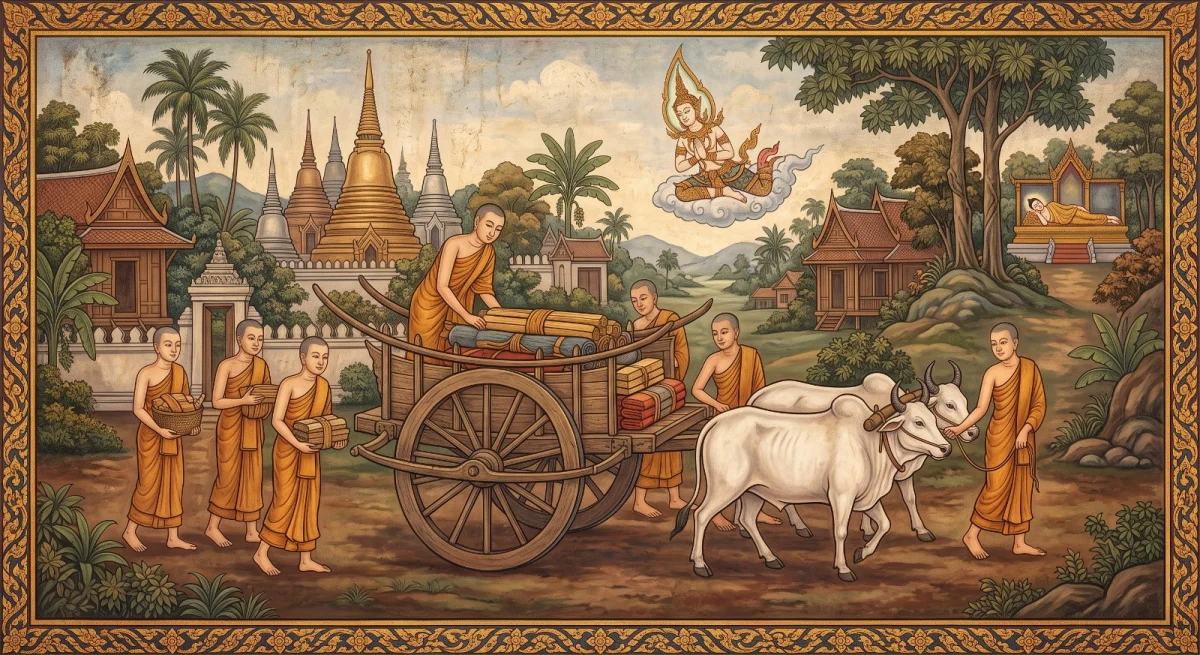
He says he is now old, eighty years of age. Just as an old cart keeps going by being repaired, so the Tathāgata's body keeps going like an old repaired cart. When he enters the signless concentration of mind, his body is at ease.
Accept your body's age plainly, without shame or denial. Look after it and repair it as appropriate, and find calm of mind as a resting place when the body is unwell.
He says: be an island to yourselves, a refuge to yourselves, with the Dhamma as your island and refuge, and no other refuge; that is, contemplate body, feelings, mind and phenomena, ardent, clearly comprehending and mindful. Those keen on training who live this way will be the foremost.
When someone you rely on grows old or passes away, ask how much of what they taught you can now do yourself. That is a refuge that doesn't disappear with anyone.
The Ambapālī episode is a lesson in keeping appointments that applies at once. Someone who booked us first shouldn't be pushed aside just because someone bigger or richer asks later. The Buddha himself kept his acceptance of a courtesan's invitation above the request of the Licchavi nobles.
The rains at Beluva show how to live with illness and old age: be aware, endure without making a fuss, admit plainly that the body is like an old cart, and think of those who depend on us rather than leaving without saying goodbye.
If you're caring for someone ill or elderly and feel like Ānanda, so drained you can't see straight, that is natural for someone who loves them. Rest enough, and it's fine to ask those around you for help.
Tap to read the actual passage on the page cited.
A lay follower in Avanti asks Mahākaccāna for ordination but must wait three years because too few monks can b…

Four things rarely obtained — human birth, staying alive, hearing the true Dhamma, and the arising of a Buddha…

Ten things one who has gone forth should reflect on often: that I am no longer like a householder, that my lif…

The Paṭisambhidāmagga explains that in developing mindfulness of breathing there are eighteen imperfections th…