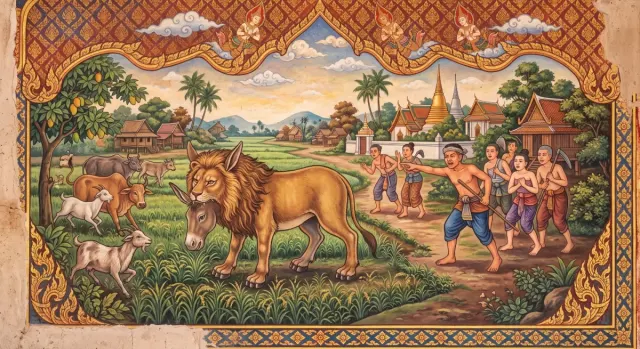
The Sīhacamma Jātaka: The Donkey in the Lion's Skin
SīhacammajātakaṃA donkey covered in a lion's skin grazed on green crops for a long time, but when it brayed it revealed itself…


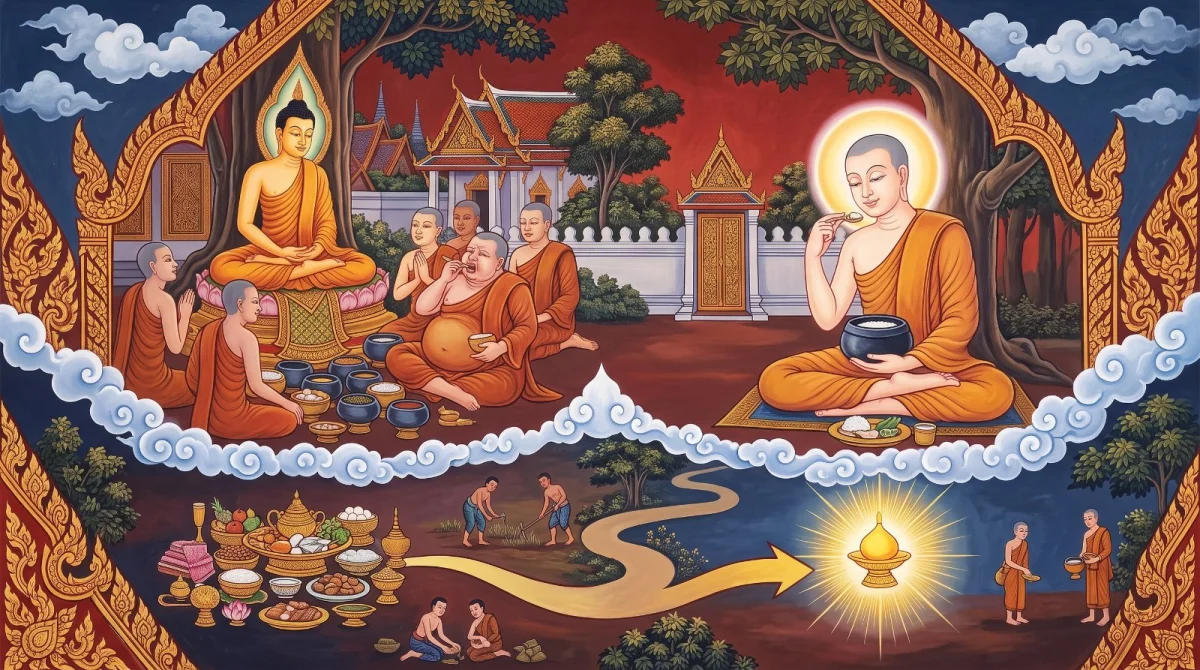
Doṇapākasuttaṃ
King Pasenadi eats so much he is left panting. The Buddha speaks a verse: one who is mindful and knows moderation in food has lighter discomfort, ages slowly and lives long. The king has a young man recite it at every meal, gradually eats less, and becomes fit.
In the Doṇapāka Sutta of the Kosala Saṃyutta (Saṃyutta Nikāya, Sagāthāvagga), King Pasenadi used to eat a large quantity of food, cooked from a doṇa-measure of rice. One day, having eaten, he was bloated and panting, and in that state went to see the Buddha.
Knowing his condition, the Buddha spoke a verse: a person who is always mindful and knows moderation in the food they receive has lighter feelings of discomfort, ages slowly, and guards a long life.
The king had the young man Sudassana, standing behind him, learn this verse and recite it whenever he ate, granting him a hundred kahāpaṇas a day. Over time the king reduced his food step by step until he was content with at most a nāḷi-measure of cooked rice, and his body became fit. He then exclaimed that the Blessed One had shown him compassion for his good in both this life and the next.
King Pasenadi ate rice cooked from a doṇa-measure. Afterwards he was bloated and panting, and in that state went to see the Buddha.
Notice your body after meals. If you're often heavy with drowsiness, bloated or short of breath, it's a signal to review how much you eat.
The verse begins with mindfulness. Moderation in eating doesn't come from rules alone but from awareness while eating.
At your first meal of the day, take the first few bites slowly, noticing the taste and the feeling of fullness as it gradually arises.
A mindful person knows the right measure of the food they receive. It doesn't forbid eating or teach fasting; it teaches knowing how much is enough.
Before a second helping, wait a moment and ask whether you're still truly hungry or the food just still tastes good.
The verse describes the result of moderation: that person's feelings of discomfort become lighter, they age slowly and guard a long life.
See moderate eating as long-term care for the body, not self-punishment. Feeling comfortable after a well-measured meal is a result you notice right away.
The king had the young man Sudassana learn the verse from the Buddha and recite it whenever he ate, paying him a hundred kahāpaṇas a day — showing how much he valued the reminder.
Place reminders where the decision actually happens, such as a small note on the dining table, or ask someone at home to remind you kindly.
Over time the king reduced his food step by step until he was content with at most a nāḷi-measure of cooked rice, far less than before, and his body became fit.
If you want to change your eating habits, change a little at a time so the body can adjust. Don't overdo it, and don't compare yourself with others.
Stroking his body, the king exclaimed that the Blessed One had shown him compassion with both kinds of good: good in this life and good in the life to come.
Moderation in eating helps physical health and also trains the mind not to follow every craving. The same skill applies to spending and screen time.
This discourse is about eating mindfully and in moderation. It is not advice on weight loss or fasting. The right amount differs from person to person according to age, work and health. Anyone with a health condition, who is pregnant, or who struggles with eating should consult a doctor or dietitian before changing how they eat.
What's interesting is the king's method. He didn't rely on willpower alone; he arranged for a reminder at exactly the moment it was needed, during meals, and cut down little by little until it became habit.
We can do something similar today: eat more slowly, put the phone away during meals, or keep a short reminder on the dining table.
Tap to read the actual passage on the page cited.
A donkey covered in a lion's skin grazed on green crops for a long time, but when it brayed it revealed itself…

The Buddha gives a brief outline: one should know what is contrary to the Dhamma and what accords with it, wha…

Dark kamma, bright kamma, kamma both dark and bright, and kamma neither dark nor bright that leads to the endi…
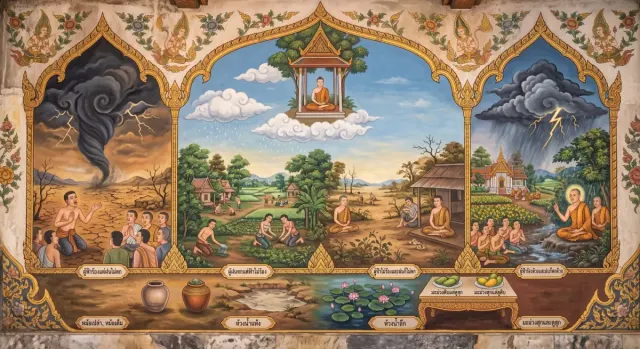
Some people talk but don't act; some look fine but are empty inside — a set of similes from the Book of Fours …