
Calm and Insight: The Four Ways of Yoking
Samatho ca vipassanā caCalm and insight must go together — four paths Ānanda said those who attained awakening came by. There is no s…


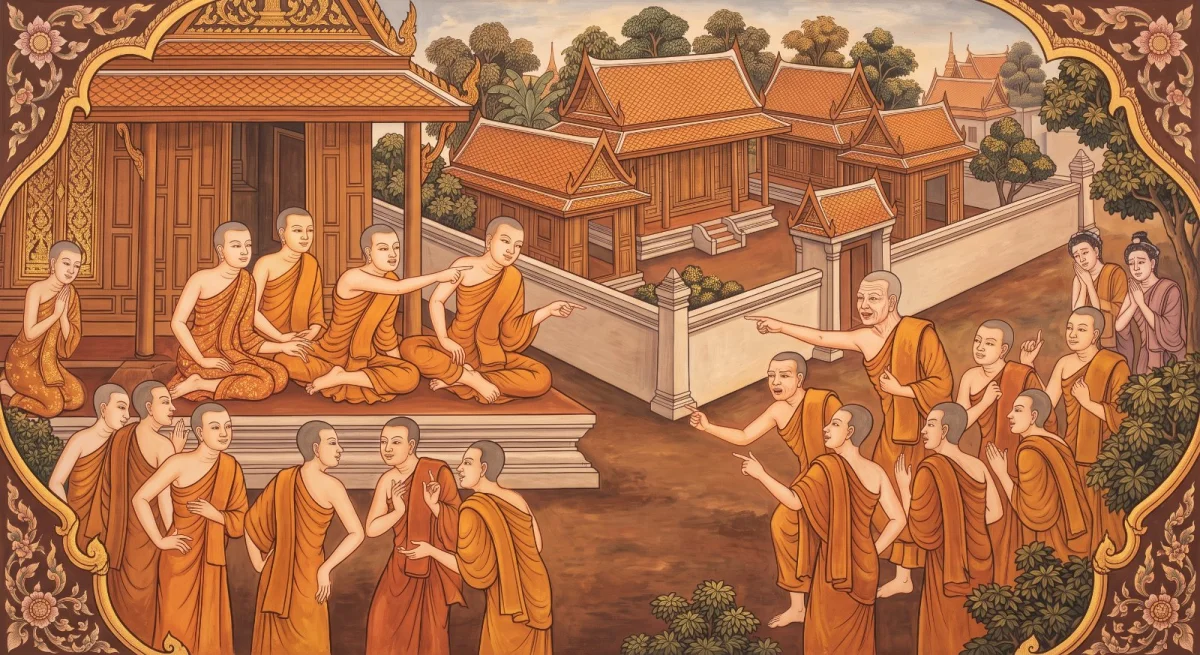
Kosambiyajātakaṃ
Verses spoken to a divided community: everyone is loud but no one thinks themselves a fool; hatred is not appeased by hatred; even worse enemies have reconciled; and if you cannot find a good companion, it is better to walk alone.
In the Kosambiya Jātaka of the Book of Nines in the Jātaka, Khuddaka Nikāya, the verses describe a divided community: everyone makes the same loud noise, no one thinks themselves a fool, they talk cleverly as if wise, yet do not see that the quarrel is leading them.
Then come the well-known verses: for those who harbour the thought "he abused me, struck me, defeated me, robbed me", hatred is not appeased. Hatred is never appeased by hatred, but by non-hatred. The verses then ask: people who plundered kingdoms and killed one another could still reconcile, so why can't you? The final verses praise finding a wise companion, and if none is found, walking alone like an elephant in the forest, doing no evil.
In the Tipiṭaka the Jātaka consists only of verses. The commentary says the Buddha spoke them to the monks of Kosambī, who had split into two factions, telling them the story of King Dīghīti of Kosala and his son, who did not take revenge on the enemy who had harmed his family. When the monks still would not listen, he withdrew to dwell alone. The same verses on hatred also appear in the Dīghītikosala Jātaka in the Book of Fives.
The first verse says everyone makes the same loud noise, and not one of them feels that they are a fool. When the community splits, no one thinks it is splitting because of them too.
In a conflict, first ask yourself, "Which part of this problem comes from me?" — even if you think you are less at fault.
They are unmindful, posing as wise, glib talkers who say as much as they like. Led on by the quarrel, they still don't see that quarrelling is harmful.
If you notice yourself typing a long message to win an argument, stop and ask: am I solving the problem, or being carried along by emotion?
For those who harbour the thought "he abused me, he struck me, he defeated me, he robbed me", hatred is not appeased. For those who don't harbour it, hatred is appeased.
Notice how many times you retell the story of being wronged. Each retelling tightens the knot; try telling it less so your mind can rest.
Never in this world has hatred been appeased by hatred; it is appeased by non-hatred. This is an ancient law.
When you want to retaliate in kind, choose not to this time. Not retaliating doesn't mean letting yourself keep being harmed; it means not feeding the cycle of revenge.
Others do not realise, "we are ruining ourselves here." But for those who do realise it, the conflict subsides.
In a quarrel, a very helpful sentence is "right now we're both losing", because it invites everyone to see the shared damage.
People who plundered kingdoms, seized wealth and took lives could still come together again, so why can't you? The verse fits the story of King Dīghīti which, according to the commentary, the Buddha told them.
When you feel what lies between you and a sibling or colleague is too serious to mend, compare it with people who were truly enemies yet came to talk again.
If you find a wise companion of good conduct, walk with them mindfully. If not, walk alone like an elephant in the forest, for there is no companionship with fools. Walk alone, but do no evil.
If a group of friends habitually gossips or does harmful things together, quietly stepping away is not losing. Use that time to look after yourself and gradually find better friends.
Conflicts in a family group chat, a team or a community often look just as the verses describe: everyone is sure they are right, everyone has good reasons, and no one sees themselves as part of the problem.
This Jātaka offers a two-step way out. First, stop keeping score of what others have done to you, because keeping score is how resentment is tied up. Second, if the other side truly won't stop, stepping back to live peacefully without harming anyone is better than staying in the quarrel.
Walking alone here does not mean cutting yourself off from everyone; it means not joining a circle that encourages each other in wrongdoing.
Tap to read the actual passage on the page cited.
Calm and insight must go together — four paths Ānanda said those who attained awakening came by. There is no s…

The final verses of the Theragāthā. Vaṅgīsa, a former poet, recalls how he used to wander drunk on poetry unti…

When confidence is tied to one person, then the day that person offends, is disciplined, moves away, disrobes …

Anuruddha, Nandiya and Kimbila live together like milk and water, because their acts of body, speech and mind …