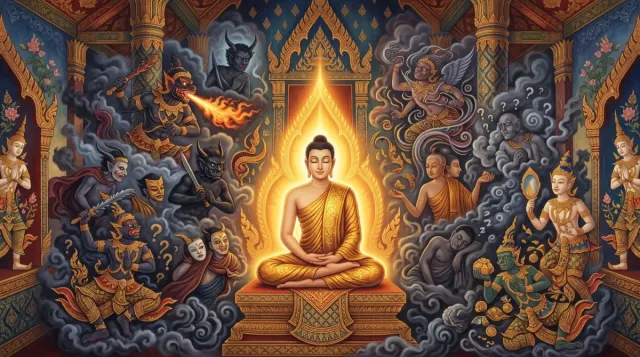
The Discourse on Imperfections: What Makes Concentration Slip
UpakkilesasuttaṃAfter the Kosambī monks refused to stop quarrelling, the Buddha visited Anuruddha and his companions, who perc…


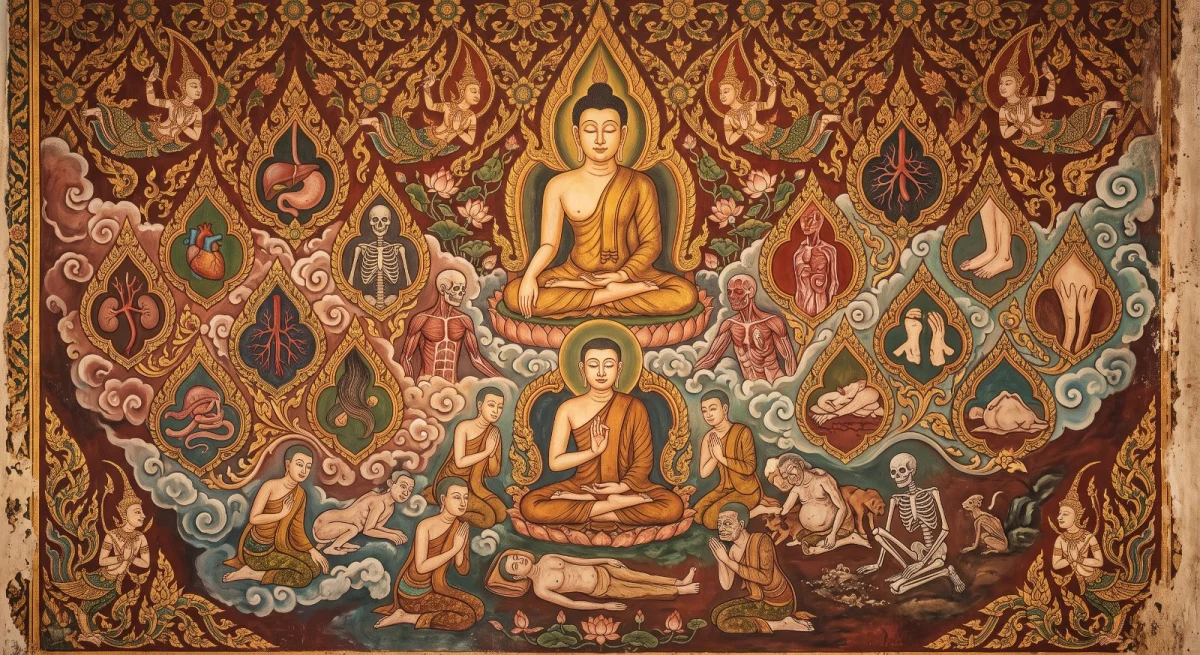
Kāyagatāsati
Mindfulness directed to the body — seven methods from the Kāyagatāsati Sutta. The body is always in the present, so it is the best anchor for a mind that keeps running to past and future.
In the Book of Ones, the Buddha praises mindfulness of the body in particular: those who develop mindfulness of the body partake of the deathless; those who do not, do not partake of the deathless.
In the Kāyagatāsati Sutta he teaches several ways to develop it: mindfulness of breathing, awareness of postures, clear comprehension in movement, reflecting on the parts of the body, reflecting on the elements, the charnel-ground contemplations, and the four jhānas — along with ten benefits, such as overcoming discontent and delight, overcoming fear, enduring cold, heat, hunger, thirst and hurtful words, and attaining the four jhānas at will.
This page differs from "The Four Foundations of Mindfulness" by focusing solely on the body and going through each method in detail.
Going to a secluded place, sitting with the body upright and mindfulness established in front, one breathes out mindfully and breathes in mindfully, knowing whether the breath is long or short.
Before starting work or answering something difficult, take three mindful breaths. See "Mindfulness of Breathing in Sixteen Steps" for detail.
Walking, one knows one is walking; standing, sitting and lying down, one knows it. In whatever position the body is, one knows it clearly.
Walk from the car park to work feeling each footstep on the ground. It's meditation that takes no extra time at all.
Being aware while going forward and back, looking ahead and aside, bending and stretching, dressing, eating, drinking, relieving oneself, speaking and keeping silent.
Choose one daily routine, such as brushing your teeth or washing dishes, and do it every day aware of each movement.
Reviewing the body from the soles of the feet up to the tips of the hair as full of various things — head hair, body hair, nails, teeth, skin and so on — like opening a bag of mixed grains and looking at each kind.
Use it when preoccupation with appearance goes too far. Seeing the body as its actual components helps loosen it — but don't practise to the point of self-loathing.
Reviewing the body as it is placed in terms of earth, water, fire and air, like a butcher who has cut up a cow and sits at a crossroads looking at the portions.
When ill or in pain, try feeling the hardness, fluidity, heat and movement in the body. You'll see the body as changing nature, not a self you must carry.
Comparing this body with a corpse left in a charnel ground at different stages: "This body too is of the same nature, will be like that, is not exempt from that."
It can be used in a gentler form: at a funeral, recall that one day your body will be like this. It makes it easier to let go of small things you've been holding on to.
When the mind is calm, the rapture and happiness born of seclusion and concentration pervade the whole body, like bath powder kneaded with water until the whole ball is moist.
A relaxed body is the doorway to a calm mind. Before sitting, always release the shoulders, jaw and belly. See "The Four Jhānas" for more.
The body is the best anchor for a scattered mind, because thoughts can live in the past or future, but the body can only be here. Returning to the felt sense of the body is returning to the present at once.
Start with methods two and three, which need no special time: be aware while walking, standing, sitting and lying down, and while handling things throughout the day. Use methods four to six when attachment to the body or fear of death weighs too heavily — and don't practise them intensively when feeling low or depressed.
Tap to read the actual passage on the page cited.
After the Kosambī monks refused to stop quarrelling, the Buddha visited Anuruddha and his companions, who perc…

The past lives of the nun Dhammadinnā: a hired worker, wise and restrained in virtue, who gave a cake to a chi…

The powerful nāga prince Bhūridatta keeps the uposatha on an anthill and is betrayed by a brahmin he had hoste…
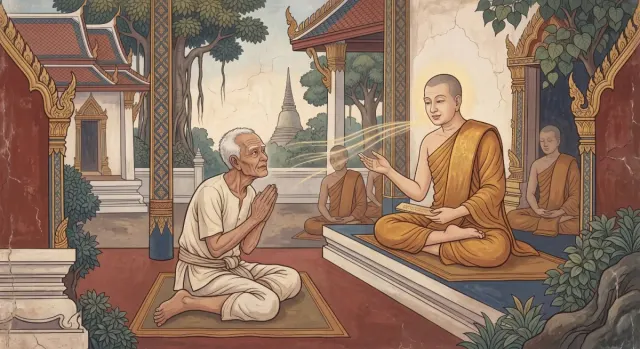
An old man with dim eyes and poor hearing asks for a Dhamma he can understand before he dies. The Buddha answe…