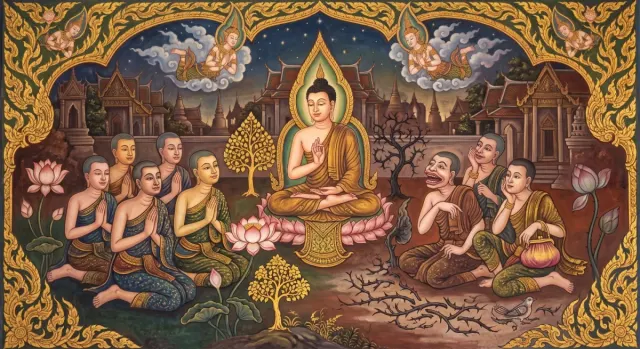
Hiri Jātaka: True Friends and Friends in Word Only
HirijātakaṃThe marks of someone who claims to be a friend but doesn't act as they speak, someone who watches for faults a…


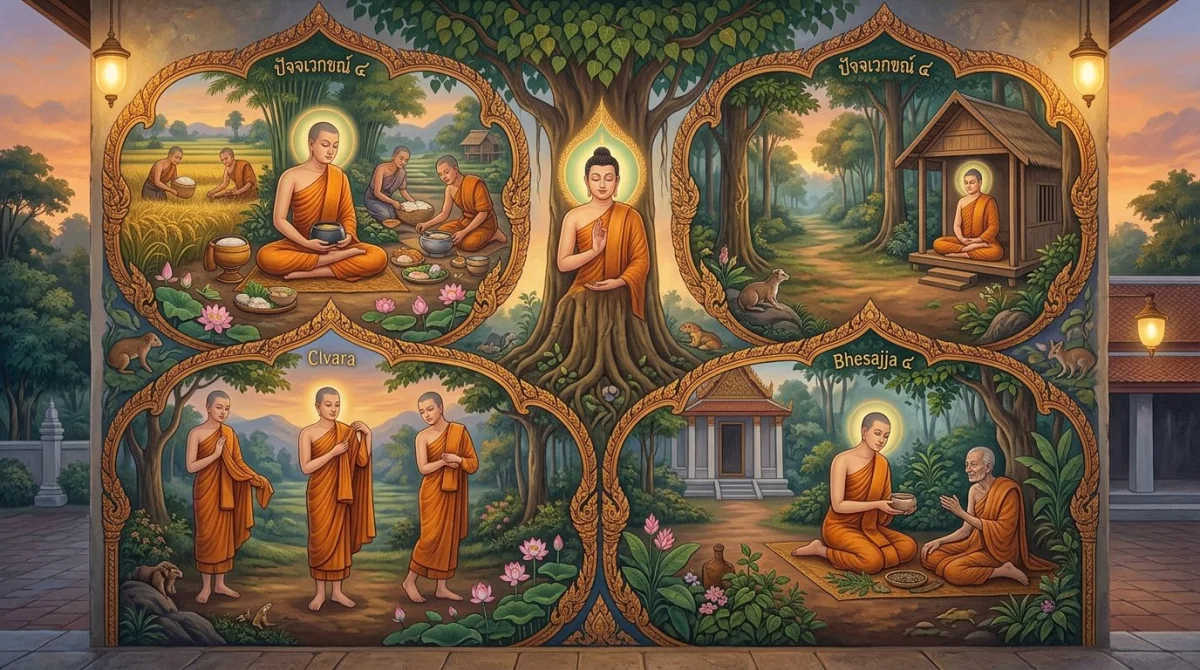
Cattāro paccavekkhaṇā
Reflecting before using the four requisites — clothing, food, dwelling and medicine — on what they are for. One question that turns consumption into practice.
In the Sabbāsava Sutta, the Buddha teaches that some taints are abandoned by wise use: a monk reflects wisely before using each of the four requisites on what it is for. Without such reflection, taints and distress arise; with it, they do not.
These reflections became a daily chant for Thai monastics, known as the reflection at the moment of use and the reflection after use.
Though originally taught to monks, the principle applies to anyone who wears clothes, eats, lives somewhere and takes medicine.
Wearing clothing only to ward off cold and heat, contact with flies, mosquitoes, wind, sun and creeping things, and only to cover what should be covered out of modesty.
Before buying new clothes, ask whether you're buying to use them, or to make others see you a certain way.
Eating not for fun, not for intoxication, not for beautification or adornment, but only to sustain this body, to end hunger, to support the holy life — ending old feelings and not arousing new ones, so that living will be easy and blameless.
Pause for one breath before each meal and ask whether you're eating from hunger, or from boredom, stress or because it's time.
Using a dwelling only to ward off cold and heat, contact with creatures and the dangers of the elements, and to enjoy seclusion.
A home is for rest and peace. If maintaining or decorating it has become a mental burden, try reducing what isn't needed.
Using medicine only to ward off painful feelings arising from illness and for the greatest freedom from affliction.
This doesn't forbid treating illness, but reminds you to use medicines and health products according to real need, not advertising.
In an age when consumption is designed to happen without thought, these reflections insert a short pause before using something: ask "What is this for?" before buying clothes, before eating, before decorating your home, and before taking medicines or supplements.
The answer in keeping with the discourse is: for the body's genuine needs and to live a good life. Answers like "for fun", "to show off" or "for beauty beyond need" are where the taints slip in.
Tap to read the actual passage on the page cited.
The marks of someone who claims to be a friend but doesn't act as they speak, someone who watches for faults a…

The rapture triplet sorts states by the feeling that accompanies them: rapture, pleasure or equanimity. The In…
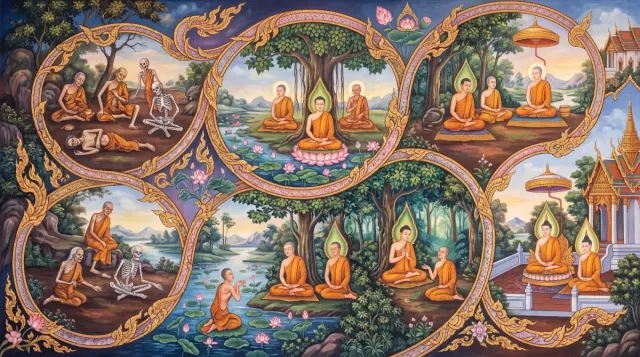
Ten ways of seeing that turn the mind around — the set the Buddha sent to Venerable Girimānanda when he was gr…

What Sāriputta told Anāthapiṇḍika as he lay gravely ill near death — cling to nothing in the world as one's ow…