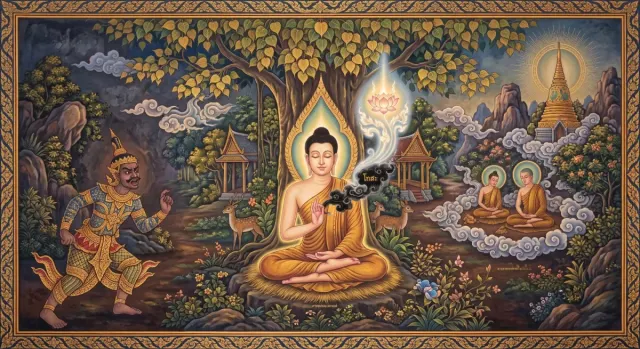
The Cullabodhi Jātaka: Anger Arises but Is Not Allowed to Stay
CullabodhijātakaṃAn ascetic admits that anger really did arise in his mind, but he checked it at once, as heavy rain settles du…


Bhikkhusaṅgho viharanto phāsuṃ vihareyya
Ānanda asks how a community of monks can live comfortably. The Buddha answers in stages, beginning with keeping one's own virtue without criticising others, attending to oneself instead of finding fault with others, and not being troubled at being unknown.
In the Ānanda Sutta of the Phāsuvihāra Chapter, Aṅguttara Nikāya, Book of Fives, Ānanda asks the Buddha at Ghosita's Monastery in Kosambī how the Saṅgha of monks might live comfortably. The Buddha answers, and Ānanda asks whether there is another way. The Buddha adds one step at a time until there are five.
The five are: being accomplished in virtue oneself without criticising others about virtue; attending to oneself rather than to others; being unknown and not agitated by it; obtaining the four jhānas at will; and realising the liberation of mind and liberation by wisdom. At the end he says there is no other comfortable abiding better or more refined than this.
The preceding Phāsuvihāra Sutta describes five comfortable abidings among fellow practitioners: bodily, verbal and mental acts of loving-kindness, shared virtue, and shared view, both openly and in private. That list overlaps almost entirely with the six principles of cordiality, so this page focuses on the Ānanda Sutta.
The first step: a monk is accomplished in virtue himself and does not criticise others regarding higher virtue. Even with just this, the Saṅgha can live comfortably.
When you start keeping precepts, eating vegetarian or giving up drinking, do it well without preaching to or criticising those around you who haven't.
The second step adds: one attends to oneself, not to others — examining one's own conduct rather than watching whether others are right or wrong.
When you feel like complaining that a colleague isn't doing well, first ask whether your own part today is complete.
The third step adds: one is not well known, and is not agitated by being unknown. The desire to be recognised fuels competition in a group; one who isn't bothered at being unknown lives easily with others.
If your work goes unmentioned in a meeting, notice the stir in your mind and let it go. Good work has value even when unseen.
The fourth step adds: one obtains at will, without trouble or difficulty, the four jhānas, pleasant abidings here and now. A mind with inner happiness doesn't need to seek happiness in getting ahead of others.
Even before jhāna, a short daily period of calm lets you return to others with a mind not hungry for approval.
The fifth step adds: one realises with direct knowledge, here and now, the taintless liberation of mind and liberation by wisdom. The Buddha then says there is no other comfortable abiding better or more refined than this. This point is for overall understanding.
When you think you can only be happy once the people around you change, remember that the highest comfort in this discourse comes from changing one's own mind.
In the preceding Phāsuvihāra Sutta, the five comfortable abidings are: bodily, verbal and mental acts of loving-kindness toward fellow practitioners, shared virtue, and shared noble view — all both openly and in private.
A simple test: do you speak about teammates behind their backs in the same tone you use to their faces?
The first three steps apply at once in any group — at work, in the family, in online communities. Unhappy groups often contain someone strict with themselves who starts policing others, or someone upset that no one notices their work. The Buddha sets out that comfort begins with looking after oneself without measuring others.
"Not attending to others" doesn't mean not caring about anyone's welfare. Here it means not watching for others' faults instead of examining oneself.
The last two steps, jhāna and liberation, are deep practice. They show that the most complete comfort comes from a freed mind, not from arranging the people around us.
Tap to read the actual passage on the page cited.
An ascetic admits that anger really did arise in his mind, but he checked it at once, as heavy rain settles du…
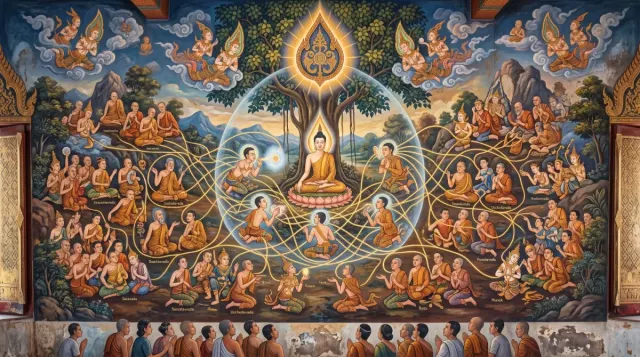
At the end of the Brahmajāla Sutta, the Buddha doesn't rule on the sixty-two views one by one. He shows that e…

Taking "me" apart into six elements — earth, water, fire, air, space and consciousness. The analysis the Buddh…
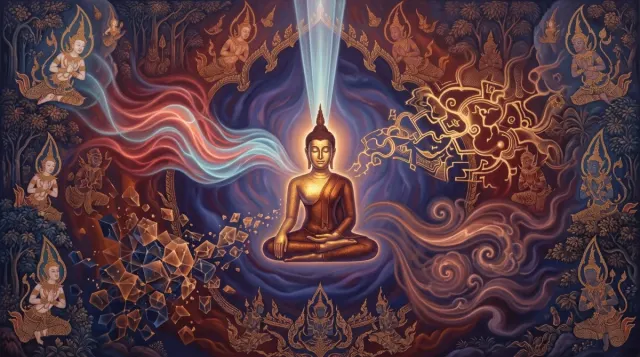
Every discourse here asks the same question — when what exists does a view arise? — and answers that it arises…