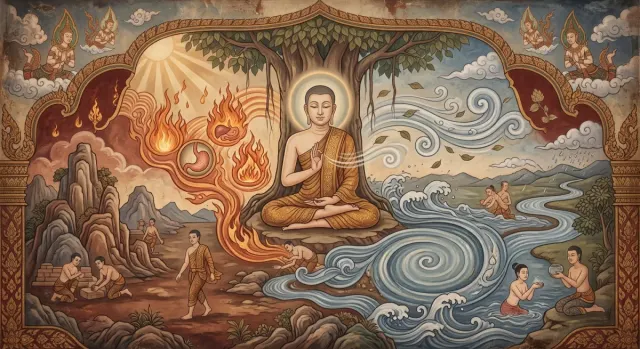
A Mind Like the Four Elements
Paṭhavīsamaṃ bhāvanaṃHow to hold the mind when struck, from the instructions to Rāhula — make the mind like earth, water, fire and …


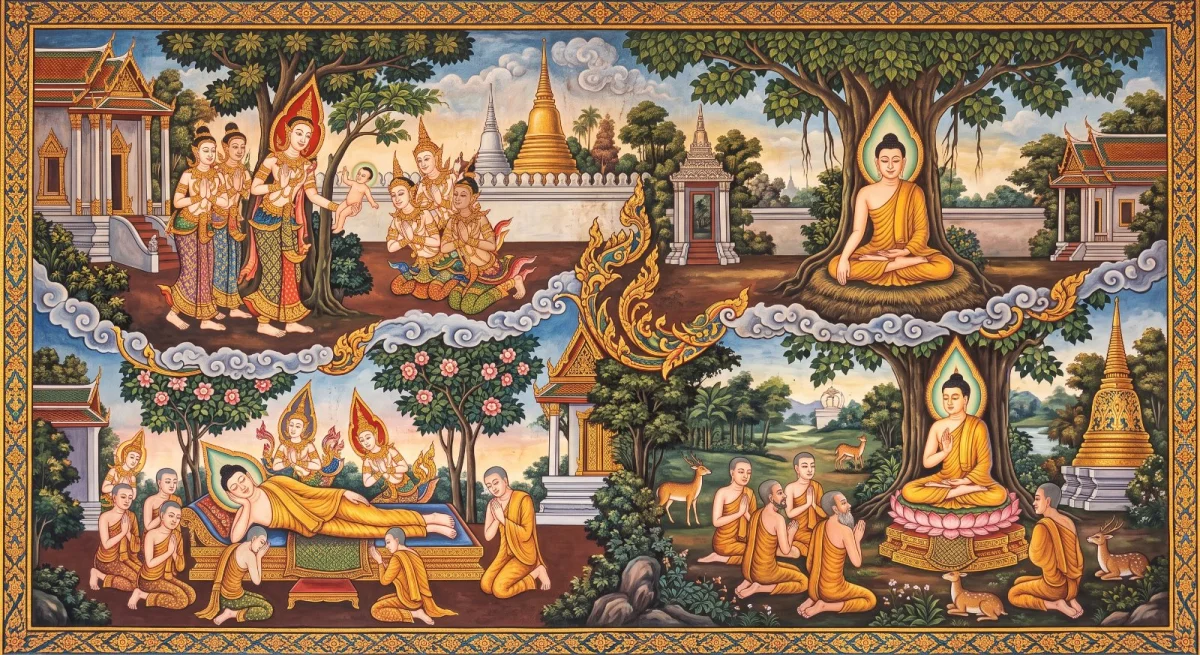
Cattāri saṃvejanīyāni ṭhānāni
Four places the Buddha said are worth seeing — birth, awakening, first teaching and final passing — to see that this happened to a real person in real places.
Before his passing the Buddha told Venerable Ānanda of four places a person of faith should visit and be moved by: where he was born, where he awakened, where he gave the first teaching, and where he finally passed away.
"Being moved" here does not mean sadness. It means the shock that wakes a person up and urges them to do what should be done, because they have seen with their own eyes that all of this happened to a real person in real places, not in a story.
The place of the Bodhisatta's birth, a reminder that the one who found the way out of suffering began, like all of us, by being born a human being.
Use it to remember that a human life is rare and shouldn't be spent on what doesn't matter.
The place of the awakening to the Four Noble Truths, a reminder that freedom comes from actual practice, not from waiting for it to be granted.
Use it to remind yourself that the real answer comes from doing, not from reading ten more books without ever starting.
The place of the first discourse to the five ascetics — where the passing on of the Dhamma began, reaching us even now.
Use it to remember that what you know today came from people who chose to pass it on, and to pass something good on in turn.
The place of the final passing, with the last instruction: all formations decay by nature; accomplish what is to be done with heedfulness.
Use it as a reminder about the time remaining. Knowing everything has an end usually makes today's priorities obvious.
If travelling to India isn't possible, the same principle works close to home — visit a monastery that settles the mind, attend a funeral as a reminder against heedlessness, or read the discourse where the event actually occurs, which this site links for you.
The heart of this teaching is not arriving at a place. It is letting the heart be moved and then returning to take unfinished things seriously.
Tap to read the actual passage on the page cited.
How to hold the mind when struck, from the instructions to Rāhula — make the mind like earth, water, fire and …
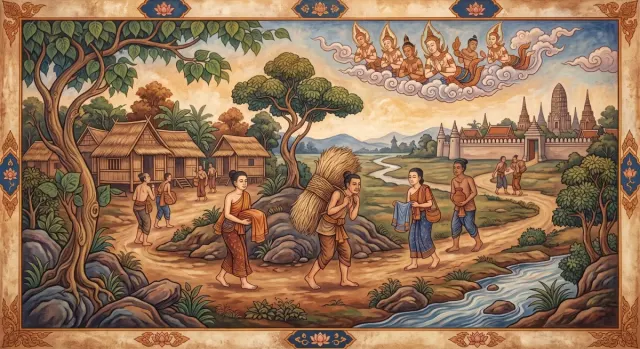
Prince Pāyāsi held that there is no world beyond. Kumāra Kassapa answered with simile after simile. Pāyāsi adm…
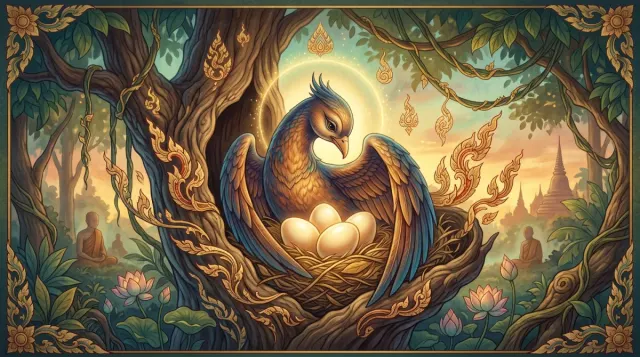
The past life of Venerable Rāhula in the Apadāna: bedding that shone like a mirror, offered to the Buddha Padu…

Mahāli asks why Sunakkhatta saw divine forms but never heard divine sounds. The Buddha explains that he develo…