
The Connected Discourses on Monks: Short Stories of the Elders
BhikkhusaṃyuttaṃShort stories of several elder monks: Moggallāna and noble silence, Sāriputta who would not grieve even if the…


Tālapuṭattheragāthā
The fifty-five verses of Tālapuṭa, a former head of a troupe of dancers. The first half longs "when will I…?" for a life of freedom; the second half is a dialogue with his own mind — holding it to its promises, scolding it, and coaxing it back to the path.
In the Theragāthā of the Khuddaka Nikāya, the Group of Fifty Verses (Paññāsanipāta) contains a single elder, Tālapuṭa, who spoke fifty-five verses. They are unlike any other elder's, because almost all of them are addressed to his own mind.
That he was once a performer isn't mentioned in the verses, but it appears in the Tālapuṭa Sutta of the Gāmaṇi Saṃyutta, Saṃyutta Nikāya. There a head of a troupe of dancers (naṭagāmaṇi) named Tālapuṭa asks whether actors who make people laugh with truth and falsehood are reborn among the laughing gods. The Buddha declines twice before answering that this is a wrong view. The man weeps because he had been deceived by earlier teachers for so long, then asks to be ordained and attains arahantship. The commentary and students generally take him to be the same elder as in the Theragāthā.
The first half of the verses repeats "when will I…?": when will I live alone in the mountains, see impermanence, be unmoved by abuse and praise? In the second half he turns to his mind — "O mind" — reminding it that it begged him to go forth, yet has grown lazy since he did. He resolves not to follow it any longer and to train it as an elephant trainer trains an elephant in rut.
He muses: when will I live alone in the mountains, with no craving as companion? When will I see all existence as impermanent? When will I take the sword of wisdom and cut the creeper of craving? Each ends with "when will this thought of mine come true?"
Write down the life you want as a list of "When will I…?" Seeing the goal clearly shows you what to do today.
When will I, spoken to with harsh words, not be upset because of them, and when praised, not be pleased because of it?
Next time you receive criticism or praise, take one slow breath before responding, and notice which way your mind ripples.
When will I give up desire for sensual pleasures, attain the Buddha's teaching, and rejoice like a poor debtor, pressed by creditors, who finds the money and pays off the debt?
Recall the relief of clearing a debt or finishing overdue work, and use that feeling as motivation to free yourself from binding habits one at a time.
"O mind, for many years you urged me not to live the household life. Now that I have gone forth as you wished, why are you lazy?" He reminds the mind that it once urged him to live in the forest, develop meditation and cultivate the path, yet now it has become greedy again.
When your mind wants to give up something you resolved to do, keep your original reasons written down to reread. Remind yourself that the one who wanted to start was you.
He tells his mind that through its power he has been a brahmin, a king, a physician, a labourer and a god, and also an asura, a hell being, an animal and a ghost. The mind has made him wander in a mass of suffering for a long time; now he won't let it do so again, even for a moment.
Consider how often a passing emotion has led you to do things you later regretted, and set a simple rule: no important decisions while emotions are running high.
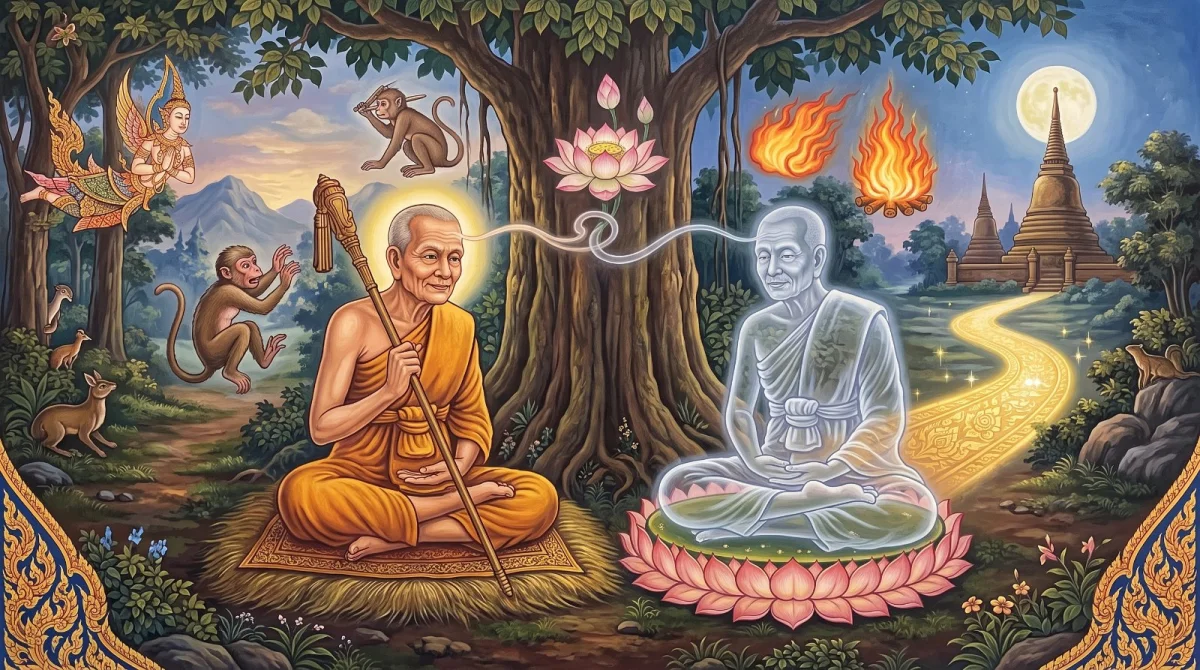
He quotes the Buddha: this mind is unsteady like a monkey, very hard to restrain for one not yet free of lust. Ordinary people who don't understand it are entangled in sensual pleasures that are lovely and sweet.
When you're working and your mind jumps to your phone, notice "the monkey jumped again" and gently bring it back without getting angry at yourself.
This mind once wandered where it wished, as it liked and as it pleased. Today I will restrain it wisely, as a trainer with a hook restrains an elephant in rut. He also says he will tie the mind to its meditation object by the power of development, as an elephant is tied to a post with a strong rope. (The verse about the elephant trainer matches a verse in the Dhammapada.)
Choose a "post" for your mind, such as the breath or a short meditation word, and tie your mind back to it each time you notice it has slipped away.
Tālapuṭa's dialogue with his mind speaks to anyone who has resolved to do something and failed — joining a gym and never going, or planning to save and spending anyway. Talking openly with your own mind helps you see that the mind that wants to start and the mind that wants to quit are the same mind, shifting back and forth.
He doesn't only scold his mind. He also invites it with pleasant images, like grass soft as cotton after rain and peacocks calling in the forest. Effective mind training has both firmness and gentleness.
The scolding in these verses isn't self-hatred. The aim is not to be carried off by momentary desire, not to hurt yourself with words.
Tap to read the actual passage on the page cited.
Short stories of several elder monks: Moggallāna and noble silence, Sāriputta who would not grieve even if the…

The potter Ghaṭīkāra did not go forth because he had to support his aged, blind parents, yet he kept pure virt…

Noble right concentration has the other seven path factors as its supports. In every factor right view leads, …

Practice guidelines from the Tuvaṭaka Sutta: cut the root of proliferation, the conceit "I am"; don't be arrog…