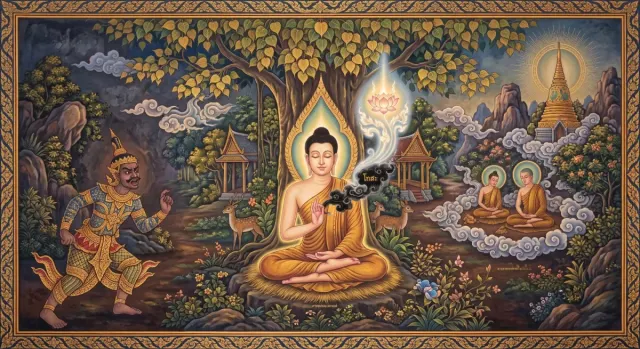
The Cullabodhi Jātaka: Anger Arises but Is Not Allowed to Stay
CullabodhijātakaṃAn ascetic admits that anger really did arise in his mind, but he checked it at once, as heavy rain settles du…


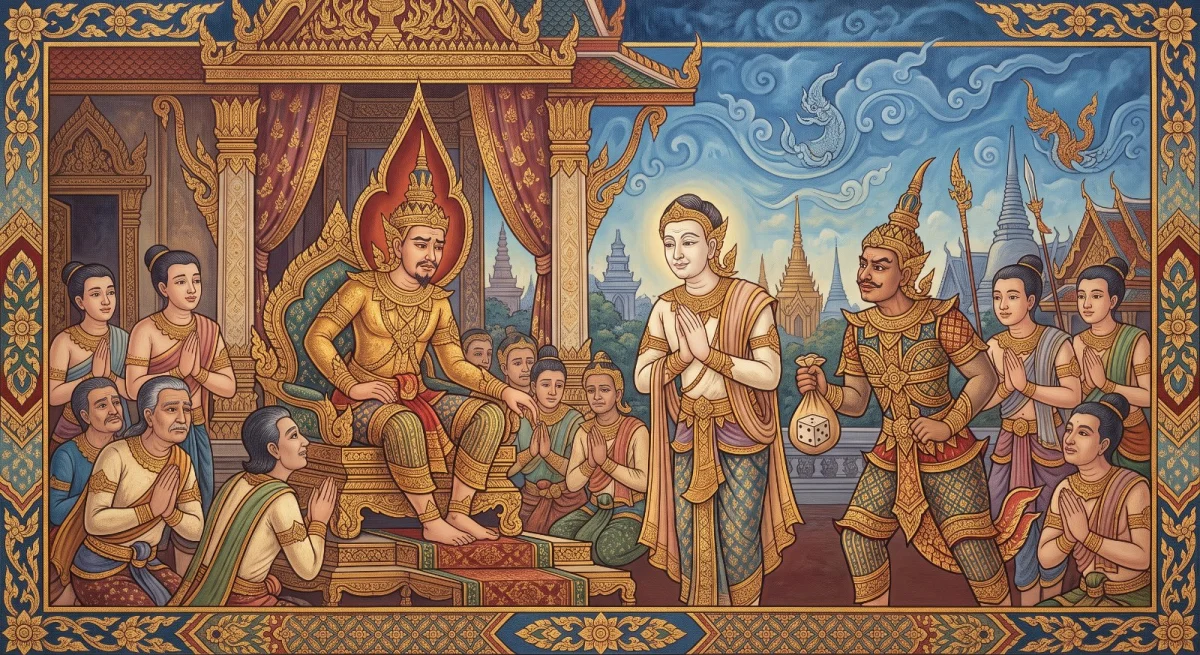
Vidhurajātakaṃ
The king loses a game of dice to the yakkha Puṇṇaka. The wise Vidhura still answers truthfully, even though that answer means he must be taken away. He spends three days teaching his family about serving the king, and when the yakkha is about to kill him, he teaches the Dhamma until the yakkha lets him go. In the end it is revealed that wisdom is the heart of the wise.
In the Vidhura Jātaka of the Mahānipāta, Khuddaka Nikāya, the canonical text consists of verses divided into sections, such as the dice section, the questions on household life, the conduct of a royal servant (rājavasati), and the section on the Dhamma of good people. The narrative linking the verses comes from the Jātaka commentary (Jātakaṭṭhakathā). The Bodhisatta is born as Vidhura the wise, the minister who instructed King Dhanañcaya Koravya of Indapatta in matters of welfare and Dhamma. In the traditional arrangement of the Ten Great Jātakas, this is the story of the perfection of truthfulness (sacca-pāramī).
In the verses, Queen Vimalā, wife of the nāga king Varuṇa, longs for Vidhura's heart. Their daughter Irandatī seeks a husband who can bring it, and the yakkha Puṇṇaka volunteers. He brings a magic gem, challenges King Dhanañcaya to dice, wins, and asks for Vidhura as his prize. When the king refuses, they go and ask Vidhura himself whether he is the king's slave or his kinsman. Vidhura answers truthfully that he is the king's servant, so Puṇṇaka wins him. Vidhura asks for three days to instruct his family, then goes with the yakkha. The yakkha intends to kill him for his heart, but Vidhura teaches the Dhamma of good people until the yakkha releases him. He even asks to meet the nāga king, answers questions to the satisfaction of the nāga king and Queen Vimalā, and returns to Indapatta with the gem.
At the end, King Varuṇa says in the verses that wisdom itself is the heart of the wise. The commentary explains that Queen Vimalā had wanted to hear Vidhura's Dhamma from the start. How the queen came to hear of his fame, and other details linking the story, also come from the commentary.
Puṇṇaka wins at dice and asks for Vidhura. The king says Vidhura is like his own life and cannot be compared to wealth, so the yakkha proposes asking Vidhura himself. Vidhura replies that there are four kinds of slaves, that he too is the king's servant and remains so wherever he goes, and that if the king gives him as a stake he should give him righteously. This answer means the king must hand him over to the yakkha.
When asked about facts that put you at a disadvantage, such as a mistake at work that was yours, answer truthfully first, then look for a way to fix it.
The king asks how a householder can live safely and not grieve in the next world. Vidhura replies: don't eat fine food alone; don't indulge in talk that doesn't develop wisdom; be virtuous, heedful, humble and not stingy; speak gently; help friends; share; support renunciants and brahmins; love the Dhamma; and respectfully go to question the virtuous and learned.
Pick one point to practise this week, such as sharing a treat with your family before eating, or cutting down on gossip and using that time to listen to or read something useful.
When the yakkha wants to take him at once, Vidhura acknowledges that he now belongs to the yakkha but asks for three days to instruct his wife and children, and the yakkha agrees. He calls his children to instruct them, puts household affairs in order, tells them about the wealth, hidden treasure and debts, entrusts his family to the king, and only then tells the yakkha he is ready.
Organise important documents, accounts, debts and essential passwords so your family knows where they are, in case you are suddenly gone, so they won't struggle.
Vidhura teaches his children that one in royal service should be neither too bold nor too timid; should work consistently, like a balance with a level beam; should not take from the royal treasury; should not act as the king's equal or assume the king is a playmate; should neither talk too much nor always stay silent, but speak in due measure when the time comes, truthfully and gently, without slander; should not grow angry when rebuked; and should not put unvirtuous relatives in charge, but appoint virtuous and diligent people instead.
At work, use company property only for work, don't slot unsuitable relatives into positions, and when your boss is upset, respond calmly rather than arguing back at once.
When Vidhura takes his leave, the king, not wanting him to go, speaks of a violent and unrighteous way out. Vidhura replies: do not set your heart on what is unrighteous; apply yourself to welfare and Dhamma. Unwholesome deeds are blamed by the wise. He himself holds no anger, and so he takes his leave.
When someone who loves you offers to help in a wrong way, such as pulling strings, lying or harming the other side, thank them for their good intentions but decline clearly.
The yakkha tells him to hold the horse's tail and says this is his last look at the human world. Vidhura answers: why should I be afraid, since I have no evil deeds of body, speech or mind that lead to a bad destination? Even in mortal danger he speaks to the yakkha without fear, and later says that because he has done no evil anywhere, he does not shrink from the death that may come.
Live so that you have nothing to hide. Calm on the day you are investigated or accused often comes from knowing you did nothing wrong.
On learning why the yakkha means to kill him, Vidhura asks to teach the Dhamma first and gives four points: do good to one who invites you, even if you are strangers; don't think ill of one who gave you shelter and food even for a single night; don't betray a friend, just as you don't break the branch of the tree that shades you; and don't fall under the sway of one who, though honoured, despises the one who honours them (the verses give the example of a woman who despises her husband). The yakkha recalls that he stayed three days in Vidhura's house and lets him go.
When someone is angry and about to harm you, if it is safe enough, invite them to talk about their reasons and the relationship you once had, rather than responding with violence.
In the nāga realm, Vidhura asks the nāga king how he obtained his palace. The nāga king says it came from giving with respect when he was human. Vidhura advises that since there are no renunciants to give to in the nāga realm, he should refrain from harming his children, wife, relatives and attendants by body and speech, and says the quality of the wise shows in times of danger. Finally the nāga king says that wisdom itself is the heart of the wise, and has Puṇṇaka take him home.
When circumstances change so you can't do good in the old way, find the good you can do there. For example, if you have no money to donate, start by not hurting those close to you with your words.
What stands out in Vidhura is that he tells the truth even when it costs him everything, and remains calm enough to teach the Dhamma to one about to harm him. In modern life, this is integrity on the day when a small lie would save us.
The conduct of a royal servant is guidance for courtiers in an ancient monarchy. Some points, such as not contradicting one's master, need adapting, and they don't mean agreeing to do wrong: Vidhura himself objected when the king was about to act unrighteously.
The scenes where the yakkha tries to harm him are told only briefly on this page. The point is a mind unshaken because it has done no evil, and answering violence with the Dhamma.
Tap to read the actual passage on the page cited.
An ascetic admits that anger really did arise in his mind, but he checked it at once, as heavy rain settles du…

An elephant who looks after his blind mother is captured to be a royal elephant, but will not take food becaus…

Lists of five dangers in abusing fellow practitioners, starting quarrels, talking too much, impatience and uni…
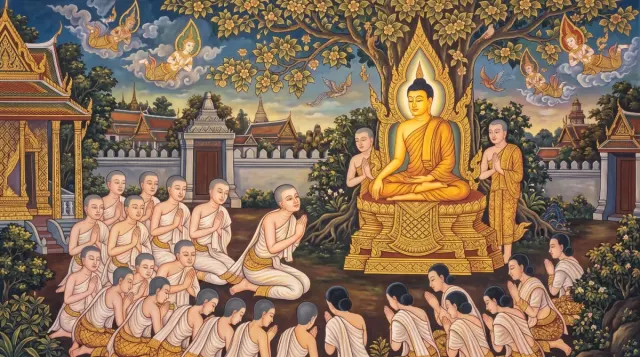
Mahāpajāpatī Gotamī asked that women be allowed to go forth and was refused. She shaved her head, put on ochre…