
Exposition of the Suddhaṭṭhaka Sutta: Morning Omens Don't Purify the Mind
SuddhaṭṭhakasuttaniddesoThe Mahāniddesa's explanation of the Suddhaṭṭhaka Sutta lists beliefs that seeing certain birds, hearing certa…


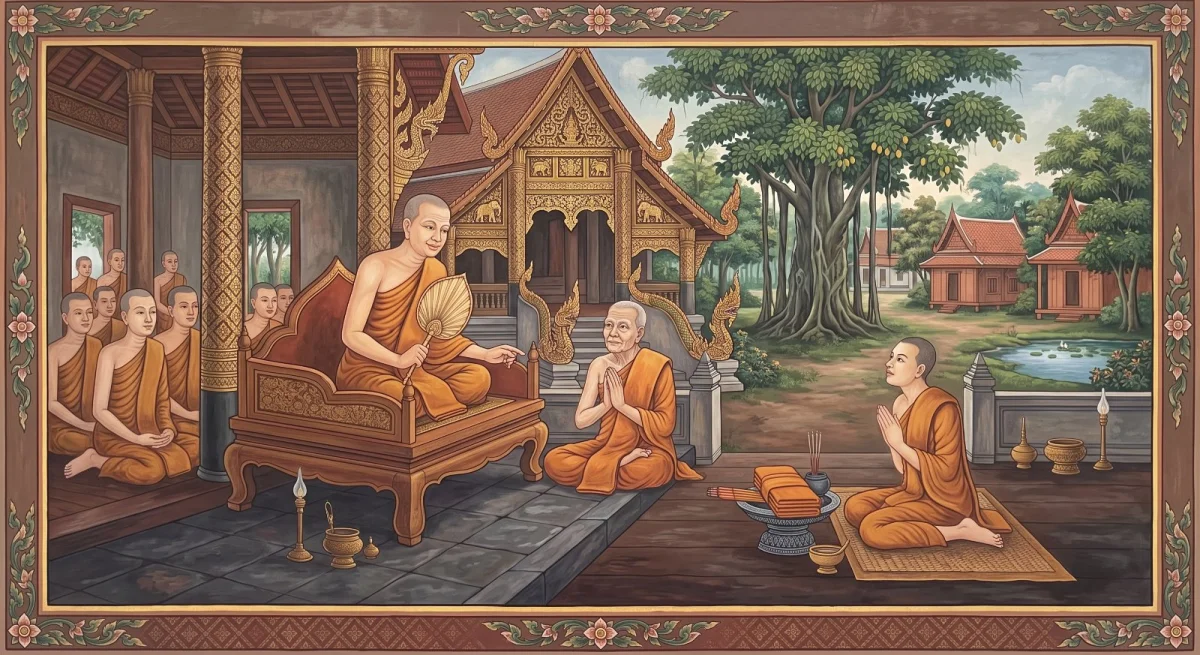
Kaṃ kālaṃ dhammo na caritabbo
The Buddha allowed monks to spend the rains with cattle herders, a caravan or on a boat, but forbade places with no shelter from sun and rain or that made people think them strange. He forbade a rule against going forth during the rains after Visākhā asked when the Dhamma should not be practised, and ruled an offence for Upananda, who promised the king to spend the rains in one place and then stayed elsewhere to get more robes.
In the Rains-Residence Chapter of the Mahāvagga in the Vinaya Piṭaka, the closing section gathers cases about where to spend the rains and about promising to stay. Some monks were travelling with cattle herders, caravans or boats as the rains began; the Buddha allowed them to spend the rains with these groups. But when monks spent the rains in a tree hollow, on a tree platform, in the open, in a charnel hut, under a sunshade or in a large jar, and people criticised them or they suffered, he forbade it.
The Saṅgha in Sāvatthī had made a rule that no one could go forth during the rains. Visākhā's grandson asked to go forth and was told to wait until the rains ended. When the time came he no longer wanted to. Visākhā criticised them: "At what time should the Dhamma not be practised?" The Buddha then forbade such rules.
In another case, Upananda the Sakyan promised King Pasenadi of Kosala to spend the rains at a certain residence, but on the way saw two residences with plenty of robe-cloth and spent the rains at both instead. The king criticised him. The Buddha rebuked Upananda, pointing out that he had criticised lying in many ways, and then set out case by case when accepting such a promise is broken and when it is not.
A monk wished to spend the rains with cattle herders; the Buddha allowed it. When the herders moved on, he allowed going with them. When monks near the start of the rains were about to travel with a caravan or by boat, he allowed spending the rains with the caravan and on the boat.
If life keeps you moving — shift work or travel — you don't have to drop the practice you've committed to. Adapt its form to the situation instead.
A monk spent the rains in a tree hollow and people said he was like a goblin; on a tree platform, like a deer hunter; in a charnel hut, like a corpse-burner; under a sunshade, like a cowherd; in a large jar, like a follower of another sect. The Buddha forbade all of these; a monk who spends the rains in such places commits an offence of wrongdoing.
Strictness so odd that those around us misunderstand it helps no one. Choose ways of practising that are simple and that ordinary people can understand.
Monks spent the rains in the open and ran to the foot of trees or under eaves when it rained. Monks without lodging spent the rains and suffered from cold and heat. The Buddha forbade spending the rains in the open and forbade entering the rains without a lodging.
Before committing to something long, like further study or sustained practice, get the basic supports in place first. Resolve with no shelter often collapses halfway.
The Saṅgha in Sāvatthī made a rule against going forth during the rains, so Visākhā's grandson was told to wait. When the rains ended and the monks called him, he said he would have been delighted then, but would not go forth now. Visākhā criticised them: at what time should the Dhamma not be practised? The Buddha forbade making such a rule; whoever does commits an offence of wrongdoing.
When someone wants to start something good, don't let rules made for our own convenience make them wait until their heart goes out of it. If you can accommodate them, open the way now.
Upananda promised King Pasenadi to spend the rains at one residence. On the way he saw two residences with plenty of robe-cloth, thought he would get much cloth by staying at both, and did so. The king criticised him: had not the Blessed One criticised lying? The Buddha convened the Saṅgha, questioned Upananda and rebuked him.
When you've agreed to help or taken on someone's work and a better-paid job comes along, don't quietly drop the first. If you really must change, go back and talk to the person you promised first.
The Buddha ruled that a monk who promised to spend the rains somewhere and then stayed elsewhere for robe-cloth, or who arrived, set up his lodging and left that day or a few days later without returning, has no recognised start to his rains and commits an offence of wrongdoing because of the promise. The fault is twofold: the rains do not count, and the word given is broken.
When reviewing yourself, ask two separate questions: did the work get done, and is the word I gave others still kept? Sometimes the work succeeds but our word is already broken.
If a monk stays two or three days, then leaves on business allowed for up to seven days and returns within seven days, his rains are recognised and the promise is not broken. But if he stays away beyond seven days, even on business, it is broken. If he leaves on urgent business when seven days remain before the Invitation, whether he returns or not, his rains are recognised and the promise is not broken.
When you need leave or a delay, give a clear time frame and come back as promised. Flexibility with a set return keeps your word intact.
This section shows two principles that look opposed but go together. On one side, the Vinaya is flexible with real life: those who must travel with a caravan or a boat can still keep the rains. On the other, once you've given your word, you must keep it; changing because you see a better offer counts as breaking it.
In daily life this applies to appointments, accepting work, or agreeing to help someone. The form can adapt to circumstances, but a promise shouldn't be dropped just because a better offer comes along.
Visākhā's question still applies: a group rule made for convenience should be reconsidered if it makes people who want to do good wait until their inspiration fades.
Tap to read the actual passage on the page cited.
The Mahāniddesa's explanation of the Suddhaṭṭhaka Sutta lists beliefs that seeing certain birds, hearing certa…

Monks lived in the forest, went for alms and walked up and down intending that people would esteem them. The B…

Waste tipped over the wall onto a passer-by's head, waste dumped into a neighbour's rice field, and relieving …

Apadānas of those who offered lamps, torches, flowers and incense, with the line repeated in nearly every one …