
The Walking Meditation Sutta and Related Discourses: People Gather by Disposition
Dhātusova bhikkhave sattā saṃsandanti samentiBeings come together according to their elements: those of low disposition associate with the low, those of go…


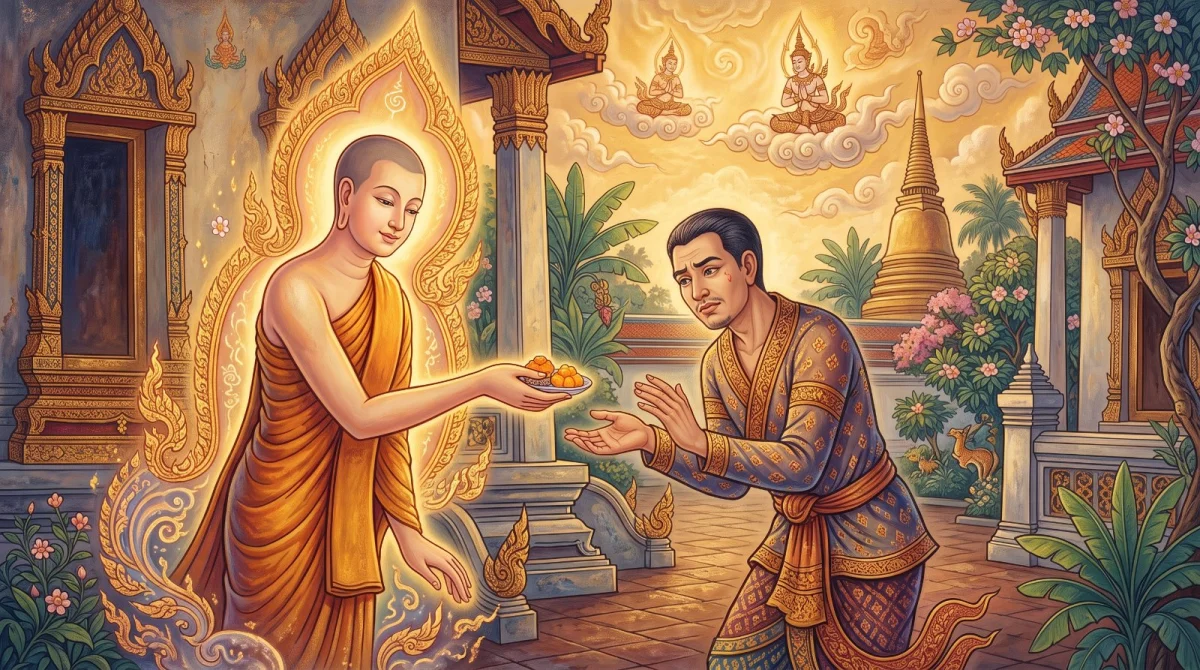
Sahatthā khādanīyaṃ vā bhojanīyaṃ vā dadeyya
Ānanda hands out cakes to the poor at the Buddha's word, but three times gives one female wanderer two cakes thinking it is one, and those nearby tease her. In another episode, an ascetic given a large lump of rice speaks of the giver with contempt. This is the origin of the rule forbidding monks to hand food with their own hand to ascetics of other sects, while still allowing it to be given through others or set down.
In the Vinaya Piṭaka, Mahāvibhaṅga part 2, the Pācittiya section, Acelaka chapter, rule 1 tells that while the Buddha was staying at the Gabled Hall in the Great Wood near Vesālī, the Saṅgha received a great deal of cakes. Ānanda told the Buddha, who said to give the cakes to those who eat leftovers, that is, people who live on scraps. Ānanda seated them in order and gave one each, but gave a certain female wanderer two cakes thinking it was one, three times over. The other female wanderers teased her, asking whether the ascetic was her lover. She said no, he gave two thinking it was one.
In another episode, a monk mixed rice with plenty of ghee and gave a large lump to an Ājīvaka ascetic. The Ājīvaka told a friend he got it from the feeding of the ascetic Gotama, that shaven householder. Lay followers who overheard asked the Buddha that the venerable ones not give to these ascetics with their own hands. The Buddha taught the lay followers the Dhamma, then convened the Saṅgha and laid down this rule.
This is a rule for monks that arose from relations between ascetic groups in ancient India. It is not a teaching to shun people of other religions, and the non-offence clauses still allow a monk to have someone else give, or to set the food down.
When the Saṅgha had many cakes left over, the Buddha told Ānanda to give them to those who eat leftovers. Ānanda seated everyone in order and gave one each. The giving began from compassion and was well organised.
When handing things out to many people, set the order and each portion clearly before you start. It prevents both chaos and a sense of unfairness.
Ānanda gave the same female wanderer two cakes thinking it was one, three times. The other female wanderers teased her, asking whether the ascetic was her lover. She answered truthfully that he was not; he had simply taken two by mistake. But those around her kept teasing.
When distributing things, count and double-check, especially when the recipient is someone others are watching. A mistake repeated with the same person tends to be read into far too much.
A monk mixed rice with plenty of ghee and gave a large lump to an Ājīvaka. When a friend asked where he got it, the Ājīvaka answered with a contemptuous remark about the Buddha, saying he got it from the feeding of that shaven householder. The text tells only this; it does not say all Ājīvakas thought that way.
When you help someone and hear that they speak badly of you, treat it as information about how to help from now on, without giving up kindness towards people in general.
The lay followers said these ascetics wanted to disparage the Triple Gem and asked that the venerable ones not give to them with their own hands. The Buddha first instructed and gladdened them with a Dhamma talk, then convened the Saṅgha. The text does not record what he taught, so we should not guess.
When someone brings a complaint in an emotional state, listen and help them settle first, then decide on any rule in the proper forum.
In this rule the text sets out the ten reasons in full, such as for the comfort of the Saṅgha, for the faith of those without faith, for the growth of faith in those who have it, and for the lasting of the true Dhamma. The rule thus looks to how the surrounding community understands things.
When an organisation sets a new rule, give the reasons too. People will understand what it is for and apply it correctly.
The rule forbids a monk to give fresh or cooked food to a naked ascetic, a male wanderer or a female wanderer with his own hand. But the non-offence clauses exempt having someone else give it, setting it down for them, and giving something for external use such as ointment. The prohibition concerns how things are handed over, not cutting off help.
If giving in person might cause gossip or misreading, use a neutral method instead, such as setting things out for everyone to take or giving through a central distribution point.
The two cakes are a small thing that people meet often. A small mistake repeated with the same person can lead others to invent a story, even when the giver meant nothing at all.
The large lump of rice teaches that kindness given does not guarantee the receiver will speak well of us. What we can control is giving in a way that is clear, fair and leaves no room for misunderstanding.
The exemptions are worth noting. The Vinaya does not close off sharing; it changes how things are handed over. In daily life we can do the same: give through a central system, set things out for everyone to take, or have someone else distribute them when giving with our own hand might be misread.
Tap to read the actual passage on the page cited.
Beings come together according to their elements: those of low disposition associate with the low, those of go…
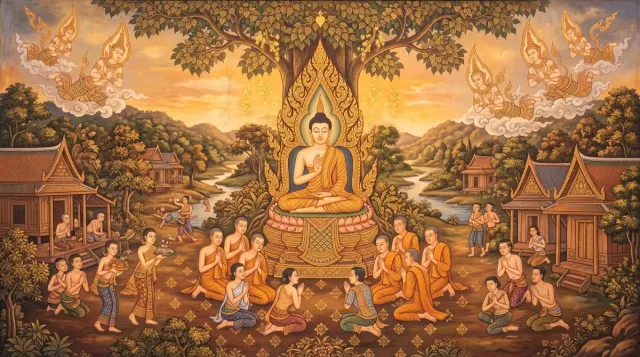
The four debates opening chapter eighteen answer the view that the Buddha did not really stand in the human wo…

The mayhaka bird sits in a fig tree full of ripe fruit crying "Mine, mine!" while other birds eat and fly away…

Apadānas of a physician who treated an ailing monk, a man who offered myrobalan as medicine, one who gave a fi…