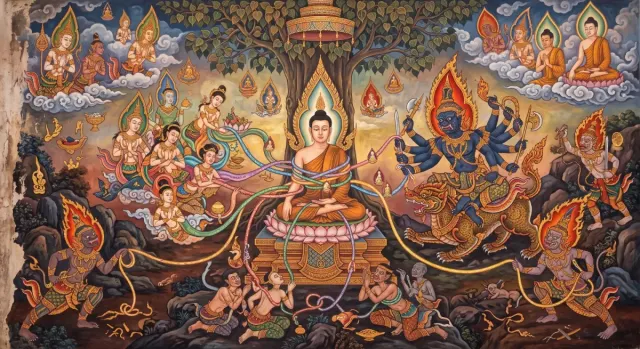
The Upādiya Sutta: Cling and You Are Bound by Māra
Upādiyamāno bandho mārassaA monk asks for a teaching in brief so he can go and practise alone. The Buddha gives the shortest possible an…


Samatho ca vipassanā ca
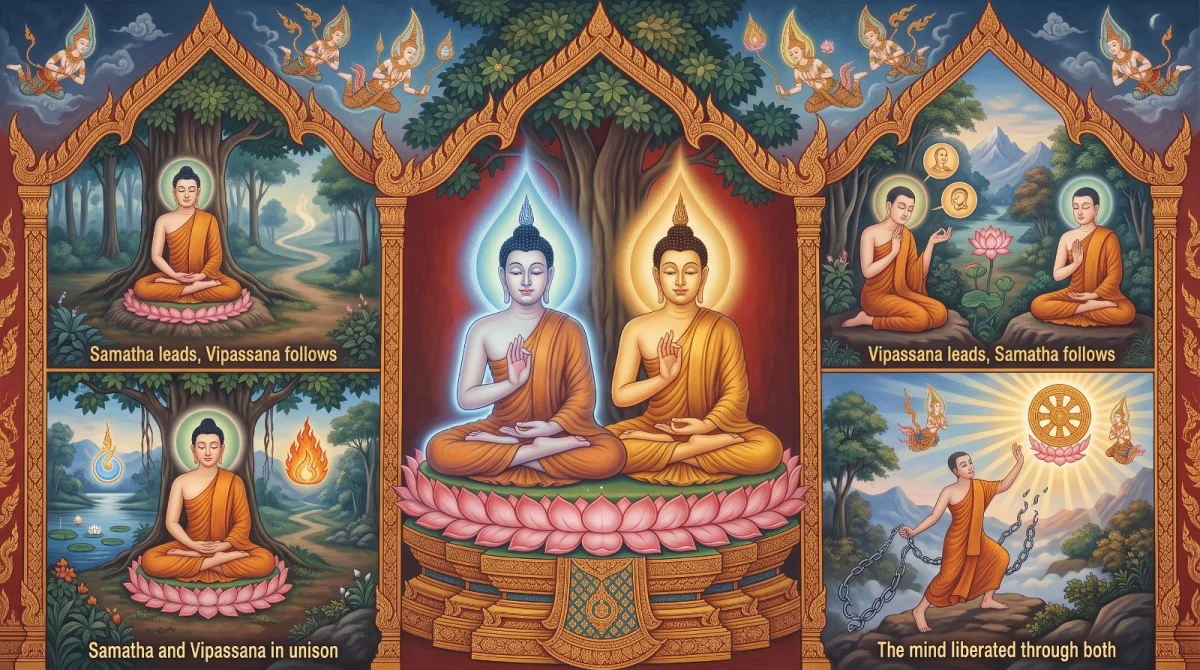
Calm and insight must go together — four paths Ānanda said those who attained awakening came by. There is no single right way for everyone.
Samatha is the calm, steady composure of the mind; vipassanā is wisdom that sees formations clearly as they are. In the Asura Vagga of the Book of Fours, the Buddha divides people into four types: those with inner calm but not insight, those with insight but not inner calm, those with neither, and those with both. He teaches that whoever lacks one should go to someone who has it and ask how.
Ānanda said that every monk or nun who declared arahantship in his presence came by one of four paths, which Sāriputta explains in detail in the Yuganaddha-kathā of the Paṭisambhidāmagga.
"Yuganaddha" means yoked together, like two oxen under one yoke that must move in step to plough the field.
First making the mind calm and steady, then using that steady mind to see the rise and fall of formations. Developing it this way, the path arises.
Suits those whose minds calm easily. Start with mindfulness of breathing until the mind is still, then shift to observing the changes in the breath or in feelings.
First seeing the impermanence of things; from that seeing, the mind releases and calm and steadiness follow.
Suits those who like to reflect. A mind that sees "this too will pass" sets things down and calms by itself, without forcing.
Developing calm and insight at the same time, alternating and supporting each other within each session.
In each sitting, when scattered, return to calm; when calm, observe change. There's no need to split it into two fixed phases.
The mind is disturbed by restlessness arising from experiences in practice — such as excitement at what one sees or understands — but when it settles and becomes steady within again, the path arises.
When a new insight or unusual experience arises in meditation, don't get excited by it. Note it and return to calm. Real understanding becomes clearer when the mind is still.
This answers a question practitioners often argue about: "Do I have to do concentration first, or go straight to watching the mind?" According to the teaching, either works depending on temperament — but in the end both are needed.
Notice which side you lack. If your mind calms easily but new understanding rarely arises, you may need more reflection. If you can reflect a lot but your mind is still restless, you may need more calm. Look for a teacher or good friend strong in the side you lack.
Tap to read the actual passage on the page cited.
A monk asks for a teaching in brief so he can go and practise alone. The Buddha gives the shortest possible an…
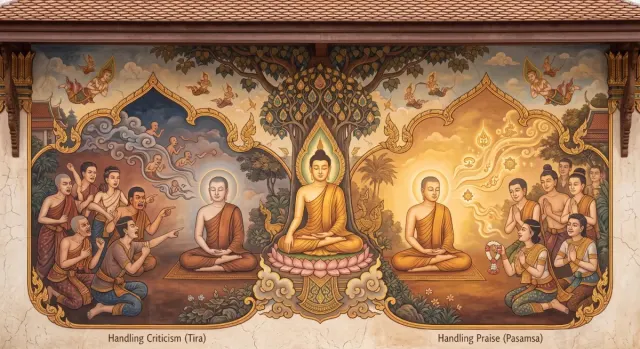
A teacher disparages the Triple Gem while his pupil praises it. The Buddha teaches the monks not to be angry w…
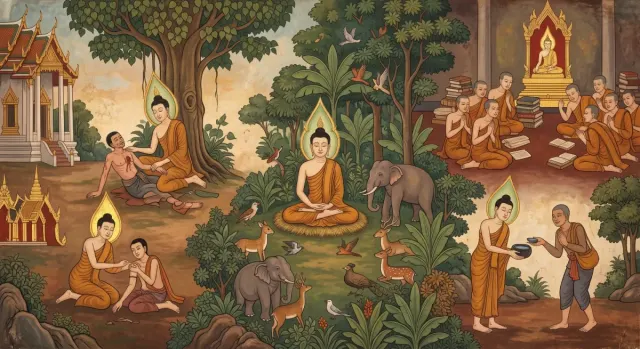
Nanda asks whom people call a sage: one with knowledge, or one with a strict way of life? The Buddha says it i…

King Makhādeva asks his barber to tell him when a grey hair appears, then hands over the kingdom, instructs hi…