
The Mother-Supporter Jātaka: The Elephant Who Could Not Eat While His Mother Suffered
MātuposakajātakaṃAn elephant who looks after his blind mother is captured to be a royal elephant, but will not take food becaus…


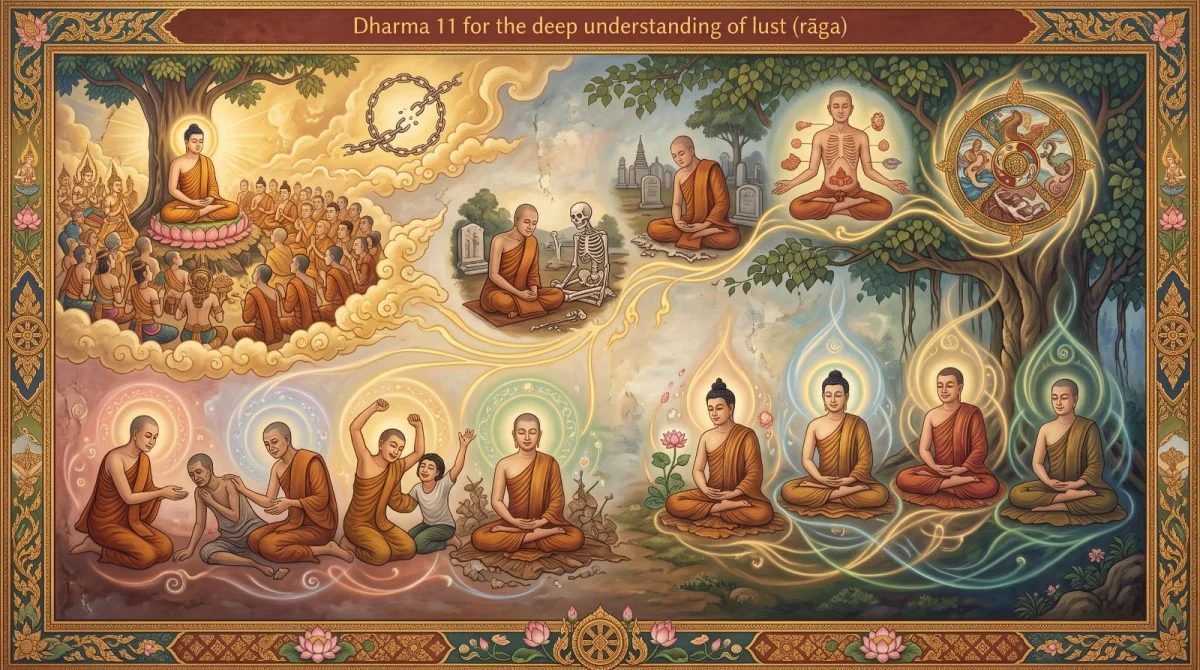
Rāgassa bhikkhave abhiññāya ekādasa dhammā bhāvetabbā
The last section of the Aṅguttara Nikāya gives eleven things for understanding lust: the four absorptions, the heart's release through love, compassion, rejoicing and equanimity, and three formless attainments. It follows the simile of the cowherd who sees impermanence in the senses, and ends with the number of suttas in the whole collection.
In the section not included in the fifties at the end of the Book of Elevens of the Aṅguttara Nikāya, the Buddha begins with the simile of a cowherd with eleven factors, who is unable or able to make his herd thrive. In the same way, a monk with eleven qualities is unable or able to contemplate impermanence, suffering, not-self, ending, vanishing, fading, cessation and relinquishment in the eye, ear, nose, tongue, body and mind and all related to them.
He then says eleven things should be developed for direct knowledge of lust: the first, second, third and fourth absorptions; the heart's release through love, compassion, rejoicing and equanimity; and the dimensions of infinite space, infinite consciousness and nothingness. They should also be developed to abandon many other defilements.
The section closes by stating that the Aṅguttara Nikāya contains 9,557 suttas. Compared with the matching section at the end of the Book of Tens, which relies mainly on perceptions and the ten kinds of rightness, this one relies mainly on calm and expansive states of mind.
A cowherd who doesn't know the form of his cattle, doesn't dress wounds, doesn't know the watering place, milks them dry and so on, eleven factors in all, cannot make his herd thrive. A monk lacking eleven qualities cannot contemplate impermanence and the rest in the sense bases, consciousness, contact, feeling, perception, intention, craving, thought and examination.
Watching the mind is like tending animals: know it, and dress small wounds before they spread, such as noticing irritation early instead of waiting until it explodes.
The first four of the eleven are the first, second, third and fourth absorptions. This section only names them and does not describe their factors. This point is for overall understanding.
Start with what you can do, such as sitting quietly following the breath for a few minutes a day. A little calm shows that happiness doesn't have to come from things we buy.
The fifth and sixth are the heart's release through love and the heart's release through compassion.
When you want something you don't need, turn your mind to someone who is struggling and help them a little. A mind turned towards others is often lighter of its own craving.
The seventh and eighth are the heart's release through rejoicing and the heart's release through equanimity.
When a friend gets something good or succeeds, practise being truly glad for them instead of wanting it too. For what you can't control, practise equanimity.
The last three are the dimension of infinite space, the dimension of infinite consciousness and the dimension of nothingness. The list has three formless levels and does not include the dimension of neither perception nor non-perception. This point is for overall understanding.
If you haven't trained in deep concentration, simply understand that the mind can become much subtler and wider, and coarse craving grows lighter as it does.
These eleven should be developed for the direct knowledge, full understanding, abandoning and relinquishing of lust, and of hatred, delusion, anger, hostility, contempt, rivalry, envy, stinginess, deceit, boastfulness, obstinacy, aggression, conceit, vanity and heedlessness. This list in the Book of Elevens lacks arrogance (atimāna), differing slightly from the one at the end of the Book of Tens.
If anger or envy is your main problem, love and rejoicing in this set are the most direct tools. Practise first with the person who irritates you least.
After this teaching the monks rejoiced in the Buddha's words, and a closing note says the Aṅguttara Nikāya contains 9,557 suttas; in Pali it is a verse counting nine thousand suttas, five hundred more, and fifty-seven. This point is for overall understanding.
The numbered teachings in the Aṅguttara are many. You don't need to know them all; choose a few that fit your life now and actually practise them.
The absorptions and formless attainments belong to deep concentration practice, which takes time and a skilled teacher. Most people need not aim for that level yet, but the main principle applies: a mind that is calm and content from within hungers less for things outside.
The four divine abidings can be used right away. Love, compassion, rejoicing in others' happiness and balanced equanimity widen the heart, leaving less room for narrow craving.
This section also serves the overall picture: the whole Aṅguttara Nikāya ends with understanding and abandoning defilements, not with gaining something more.
Tap to read the actual passage on the page cited.
An elephant who looks after his blind mother is captured to be a royal elephant, but will not take food becaus…

A family that has become wealthy won't last long for four reasons: not looking for what is lost, not repairing…
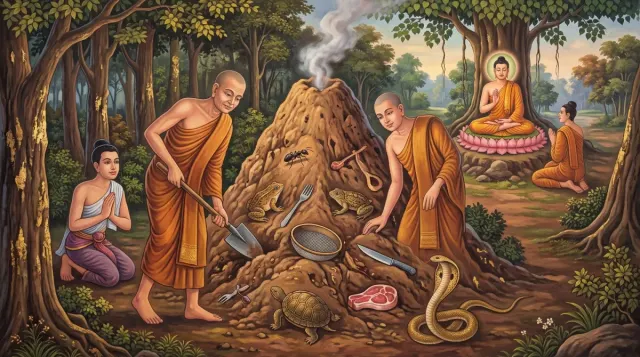
A deva poses a riddle of an ant-hill that smokes by night and blazes by day, to be dug with a tool until a nāg…
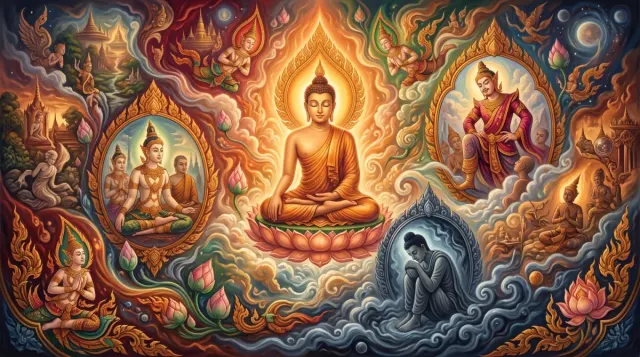
Inner pleasure and pain arise dependent on the eye, ear, nose, tongue, body and mind, and the sense "I am bett…