
The Discourse on Fearlessness: Who Fears Death and Who Does Not
AbhayasuttaṃThe brahmin Jānussoṇi held that no one is unafraid of death. The Buddha says some fear it and some do not. Fea…


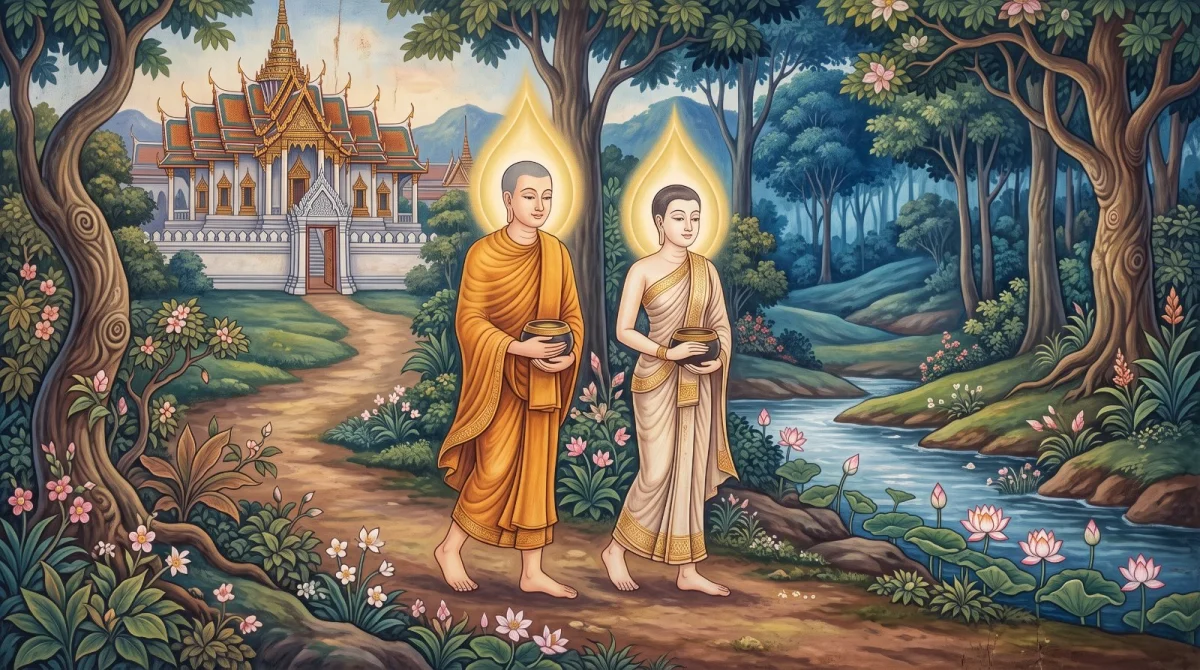
Bhaddakāpilānītheriyāpadānaṃ
The nun Bhaddā Kāpilānī tells of travelling through many lives beside the man who would become Mahākassapa, like a shadow following a body: rejoicing in the single cloth her husband gave, frankly admitting her own anger and making amends, until in their final life both were moved on seeing small creatures devoured because of their household's work, and went forth together.
In Bhaddā Kāpilānī's Apadāna, in the Kuṇḍalakesa chapter of the Therī-apadāna in the Khuddaka Nikāya, the nun Bhaddā Kāpilānī relates that in the time of the Buddha Padumuttara she was the wife of a merchant named Videha. Hearing the Buddha appoint a disciple as foremost among those who observe the ascetic practices, the merchant gave offerings for seven days and aspired to that position, and the Buddha predicted he would become the disciple Kassapa. After the Buddha's final passing the two built a stupa and honoured it with lamps, and then travelled together through many lives.
In her final life her husband was born as the brahmin Pippalāyana and she as the daughter of the brahmin Kapila in Sāgala in the Madda country. The verses mention a golden image and say that her father gave her to Kassapa, who shunned sensual pleasures (the Thai translation used here renders it as offering a cast image to the Buddha Kassapa). The commentary adds that neither wished for household life, and even after marrying they did not live as husband and wife.
Most scholars place the Apadāna in a later stratum, while the Theravāda tradition counts it as the word of the Buddha. This story stands out because she recounts her own past mistake frankly, together with how she put it right.
After the Buddha Padumuttara's final passing, the merchant Videha gathered relatives and friends to build a jewelled stupa. She had craftsmen make a great many lamp bowls filled with scented oil to light in homage, and gave to the Saṅgha as she was able all her life. The two made merit together and went to a good destination together, and she travelled through heavens and human lives with him like a shadow following a body.
If you have a partner or close friend, find one good deed to do together regularly, such as making offerings or volunteering once a month.
In the time of the Buddha Vipassī her husband was a brahmin rich in virtue but poor. Having heard the Dhamma, he gave away his upper cloth, came home wearing only his lower cloth, and asked her to rejoice. Joining her palms she said: the cloth was well given to the Buddha. (The Thai translation used here says the brahmin was wealthy, but the Pāli says he was very poor.)
When someone in your household gives or helps others to the point of some hardship for yourselves, first appreciate the intention, then talk calmly about managing money.
In one life a dispute arose at home over food given to a paccekabuddha. She grew angry, threw the food away, and gave him the bowl filled with mud. She tells this herself, without hiding it.
If you once did something bad in anger, tell the story honestly to yourself or someone you trust, without blaming others. That is the first step of change.
She saw a face that remained evenly calm through giving, receiving, disrespect and offence, and she was deeply moved. She took the bowl back, washed it with scented water, filled it with ghee and sugar and offered it with a trusting heart. She relates that giving brought her beauty, while that wrong deed brought an unpleasant body odour, until later she offered a golden brick soaked in perfume at the shrine of the Buddha Kassapa and was freed from that fault.
When you know you have done wrong, don't stop at feeling guilty; set it right as soon as possible with better action, such as apologising and making good the damage.
The two were born together again in many lives and attended on paccekabuddhas. In the life when her husband was King Brahmadatta, they supported paccekabuddhas in the royal park, built shrines, then both went forth, developed the immeasurables (boundless loving-kindness, compassion, gladness and equanimity), and were reborn in the Brahma world.
Before sleep, try spending a minute radiating loving-kindness together with those at home, an easy mind-training to share.
In the final life Pippalāyana went to inspect the fields and was moved on seeing creatures pecked and eaten by crows and other birds. She, seeing sesame put out to dry in the sun at home and the worms in it eaten by crows, was likewise moved.
Look at how your work or consumption affects other living beings, and reduce that impact where you can, such as wasting less or choosing products that harm fewer animals.
Pippalāyana went forth and she followed, living five years among wandering ascetics. When Gotamī had gone forth, she went to her, was instructed by the Buddha, and soon attained arahantship. She exclaimed: how good is the friendship of the glorious Kassapa!
Think of one person who once led you towards the good and thank them today; if they are no longer living, do a good deed and dedicate it to them.
She says that Kassapa, son and heir of the Buddha, knows his past lives, sees heaven and the states of loss, has reached the end of birth and possesses the three knowledges. Just so, Bhaddā Kāpilānī has the three knowledges and bears her last body. Seeing the danger in the world, both went forth; they are free of taints, tamed, cooled and at peace.
A good relationship need not keep the same form forever. If both people grow in goodness and still respect each other, that is the success of the relationship.
Bhaddā Kāpilānī's story is a picture of a relationship in which two people help each other towards the good. She rejoiced when her partner gave, admitted it when she herself was angry and did wrong, and when her partner went forth she chose the same path.
Notably, the sense of urgency in her final life did not come from some great event, but from seeing small creatures devoured because of her own household's work. This sensitivity to the effects of our actions applies to everyday living.
Her exclamation about the blessing of a good friend reminds us to thank those who lead us towards the good, and to try to be such a person for others.
Tap to read the actual passage on the page cited.
The brahmin Jānussoṇi held that no one is unafraid of death. The Buddha says some fear it and some do not. Fea…

Instead of suppressing bandits by punishment, the chaplain advised the king to give seed to farmers, capital t…

Three origin stories about anger: answering a simple question with a curse of hell, beating oneself and weepin…
Two consecutive debates in chapter 3. One side holds that a mind with lust is liberated, and that a mind alrea…