Five Wrong Trades
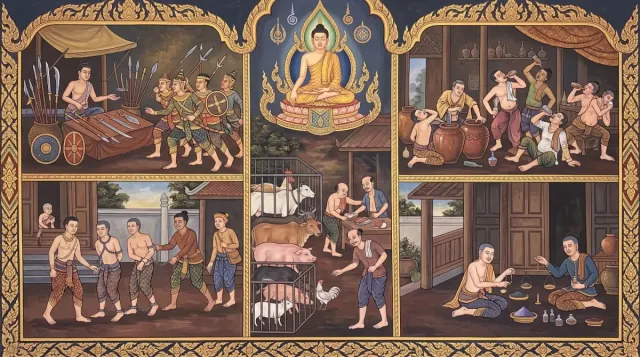
Pañca vaṇijjā upāsakena akaraṇīyāFive kinds of trade a lay follower should not engage in — weapons, human beings, meat, intoxicants and poison …


Soṇātheriyāpadānaṃ
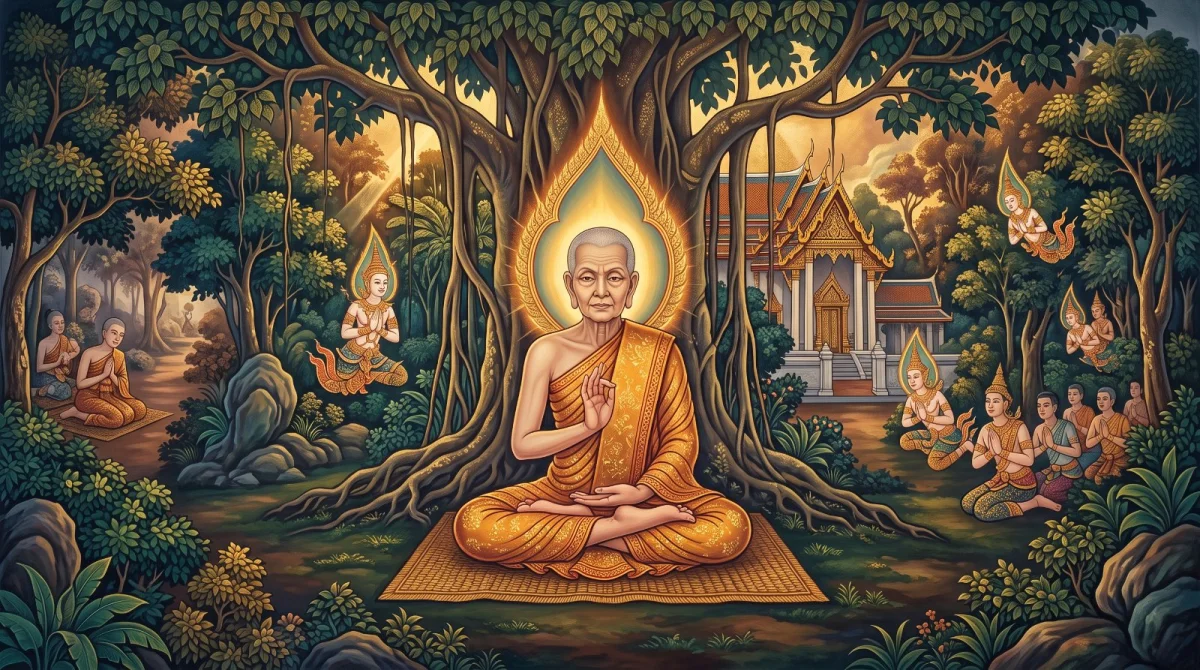
The nun Soṇā had ten sons, but her husband took all of them with him into the monastic life against her wishes. Alone, she felt life had no point, and decided to go forth as well. Left behind to heat water, she settled her mind in contemplation and attained arahantship. The Buddha said that one day lived with firm effort is better than a hundred years of laziness.
In Soṇā's Apadāna, in the Kuṇḍalakesa chapter of the Therī-apadāna in the Khuddaka Nikāya, the nun Soṇā relates that in the time of the Buddha Padumuttara she was born into a wealthy merchant family. Hearing the Buddha praise a nun as foremost in arousing energy, she paid him honour and aspired to that position.
In her final life she was born into a wealthy merchant family in Sāvatthī, married, and had ten sons, all dear to her. Later, against her wishes, her husband went forth in the Buddha's teaching together with all ten sons. Left alone, she felt that she had had enough of life, and decided to go forth after them. The nuns left her alone at the residence and told her to heat water. She set the pot of water on the stove, sat down, settled her mind, contemplated the aggregates, and attained arahantship.
The Therīgāthā commentary tells the story somewhat differently: she divided her wealth among her children, who then failed to care for her, and she went forth when already old. This page follows the verses of the Apadāna. Most scholars place the Apadāna in a later stratum, while the Theravāda tradition counts it as the word of the Buddha.
In the time of the Buddha Padumuttara she was a merchant's daughter dear to her father. Hearing the Buddha praise a nun as foremost in arousing energy, she was glad, paid him honour and aspired to that position. The Buddha rejoiced, saying her aspiration would succeed.
Choose one quality you want to grow this year, such as perseverance, and find a real person who embodies it as an inspiration.
In her final life she was born into a wealthy merchant family in Sāvatthī, married, and bore ten sons, all handsome and living happily, liked even by enemies, and so all the dearer to her.
Love and care for your children fully today, but also gradually build your own life and interests, for the day they must follow their own path.
Then, against her wishes, her husband went forth in the Buddha's teaching together with all ten sons. Left alone, she thought she had had enough of life, now that husband and sons had left her.
When life changes without your choosing, for example children moving far away or a partner changing course, accept that it is all right to grieve, and tell someone you trust how you feel.
She thought: where my husband has gone, there I will go too. With this thought she went forth, and her sorrow became the start of a new path.
In a time of emptiness, find one good thing to become part of, such as a club, volunteer work or a meditation group, rather than staying alone with your thoughts.
The nuns left her alone at the residence and went to receive instruction, telling her to heat water. She fetched water, poured it into a pot, set it on the stove, sat down, and began to settle her mind right then.
Ordinary tasks such as boiling water, washing dishes or waiting for a bus can be times to train mindfulness: know the breath or the movements while you do them.
She contemplated the aggregates as impermanent, suffering and not-self, ended all the taints and attained arahantship. When the nuns returned and asked for hot water, she resolved on the fire element and heated the water at once. Astonished, the nuns reported this to the Buddha.
When grieving over something that has changed, try seeing that the feeling itself also arises and changes; it is not something that stays forever.
Delighted, the Buddha spoke the verse: better than a hundred years lived lazy and of weak energy is a single day of one who arouses firm energy (the Thai translation used here renders it as a thousand years). She pleased the Buddha with her good practice, and he declared her foremost among nuns who arouse energy.
If you feel you have wasted a lot of time, don't calculate how much time is left; ask what one good thing you can do fully today.
Soṇā's story is about someone whose life changed without her choosing. The family that had been the centre of her life went away, yet she did not stay stuck there. She found a new place, and began her effort with a simple task like heating water.
Feeling that life has no meaning after a loss deserves attention. If that feeling becomes so heavy that you think of harming yourself, talk to someone close or call the Thai mental health hotline 1323; outside Thailand, contact a local helpline.
For anyone who feels it is too late, this story says that one day lived with real resolve has value. There is no need to wait for everything in life to be ready before starting.
Tap to read the actual passage on the page cited.
Five kinds of trade a lay follower should not engage in — weapons, human beings, meat, intoxicants and poison …

Apadānas of people who gave small everyday things that met a real need: needles for sewing robes, a clay bowl …

The eye, ear, nose, tongue, body and mind are an ocean with waves, whirlpools and sea monsters; one who crosse…

For those standing in mid-stream as a fearful flood arises, overwhelmed by aging and death, what island can th…