
Niddesa on the Pasūra Sutta: An Anatomy of Arguing to Win
PasūrasuttaniddesoThe Niddesa sets out every stage of a person who enters a debate to win: the anxiety before it starts, the emb…


Taṇhāvaggo
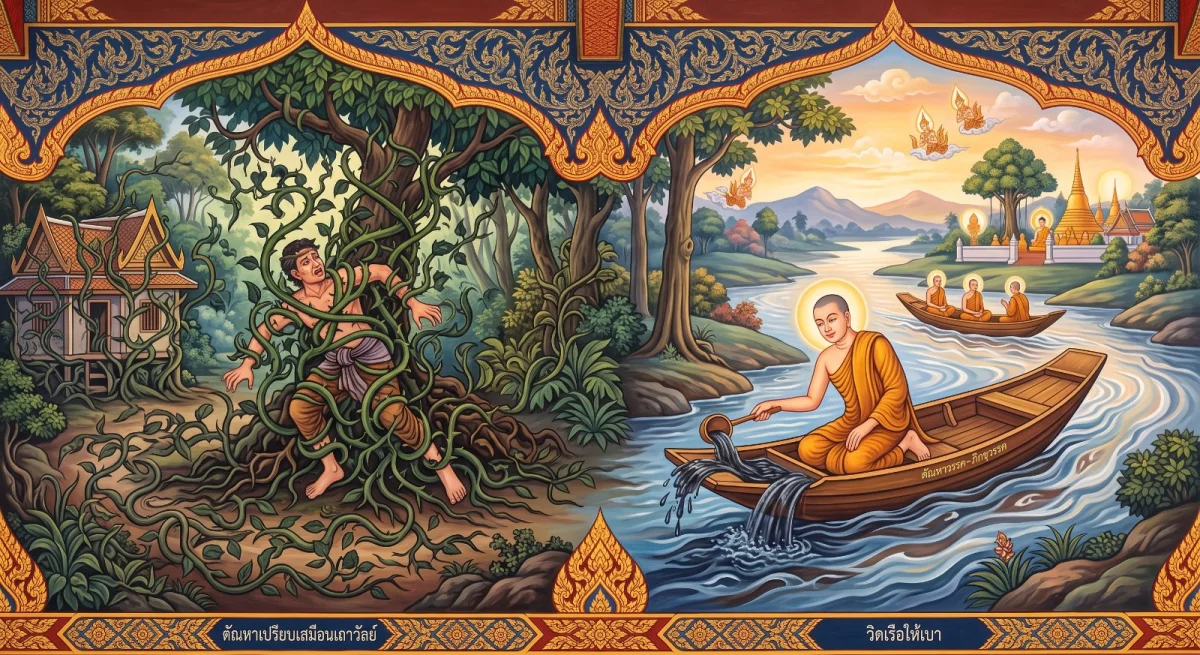
Key verses from Dhammapada chapters 24–25: craving grows like a māluvā creeper; a tree with its roots intact grows back; beings run along craving like a spider on its own web; the gift of Dhamma surpasses all gifts; restraint of hand, foot and speech; and bail out the boat so it goes swiftly.
In the Dhammapada of the Khuddaka Nikāya, chapter 24 is the Taṇhāvagga (craving) and chapter 25 the Bhikkhuvagga (the monk).
The Taṇhāvagga uses many images from nature to show how craving grows, binds and returns. The Bhikkhuvagga describes the qualities of one in training: restraint of the senses, contentment with what one receives, and admonishing oneself. Although its verses address monks, most of the principles can be applied by lay people.
Background stories and explanations of some images come from the Dhammapada Commentary and are labelled where mentioned.
In a person who lives heedlessly, craving grows like a māluvā creeper. He drifts from life to life like a monkey seeking fruit in the forest. Whoever is overcome by this craving, sorrows grow for him like grass after rain. But whoever overcomes this craving, so hard to get past, sorrows fall from him like drops of water from a lotus leaf.
Notice how a small want, like "just one more video", keeps winding on like a creeper. Set a stopping point before you start, for example with a timer.
As a tree cut down grows again if its roots are undamaged and firm, so this suffering springs up again and again while the underlying craving is not rooted out. So he urges digging up craving by the root, as one who wants the fragrant root digs up the grass whole.
When a habit you gave up for a while comes back, look for its root, such as stress or loneliness that lets it regrow, and tend to that root as well.
Those infatuated with lust fall back into the stream of craving, as a spider runs along the web it has made. The wise cut this bond too and, free of longing, abandon all suffering. The same chapter says the wise don't call bonds of iron, wood or grass strong; infatuation with jewellery and concern for children and wife are the strong bonds, seemingly loose yet hard to undo.
Thoughts that loop, such as resentment towards someone you dislike, are often a web you keep spinning yourself. When you notice the loop, stop adding a new strand by returning to the breath or to what you're doing.
The gift of Dhamma surpasses all gifts; the taste of Dhamma surpasses all tastes; delight in Dhamma surpasses all delights; the destruction of craving overcomes all suffering. The Dhammapada Commentary says this was the answer to four questions that Sakka brought to the Buddha because the devas could not settle them.
The gift of Dhamma in daily life can be recommending a good book or sharing what helped you through hard times, with someone ready to listen, without pushing.
Restraint of eye, ear, nose, tongue, body, speech and mind is good. One restrained in hand, restrained in foot, restrained in speech, fully restrained, delighting within, composed, solitary and content is called a monk. When a monk who guards his mouth, speaks wisely and is not restless explains the meaning and the Dhamma, his words are sweet.
When angry, start restraint with what you can physically control: the hand about to type a reply and the mouth about to speak. Let ten breaths pass.
One should not despise what one has received, nor go about envying what others receive. A monk who envies others' gains does not attain concentration. A monk who, though receiving little, doesn't despise it, living purely and not lazy, is praised even by the devas.
Before comparing your salary, home or car with someone else's, write down three things you have and genuinely use today.
Bail out this boat, monk; emptied, it will go swiftly. Having cut off lust and hatred, you will reach nibbāna. The Dhammapada Commentary explains that the boat stands for this individual existence and the water for unwholesome thoughts.
When life feels heavy, bail out one bucket at a time: cancel an unnecessary appointment, unfollow an account that irritates you, or put down one old grudge.
Admonish yourself by yourself; examine yourself by yourself. A monk who guards himself and is mindful will live happily. Oneself is one's own refuge; oneself is one's own destination. Therefore restrain yourself, as a merchant looks after a fine horse.
Before sleeping, ask yourself two short questions: what did I do today that I shouldn't have, and what will I do differently tomorrow? Don't wait for someone else to point it out.
The Taṇhāvagga doesn't tell us to hate desire or suppress ourselves harshly, but invites us to see how it works: it grows when we're heedless, winds round the mind like a creeper, and comes back if the root remains.
The Bhikkhuvagga offers the opposite tools: restraint, contentment with what we have, and admonishing ourselves. All of these work in ordinary life.
The verse calling concern for children and wife a bond means the clinging that keeps the mind from being free. It doesn't teach lay people to abandon their duties to their families.
Tap to read the actual passage on the page cited.
The Niddesa sets out every stage of a person who enters a debate to win: the anxiety before it starts, the emb…
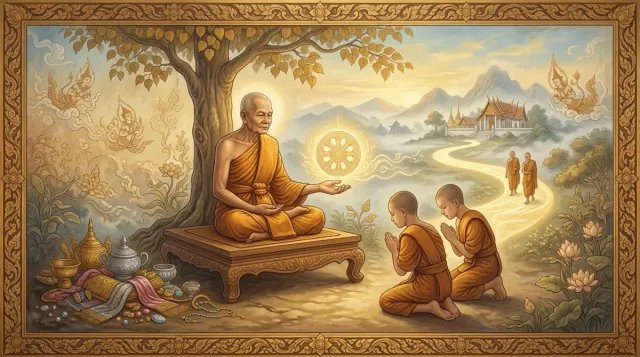
The Buddha wanted his disciples to inherit the Dhamma, not gain and honour — and Sāriputta lists sixteen defil…
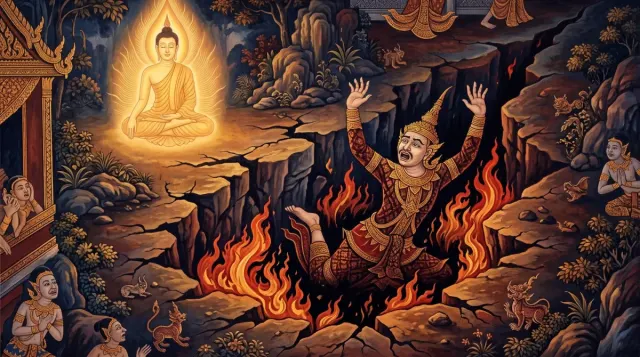
Devadatta gains lavish support from Prince Ajātasattu and then wants to lead the Saṅgha. Refused, he nurses a …
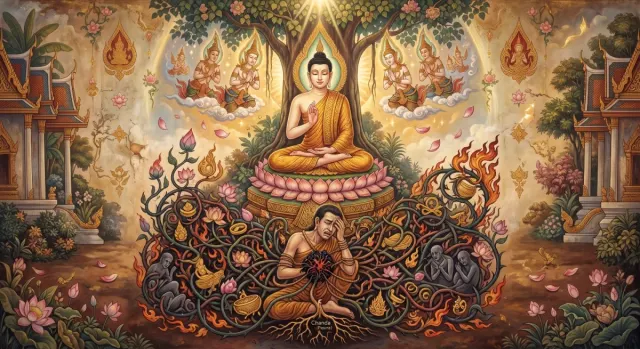
A headman asks the Buddha to explain the arising and ending of suffering. Instead of speaking of the past or f…