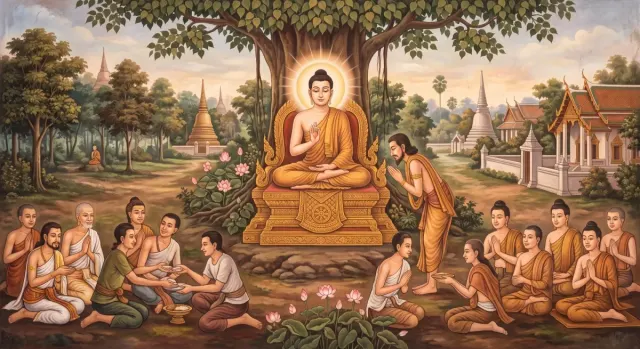
The Discourse to Sundarika Bhāradvāja: Ask Not About Birth, Ask About Conduct
SundarikabhāradvājasuttaṃA fire-worshipping brahmin wants to offer the rice left over from his ritual but first asks the Buddha about h…


Janavasabhasuttaṃ
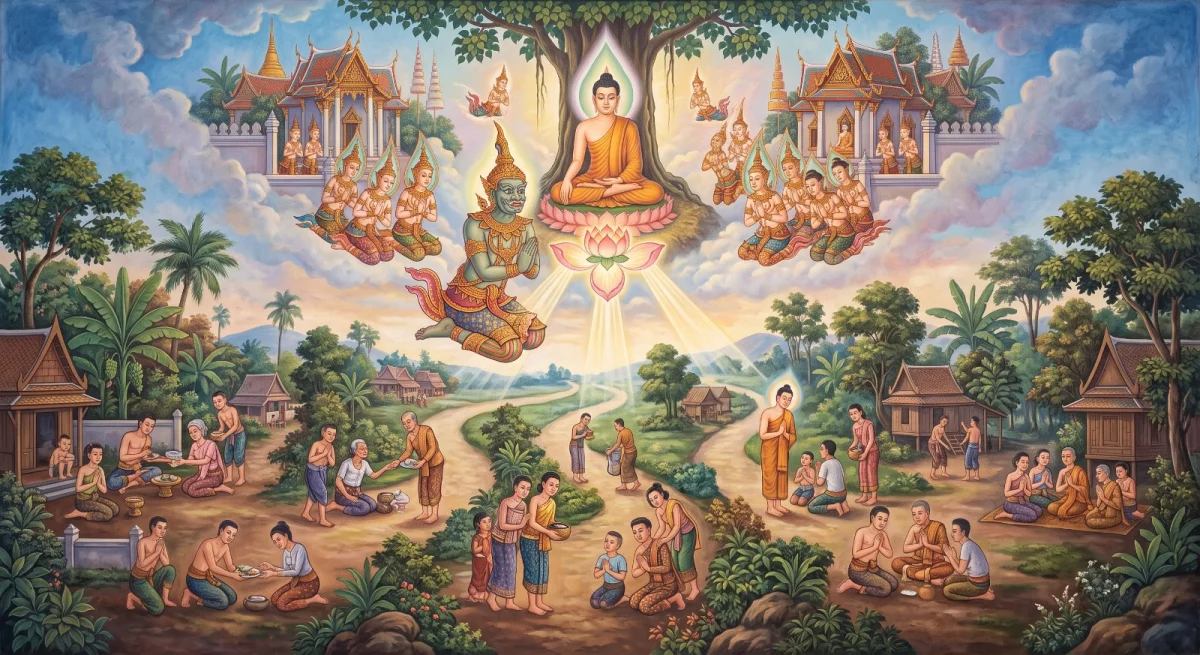
Ānanda worries that the deceased lay followers of Magadha have not been spoken of, so the Buddha considers their destinations. He then relates the words of the spirit Janavasabha, who reports the teaching of Brahmā Sanaṅkumāra: three openings to happiness, mindfulness established internally and externally, and the seven requisites of concentration.
In the Janavasabha Sutta of the Dīgha Nikāya (Mahāvagga), the Buddha is staying at Nādika and declares the destinations of lay followers in various lands who have passed away, and the people of Nādika are delighted. Ānanda then thinks of the lay followers of Magadha, who were many, long-standing and devoted to the Triple Gem, including King Bimbisāra, who ruled righteously and praised the Buddha to the very end, yet nothing has been declared about them. Ānanda hints at this to the Buddha.
The Buddha takes the matter to heart and considers it carefully. He then relates that a spirit named Janavasabha appeared, said he was Bimbisāra, and reported the teaching Brahmā Sanaṅkumāra had given in the assembly of the Tāvatiṃsa gods.
The parts about gods and realms are only summarised here. This page focuses on the practical teachings: the three openings to happiness, the four establishments of mindfulness that begin internally and give rise to knowledge of others externally, and the seven requisites of concentration, which are the first seven path factors surrounding right concentration.
Ānanda reflected that many devoted Magadhan lay followers of complete virtue had died, yet nothing had been declared about them. If it were declared, many people would gain confidence, and the Magadhans might feel hurt that they had been left out. After his almsround, the Buddha sat down, attended to the matter and considered it fully with his mind.
In your team or family, look for someone who quietly does good but is never mentioned, and bring it to the attention of those who should know, as Ānanda did.
Janavasabha said that since the day he gained deep confidence in the Buddha, he had long known himself not to fall into lower realms, and he hoped to become a once-returner. This knowledge of his attainment came from nowhere but the Buddha's teaching.
Confidence isn't a passing excitement. Measure it by what has actually changed in your life since you began studying and practising.
Someone lives entangled with sensual pleasures and mixed up with unwholesome states. Later they hear the noble ones' Dhamma, attend wisely and practise in line with the Dhamma, and so live free of sensuality and unwholesome states. Happiness arises, and a gladness greater than happiness follows. Sanaṅkumāra says this is an opening the Buddha discovered for reaching happiness.
Try giving up one stimulus you know leads you astray for a week, such as scrolling your phone before bed, and notice the lightness that arises instead.
Someone's coarse bodily, verbal and mental activities have not calmed. Relying on hearing the Dhamma, wise attention and practice, those coarse activities calm down, and happiness and a gladness greater than happiness arise.
Notice your own coarseness today, such as hurried movements, a loud voice or a busy mind, and deliberately reduce one at a time.
Someone does not truly know: this is wholesome, this is unwholesome; this is blameworthy, this is blameless; this should be cultivated, this should not; this is inferior, this is superior. When through hearing the Dhamma and practising they come to know it clearly, ignorance is abandoned and knowledge arises, and happiness and gladness arise.
When you're unsure about something, write two columns: what harm it brings and what benefit. Clarity itself is a kind of ease.
A monk contemplates the body in the body internally, ardent, clearly comprehending and mindful. When his mind becomes concentrated and clear in that contemplation, knowledge and vision arise regarding the bodies of others externally. The same is true for feelings, mind and phenomena.
Once you see anger or fear clearly in your own mind, it becomes easier to understand others who are angry or afraid. Look at yourself first before judging others.
Unification of mind surrounded by right view, right intention, right speech, right action, right livelihood, right effort and right mindfulness is called noble right concentration. Each factor gives rise to the next, followed by right knowledge and right liberation. Sanaṅkumāra says that because this Dhamma is well taught, the doors to the deathless are open.
If your mind won't settle in meditation, look back at the surrounding factors, such as your speech and actions during the day. Concentration doesn't arise only on the cushion.
The story opens with Ānanda's small act of care for ordinary people nobody mentioned, and the Buddha doesn't brush it aside but considers it seriously. This is a model of caring for a community in which no one is left feeling forgotten.
The three openings answer a question many people have: where does the happiness of Dhamma practice come from? When we listen to the Dhamma, attend wisely and practise accordingly, life loosens from sensuality and unwholesome states, coarse body, speech and mind grow calm, and we know clearly what is good and what is not. Each stage brings happiness, followed by a gladness even greater than that happiness.
Tap to read the actual passage on the page cited.
A fire-worshipping brahmin wants to offer the rice left over from his ritual but first asks the Buddha about h…
Upāli asks what a monk who wants to reprove another should first have in himself. The Buddha tells him to exam…

General Sīha of Vesālī asks whether there are fruits of giving that can be seen in this life. The Buddha says …

Illness and feelings can arise from eight causes, and past kamma is only one of them — the Buddha rejected the…