
The Connected Discourses on Monks: Short Stories of the Elders
BhikkhusaṃyuttaṃShort stories of several elder monks: Moggallāna and noble silence, Sāriputta who would not grieve even if the…


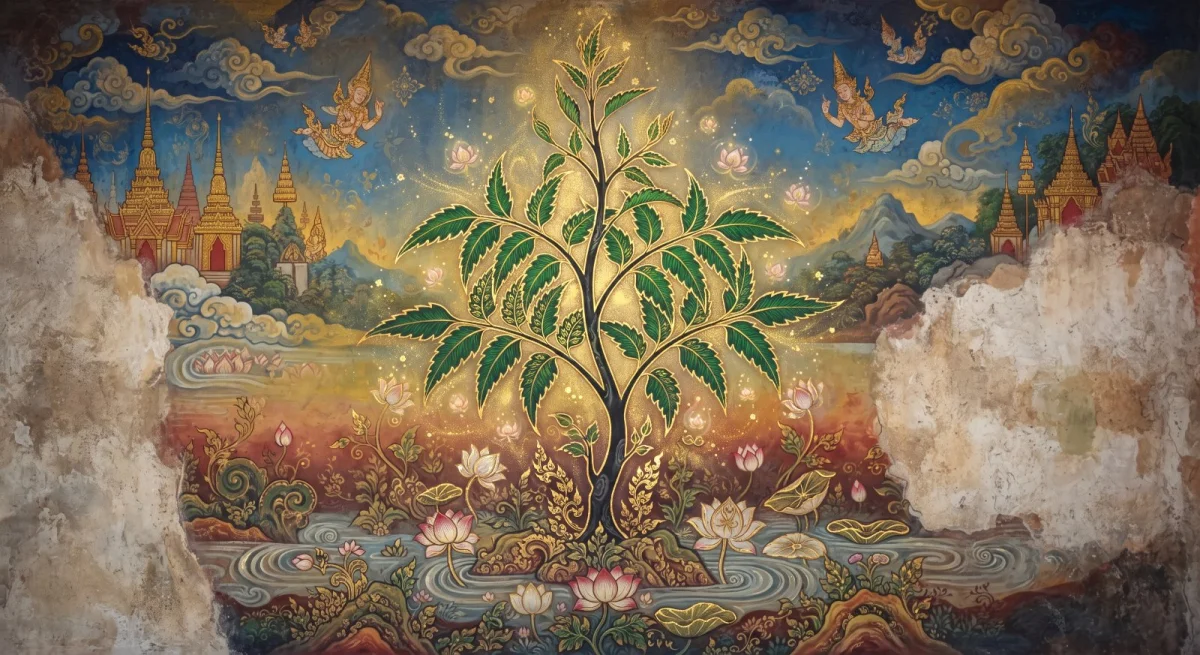
Ekapaṇṇo ayaṃ rukkho
A tree with just one leaf on each side, not four inches above the ground, already tastes like poison; how bitter will it be when grown? A hermit uses this neem sprout to teach a violent-tempered prince that bad habits should be corrected while they are still small.
In the Ekapaṇṇa Jātaka of the Ekanipāta in the Jātaka, Khuddaka Nikāya, there is a single verse: this tree has only one leaf, not four inches above the ground, yet it tastes like poison; what will it be when it is grown?
The story comes from the commentary. The Bodhisatta was a hermit staying in the royal park of the king of Bārāṇasī. The king's son, Duṭṭhakumāra, was fierce and harsh, and no one could teach him, so the king entrusted him to the hermit. Walking in the park with the prince, the hermit found a neem sprout that had just put out one leaf on each side and had the prince chew a leaf. The prince spat it out and said that even this small it was like poison, and when grown it would surely kill many people. He pulled it up, crushed it and spoke the verse.
The hermit then pointed out that the people of the kingdom might think the same of the prince: so fierce even as a boy, what will he be like when grown? They might refuse to let him rule. The prince changed his ways and became patient, kind and considerate. According to the commentary, the Buddha told this story when he transformed a fierce Licchavi prince in Vesālī with a single admonition.
The verse says the little tree tastes like poison. The commentary explains that even while the tree is this small, its leaves are already this bitter.
Notice small habits you tend to let slide, such as harsh words when irritated. Something small that can already hurt others won't stay small as it builds up.
The verse says the tree is not yet four inches above the ground, with just one leaf on each side. At this point it can still be pulled up by hand.
When you notice a bad pattern starting, such as using your phone late into the night or putting work off, correct it in the first week rather than waiting until it becomes a habit.
The verse ends with a question: what will it be when grown? The commentary explains that if this tree grew up it could harm many people.
Before excusing a bad habit of your own, imagine continuing it for another five years and ask what your life and relationships would look like.
In the commentary, the hermit doesn't begin by criticising. He has the prince chew the neem leaf and judge the tree himself, so the prince grasps the lesson through his own words.
When you need to warn someone, try starting with a question or an example they can answer for themselves, instead of giving them the conclusion straight away.
In the commentary, the hermit tells the prince that just as he treated the neem sprout, the people might think of him: so fierce even as a boy, how could they rely on him when grown? And they might not let him rule.
When you judge someone by their habits, turn the question around: which of your habits might the people around you be viewing the same way?
The commentary says the hermit taught the prince to give up being like the neem tree and to be endowed with patience, kindness and consideration. The prince changed accordingly and later became king.
Dropping an old habit works better when a new one takes its place, such as replacing an instant retort with one slow breath before you answer.
In the commentary's present-day story, the Buddha taught the fierce Licchavi prince that a harsh-spoken person is not loved even by mother and father, children and spouse, siblings or friends; an angry person looks dull even when finely dressed; one should be kind and gentle towards all beings.
If people at home start going quiet or avoiding conversation with you, look back at your tone and words over recent times.
Small habits such as sarcasm, quick anger or little lies look harmless today, but repeated over and over they grow into habits that are hard to change and damage relationships. This Jātaka invites us to deal with them while they are still sprouts.
What should be uprooted is the habit, not the person. In the story, the hermit doesn't punish the prince, but helps him see himself through a judgement the prince made himself, and gives him a chance to change.
For parents and teachers, the story is a reminder that effective teaching often starts by letting a child see and feel things for themselves, rather than scolding.
Tap to read the actual passage on the page cited.
Short stories of several elder monks: Moggallāna and noble silence, Sāriputta who would not grieve even if the…

The nun Caṇḍakālī quarrels with other nuns and, in anger, declares that she renounces the Buddha, the Dhamma a…

A deva asks what one must slay to live happily. The Buddha answers: anger, with its poisoned root and honeyed …

Prince Pāyāsi held that there is no world beyond. Kumāra Kassapa answered with simile after simile. Pāyāsi adm…