
The Easy Patient, the Good Nurse, and Causes of Long Life
GilānavaggoThree sets of five from the Gilāna Vagga — qualities of a patient who is easy to care for, qualities of a good…


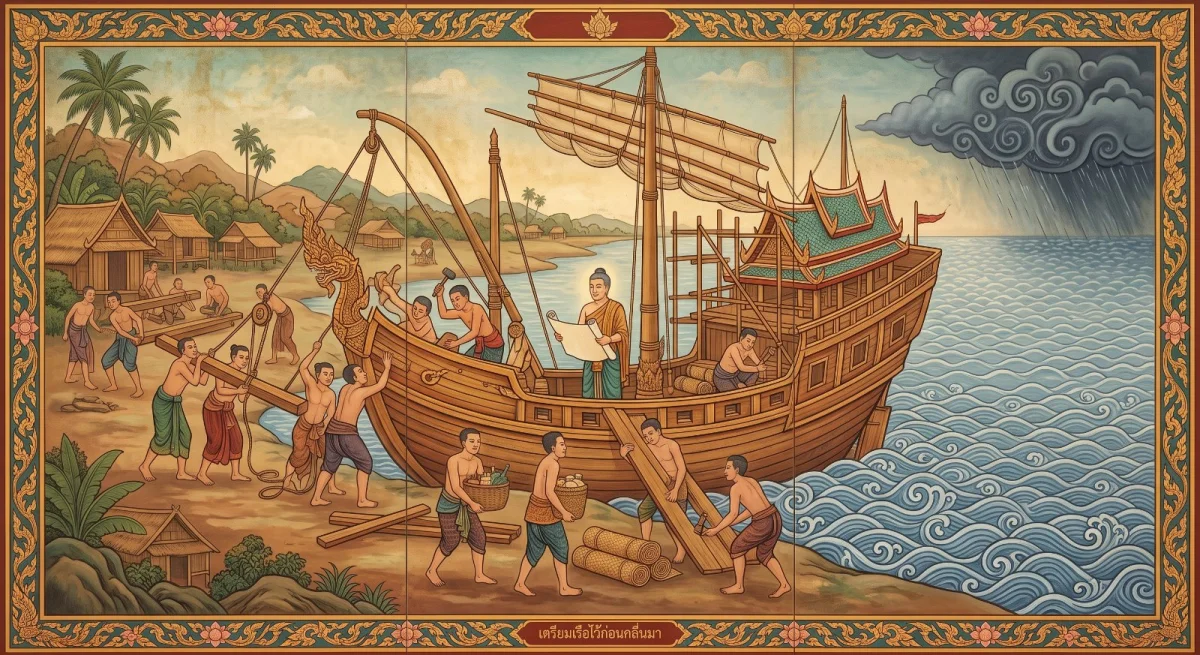
Samuddavāṇijajātakaṃ
Island settlers hear one deity warn that a great wave will flood the island and another say they are safe. The wise do not readily believe either, but build a boat without abandoning the island, while those attached to comfort prepare nothing. The verses teach doing in advance what must be done.
In the Samuddavāṇija Jātaka of the Book of Twelves in the Jātaka, Khuddaka Nikāya, the first verse is the voice of someone living on an island in the sea: people who must plough and sow for a living have no share in this island; our island is better than Jambudīpa. Then a voice warns that on the full-moon night a great wave from the sea will flood the island, so they should seek refuge elsewhere. But another voice says the wave will not come: do not fear, live joyfully with your children and grandchildren.
A wise man among the islanders says that the two deities contradict each other: one speaks of danger, the other of safety. Let everyone build a large, strong boat fitted with all its gear. If the warning is true, the boat is ready; if not, they need not abandon the island. He concludes that one should not readily take the first word as best, nor the later one; whoever examines and takes the middle reaches the highest place. The closing verses compare: the wise, seeing their future good, crossed the sea safely by their own deeds, while fools attached to taste sink when the moment arrives.
In the Tipiṭaka the Jātaka consists only of verses. The commentary adds that a thousand families of carpenters fleeing their debts found a fertile island, but later brewed liquor, drank and fouled the island, so the island's deities grew angry and planned to flood it. A righteous deity came to warn them, while a cruel deity came to say there was no danger. The foolish headman and his five hundred families believed the latter; the wise headman and his people prepared a boat and escaped, while those who did not prepare did not survive. The verses call them merchants, which the commentary explains as referring to their travelling in mid-ocean.
The first verse says that people who plough and sow for a living have no share in this island; our island is better than Jambudīpa. Contentment with what you have is good, but the commentary tells that this very comfort led the islanders to grow careless and break the agreement they should have kept.
When your job is secure and income good, that is the best time to build savings and develop skills, not the time to stop planning.
One voice warns that on the full moon a great wave will flood the island, so they should flee; another says it has seen many signs that the wave won't come, so there is no need to fear. The wise man sees that the two contradict each other — one speaks of danger, one of safety — and doesn't rush to judge.
When news sources or experts disagree, write down what each side says and how much you would lose if that side were right, before choosing to believe the one that feels more comfortable.
The wise man asks everyone to help build a large, strong boat with all its gear. If the warning is true, the boat will serve in time of danger; if it isn't, they need not leave the island. Preparing pays off either way.
Keep an emergency bag, savings for at least two or three months, or copies of important documents. These don't make life harder today, but they help a great deal on the day something happens.
The wise man says one should not readily take what was heard first as true, nor readily take what was heard later as true. The commentary explains that the foolish chose the later word because it seemed spoken out of kindness, while the first sounded as if spoken in anger.
Notice whether you believe a piece of information because of evidence, or because it tells you what you want to hear. Reassuring news needs checking just as much as worrying news.
The verse says that whoever examines and takes the middle reaches the highest place. The commentary explains this as weighing the earlier and later words closely and holding to what is truly certain — here, preparing the boat and then seeing what actually happens.
When you must make a big decision on unclear information, choose a path you can still adjust — for example, a small trial before investing fully — rather than committing everything to one side.
The verse says that fools, attached to taste through delusion, do not see their future good, and when the matter arrives they sink, as those people sank in mid-ocean. The wise, seeing their future good, do not let even a small benefit slip by.
If you find yourself putting off a health check, a roof repair or insurance because "there's no problem yet", put one of them firmly on your calendar this week.
The last verse teaches that the wise should do beforehand what must be done, so that the task does not oppress them when the time comes. The task does not oppress one who has already done it in advance.
Prepare presentations, annual tax filings or renewal documents a week before the deadline. The deadline itself won't turn into a day of rushing around.
This Jātaka is very close to life today. Every day we hear conflicting information about the economy, health, natural disasters and work. Some say there will be trouble; others say there is nothing to worry about.
The key lesson is not guessing who is right, but preparing so you are safe whichever way things turn out. Building the boat didn't force anyone to leave the island — just as emergency savings, insurance or a backup plan don't make life worse today.
The warning about attachment to comfort doesn't forbid enjoying what you have; it warns that comfort shouldn't make us stop looking ahead.
Tap to read the actual passage on the page cited.
Three sets of five from the Gilāna Vagga — qualities of a patient who is easy to care for, qualities of a good…

Four ways of practice — painful or pleasant, slow or quick to realise. All of them arrive; a difficult practic…

A father lost in grief for the grandfather came to his senses on seeing his son offer grass to a dead ox. The …

The monk Sāti believed the same consciousness wanders on through saṃsāra. The Buddha teaches that consciousnes…