The Discourse on the Cloak: Conduct the Wise Censure
BāhitikasuttaṃKing Pasenadi asks Ānanda what kind of bodily, verbal and mental conduct the wise would censure. The answer: c…


Mettagūmāṇavapucchā
Suffering arises from acquisitions (upadhi); the ignorant keep creating them and meet suffering again and again. The way across is to know the Dhamma visible here and now, be mindful, and dispel delight and attachment above, below and across the middle.
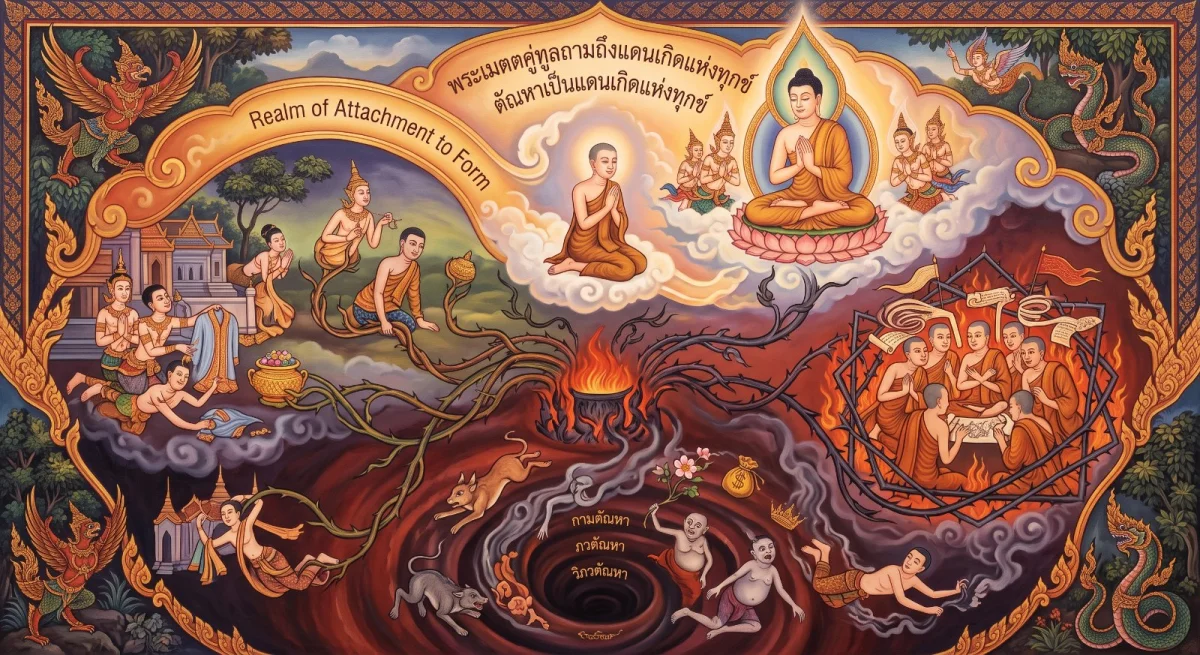
In the Pārāyana Vagga of the Sutta Nipāta, Khuddaka Nikāya, the young brahmin Mettagū is one of the brahmin Bāvarī's sixteen pupils who go to question the Buddha. He asks the most basic question: where does all the suffering in the world come from?
The Buddha says suffering arises with acquisitions (upadhi) as its cause; the ignorant create acquisitions and meet suffering again and again. Mettagū then asks how the wise cross the flood of birth, aging, sorrow and lamentation. The Buddha says he will teach a Dhamma visible here and now, not based on hearsay, which, once known, lets one who lives mindfully cross over the craving that spreads through the world.
He then teaches him to dispel delight and attachment towards whatever he knows — above, below, and across the middle — to give up the sense of "mine", and to abandon suffering in this very life.
The Buddha says the many kinds of suffering in the world arise with acquisitions (upadhi) as their cause. Upadhi are the things taken up that become a basis for suffering; the Niddesa explains that they include craving, views, defilements and kamma, among others.
When something makes you suffer, look for what you're clinging to in it — an image of yourself, an expectation, or the view that things must be a certain way.
One who does not understand creates acquisitions; such a fool meets suffering again and again. So one who understands, seeing birth as the source of suffering, should not create acquisitions.
Before taking on a new burden, making a big purchase or committing to something, ask whether it's truly necessary or just another hook for suffering.
When Mettagū asks how to cross birth, aging, sorrow and lamentation, the Buddha says he will teach a Dhamma visible here and now, evident to oneself, which, once known, lets one who is mindful cross over the craving that spreads through the world.
Test the teaching in real life. For example, watch for a week whether letting go of small cravings lightens your mind, rather than believing or dismissing it in advance.
He says: whatever you know, above, below and across the middle, dispel delight and attachment towards it, and consciousness will not stand in existence. The translation adds in brackets that above means the future, below the past, and the middle the present.
Notice whether your mind today is caught on the past (regret), the future (worry) or the present (possessiveness), and loosen one point at a time.
A monk who lives this way, mindful and heedful, having understood and given up the sense of "mine", would abandon the suffering of birth, aging, sorrow and lamentation right here in this life.
When something breaks or a plan fails, separate the feeling "my thing is ruined" from the fact "the thing is broken", and deal only with the fact.
Finally he says: the one you would know as a brahmin who has attained knowledge, owning nothing, not attached to sensual existence, has surely crossed this flood and reached the far shore, free of doubt and longing; he has crossed birth and aging.
Ask this when making a big decision: which option leaves me with fewer things to worry about, not more?
Mettagū's question is one everyone has asked: why does life never run out of suffering? The answer doesn't blame fate or other people; it points to what we take on ourselves as burdens. The more we cling to, the more places suffering has to take hold.
The strength of this teaching is that you can start at once, without waiting for a future life. The Buddha stresses that it is a Dhamma visible here and now, something you can observe in your own mind: when you cling less, does suffering really become lighter?
Loosening attachment doesn't mean dropping responsibility. You can still look after your work, family and property fully, just without carrying the sense of "mine" more heavily than you need to.
Tap to read the actual passage on the page cited.
King Pasenadi asks Ānanda what kind of bodily, verbal and mental conduct the wise would censure. The answer: c…

A monk holding a grudge refused to lend his travelling companion a water strainer, and the companion died. The…

If you can't yet read other people's minds, become skilled in your own — ten questions for checking the mind a…
Sensual, hostile and cruel thoughts don't arise out of nowhere but through a chain of causes. Failing to put t…