
The Discourses on Growth: Noble Growth in Five Ways, for Laymen and Laywomen Alike
Ariyāya vaḍḍhiyā vaḍḍhatiA disciple who grows in faith, virtue, learning, generosity and wisdom is said to grow in a noble way and to t…


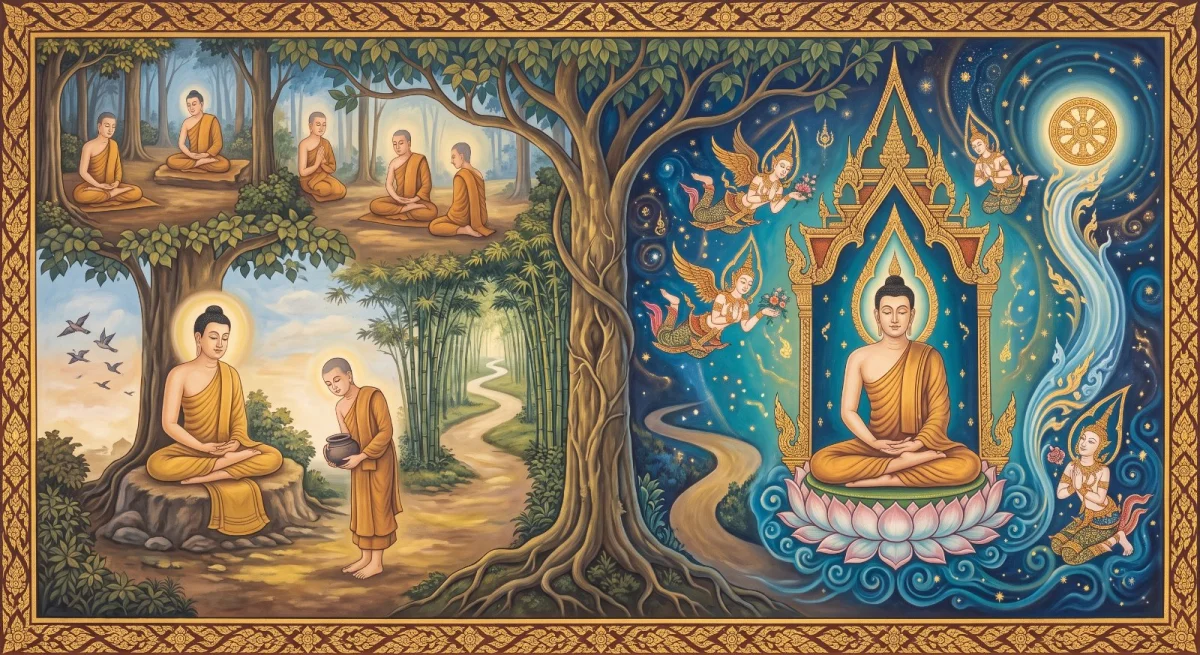
Sārīputto ca rāhulo
Two discourses side by side. The first explains why someone could not keep going and gave up the training; the second tells how the Buddha waited until the states ripening in freedom had matured in Rāhula, and only then took him into the forest to teach him.
In the Lokakāmaguṇa-vagga of the Saḷāyatana Saṃyutta, Saṃyutta Nikāya, two discourses stand next to each other: the Sāriputta Sutta and the Rāhula Sutta.
The Sāriputta Sutta begins with a monk telling Venerable Sāriputta that his pupil has given up the training and returned to lay life. Sāriputta answers briefly: so it is, friend, for one who is unguarded in the sense faculties, immoderate in eating, and not devoted to wakefulness. It is impossible, he says, for such a monk to live the holy life complete and pure for as long as life lasts. He then explains each of the three.
The Rāhula Sutta tells how the Buddha, while in seclusion, had this thought: the states that ripen in freedom have matured in Rāhula; let me lead him further to the destruction of the taints. In the morning he went for alms, and after the meal he called Venerable Rāhula to take a sitting cloth and come with him to the Blind Men's Grove. The discourse says several thousand deities followed, knowing what was about to happen.
The teaching in the forest is not a set of instructions but the same series of questions he always used, on the impermanence of the six sense bases. At the end, Rāhula's mind was freed from the taints by not clinging, and several thousand deities gained the vision of the Dhamma.
A monk comes to tell Venerable Sāriputta that his pupil has given up the training and returned to lay life. Sāriputta does not criticise the person; he names the causes, saying that this is what happens to one who lacks the three.
When someone leaves a team or abandons something they had set out to do, look for causes in the conditions before concluding that they were not serious.
Sāriputta names three: unguarded in the sense faculties, immoderate in eating, not devoted to wakefulness. He says it is impossible for such a monk to keep the holy life complete and pure for life, and possible for one who has all three.
Before blaming your own motivation, check three things: what you take in through your eyes, how much you eat, and how much you sleep. These drain willpower quietly.
On seeing a form with the eye, one does not grasp at its signs or features, but practises for the restraint of the eye faculty, since unrestrained it lets covetousness and grief overwhelm the mind. The same for ear, nose, tongue, body and mind.
When you are scrolling and start fixing on small details of an image or a phrase until your mood shifts, recognise that as grasping at features, and put it down.
One reflects wisely before eating: not for amusement, not for intoxication, not for beautification, not for adornment, but only to sustain this body, to remove old feeling and not arouse new feeling, for health, blamelessness and living at ease.
Before your next meal, ask one question: am I eating because I am hungry, or because I am bored, sad, or because it happens to be in front of me?
One purifies the mind of obstructions by walking and sitting through the day and the first watch of the night; in the middle watch one lies down on the right side, mindful and clearly comprehending, attending to the perception of rising; in the last watch one gets up and continues. This is a monastic observance; lay people take the principle, not the timetable.
Keep one period a day of full wakefulness, such as the first ten minutes after waking before touching your phone, and decide the night before when you will get up.
In seclusion the Buddha had this thought: the states that ripen in freedom have matured in Rāhula; let me lead him further to the destruction of the taints. This teaching came from an assessment of readiness, not from a schedule.
For the important thing you want to say to a child or a colleague, wait until they start asking. The same words at the right moment land very differently.
After the meal he called Venerable Rāhula: take a sitting cloth, we shall go to the Blind Men's Grove for the day's abiding. He sat at the root of a tree on the seat Rāhula prepared. The decisive conversation happened in a quiet place, not in the middle of the group.
For a conversation that really matters, choose the place and time: go for a walk, or find a quiet corner, rather than speaking over other work or in front of others.
At the end of the discourse Rāhula's mind was freed from the taints by not clinging, and the several thousand deities who had followed gained the dustless, stainless vision of the Dhamma: whatever is subject to arising is all subject to cessation.
When something is taught or shared at the right moment, those who benefit are often not only the person you meant to speak to.
The two discourses read well together, because they describe two ends of one line: someone who slowly runs out of strength and stops halfway, and someone who arrives because the conditions ripened.
Sāriputta's answer is striking in that it does not blame the pupil for weak resolve or lack of merit. It points to three very basic things: what comes in through the senses, how much one eats, and how one arranges waking hours. All three translate directly into modern life as screen time, food and sleep.
The Rāhula Sutta reminds teachers that timing matters as much as content. The Buddha did not give Rāhula this teaching on the first day; he waited until it was time. Parents, teachers and managers who push advice at someone not yet ready usually get less than those who know how to wait.
Tap to read the actual passage on the page cited.
A disciple who grows in faith, virtue, learning, generosity and wisdom is said to grow in a noble way and to t…

When a group of monks had quarrelled until everyone had committed many offences, dealing with each one could h…

The Buddha says intentional deeds done and accumulated do not come to an end without their results being exper…

Sakka offers the ascetic Akitti whatever boon he wishes, but Akitti asks for neither wealth nor heaven. Instea…