
The Velāma Discourse: The Ranking of Merit
VelāmasuttaṃThe greatest gift is still less fruitful than keeping the precepts; precepts less than loving-kindness for the…


Sakassa cittassa nimittaṃ
A skilled cook watches which flavours his master prefers; a skilled meditator watches his own mind. And when the mind is sluggish or scattered, the Buddha teaches directing it first to something that inspires confidence, then withdrawing it again.
In the Satipaṭṭhāna Saṃyutta of the Saṃyutta Nikāya (Mahāvagga, Ambapāli chapter), two discourses fit together well, since both teach adjusting meditation to the state of one's own mind.
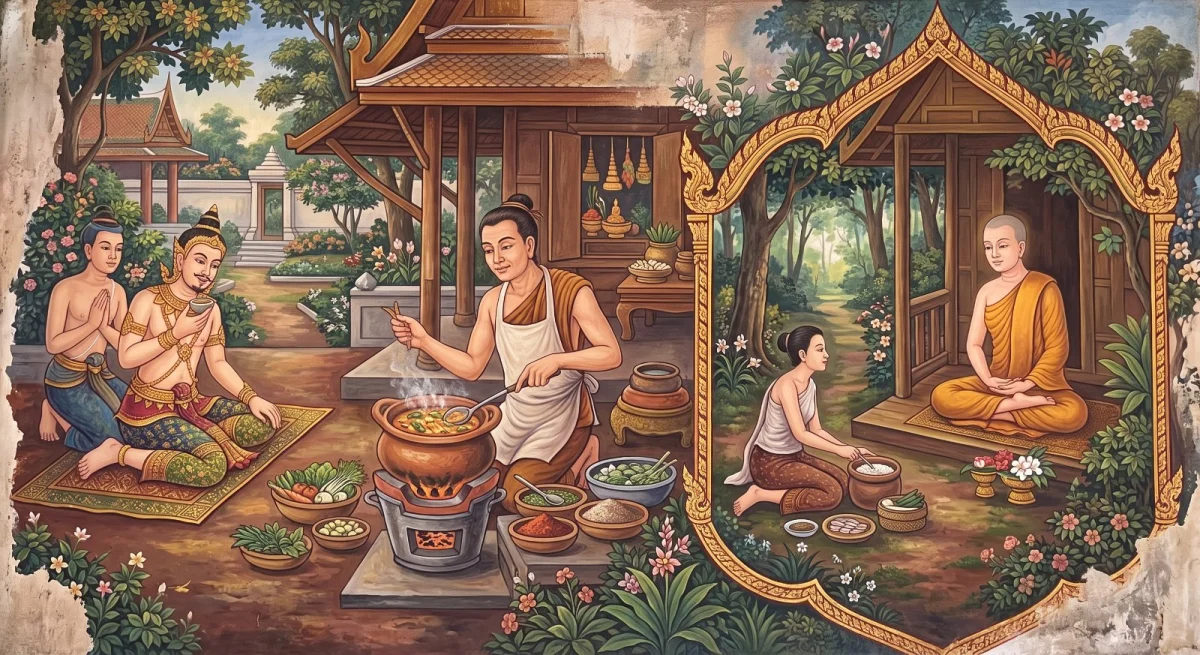
In the Sūda Sutta, the Buddha compares two cooks who serve a king or royal minister curries of many flavours: sour, bitter, pungent, sweet, salty and bland. The foolish cook doesn't notice which flavour his master likes, so he gets no clothing, wages or bonuses. The wise cook notices, and gets all three. So too, a monk who develops the foundations of mindfulness but doesn't notice whether the mind has become concentrated and the defilements abandoned gains neither a pleasant abiding nor mindfulness and clear comprehension.
In the Bhikkhunupassaya Sutta, Ānanda visits a nuns' residence. Several nuns tell him that those whose minds are well established in the four foundations of mindfulness perceive ever higher distinction. Ānanda reports this to the Buddha, who then teaches two kinds of development: directed development (paṇidhāya bhāvanā) and undirected development (appaṇidhāya bhāvanā).
The discourse ends: what a compassionate teacher should do for his disciples has been done. Here are the roots of trees, here are empty huts. Meditate, don't be negligent, lest you regret it later.
The foolish cook serves his master curries of many flavours but doesn't notice which one the master likes today, reaches for, takes a lot of, or praises. So that cook gets no clothing, no wages and no bonuses.
If you do something every day without ever checking the results, such as exercise or chanting, jot down briefly which approach actually works for you.
The wise cook notices whether today his master likes the sour, bitter, pungent or sweet, which he takes more of, and which he praises. So that cook gets clothing, wages and bonuses.
Working with others is the same: noticing what actually works beats doing what we assume is good.
Some monk contemplates the body as body, feelings as feelings, mind as mind and phenomena as phenomena, but his mind does not become concentrated, the defilements are not abandoned, and he doesn't take note of that sign. So he gains no pleasant abiding in this very life, nor mindfulness and clear comprehension.
After sitting or walking meditation, ask two questions: is the mind calmer, and what is still disturbing it? Don't just count how many minutes you sat.
The wise monk develops the foundations of mindfulness, his mind becomes concentrated, the defilements are abandoned, and he takes note of that sign. So he gains a pleasant abiding in this very life, and mindfulness and clear comprehension, because he notices the sign of his own mind.
On a day when the mind settles well, remember what you did differently, such as sleeping enough, eating less or speaking less, and do it again.
While contemplating the body, if a fever based on the body arises, or sluggishness of mind, or the mind is scattered outward, the monk should direct his mind to some inspiring sign. Then gladness arises, rapture arises, the body becomes tranquil, he feels happiness, and the mind becomes concentrated.
On a low day, let the mind rest with something that uplifts it and inspires confidence, such as recollecting the goodness of someone you respect, before returning to difficult work.
Once the mind is concentrated, he reflects: the purpose for which I directed my mind has been achieved; now let me withdraw it. He withdraws it, no longer thinking or examining, and knows: without thought and examination, mindful within, I am happy. The Buddha calls this directed development.
What you use to comfort the mind is a tool, not a permanent home. Once the mind has regained its footing, put it down and come back to the present.
Alternatively, the monk does not direct his mind outward and knows that it is not directed outward. He knows it is unconstricted behind and in front, released and undirected, and then knows that he dwells contemplating body, feelings, mind and phenomena, ardent, mindful and happy. This is undirected development.
On days when the mind is in good shape, you needn't seek any other support; look at body and mind directly. Choose your method according to the state of mind that day.
The core of these two discourses is that meditation is not repeating the same routine without looking at the results. It is noticing how the mind responds today and adjusting accordingly, like a cook watching which dish gets taken most.
The teaching on directing the mind to something inspiring is very practical on days when the mind is tired, low or restless. Sometimes forcing yourself to keep sitting with something difficult doesn't help. Letting the mind rest first with something that uplifts it can bring it back to steadiness, and then you can return to the original task.
If low mood persists or is heavy enough to affect daily life, consult a mental health professional as well.
Tap to read the actual passage on the page cited.
The greatest gift is still less fruitful than keeping the precepts; precepts less than loving-kindness for the…

Bhaddā Kuṇḍalakesā tells her life: falling in love with a thief about to be executed, surviving him through qu…

Baka the Brahmā holds that his Brahmā world is permanent and that there is no escape from suffering beyond it.…

Six qualities for realising supreme coolness: restrain the mind when you should, exert it when you should, gla…