
The Discourses on Ways of Undertaking Things: Pleasant Now, Painful Later, or the Reverse
Cattārimāni bhikkhave dhammasamādānāniThere are four ways of undertaking things, according to whether they are pleasant or painful now and what resu…


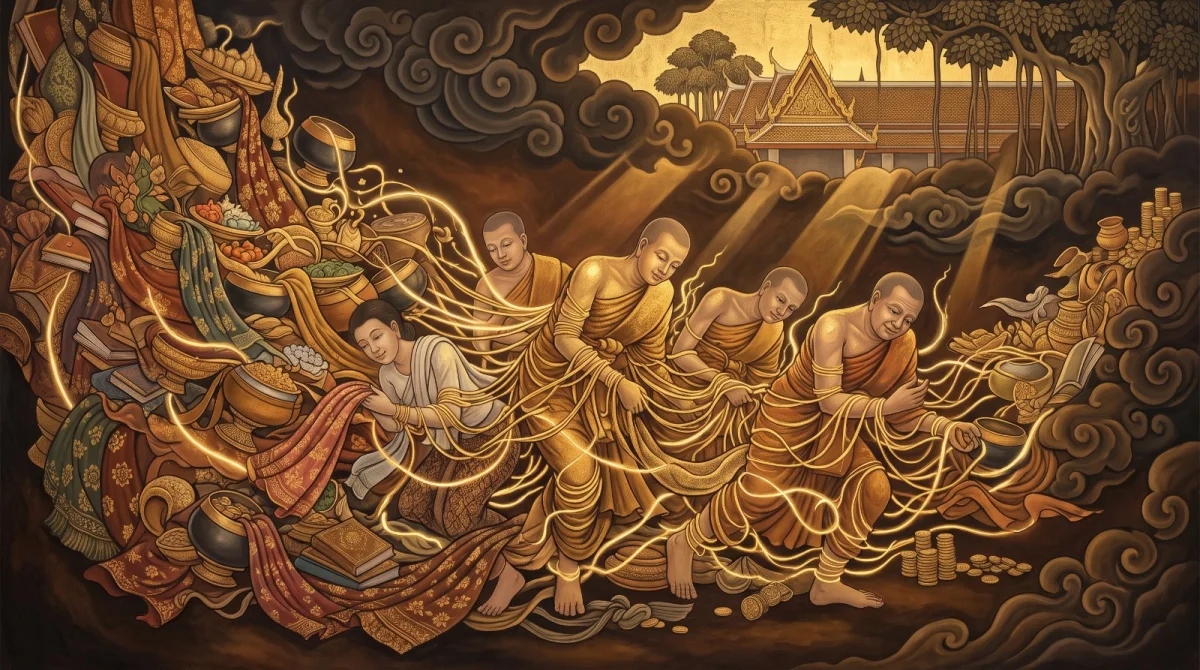
Aññātakaṃ gahapatiṃ vā gahapatāniṃ vā cīvaraṃ viññāpeyya
A merchant's son invited a monk to ask for whatever he needed, and was asked for the very cloth he was wearing, so that he walked home in a single garment. In another story a potter invited monks to ask for bowls, and ended up making bowls until he had no time to make anything to sell, leaving his family in hardship.
In the Vinaya Piṭaka, Mahāvibhaṅga Part 2, Nissaggiya chapter, Cīvaravagga rule 6, Venerable Upananda the Sakyan was a skilled speaker on the Dhamma. A merchant's son who heard him was inspired and invited him to say if he needed robes, alms food, lodging or medicine. Upananda replied that if he wished to give, he should give one of the cloths he was wearing. The young man asked three times to be excused, saying that as a gentleman it would look odd to walk about in a single cloth, and that if allowed to go home he would send that cloth or a better one. He was reproached with the words: if you do not wish to give, why invite at all? So he handed over the cloth and left. Villagers who met him asked why he had only one cloth, and when they heard the story they criticised what had happened.
Rule 8 of the same chapter is a different case. A man told his wife he would provide Venerable Upananda with a robe. Hearing the news, Upananda went to him although he had not been invited, and said that if he was going to provide a robe he should provide one of this particular kind, since a robe he would not use would be of no benefit even if worn. The householder complained that he had never invited the monk in the first place, so why had he come and specified the robe?
In Pattavagga rule 2, a potter at Kapilavatthu had invited the monks: whoever needs a bowl, I will give one. The monks asked without any sense of measure; those with small bowls asked for large ones and those with large bowls asked for small ones. Busy making bowls for them, the potter could make nothing else to sell, could not support himself, and his wife and children suffered. The villagers criticised this. These rules bind monks, but what the stories show is that an invitation from a giver is not an unlimited permission.
The merchant's son did not refuse. He asked to go home and send that cloth or a better one, and said so three times. He was answered with: if you do not wish to give, why invite at all? So he had to hand it over. The Buddha laid down the rule against asking a householder who is not a relative for a robe.
When someone asks to be excused or offers an alternative, treat that as the answer. Asking a third time is not confirming; it is pressuring.
In his rebuke the Buddha said that those who are not relatives do not know what is suitable or unsuitable, nor what one has or does not have. Relatives can object or refuse plainly, while outsiders often give beyond their means out of deference. Hence the exemptions: asking relatives, asking those who invited you, asking for the sake of another, or buying with your own money.
Before asking a favour of someone not close enough to refuse you, ask whether they could really say no. If they could not, do not ask yet.
The rule has an amendment allowing a monk whose robe has been snatched away or destroyed to ask a householder who is not a relative, because the need is genuine. The rule does not forbid asking in an emergency; it forbids asking out of desire.
Distinguish real trouble from mere wanting. In real trouble, ask plainly, and you will usually find people glad to help.
In rule 8, Upananda heard that someone intended to provide a robe, went to him although not invited beforehand, and specified the kind of robe he wanted. The householder complained at once that providing a robe for these monks was no easy matter. The man's good intention was turned into a demand before he had even given.
When you know someone is about to give you a gift, do not hurry to supply specifications. Let the giving be theirs, and thank them for what comes.
The exemptions to rule 8 state that if the householder wishes to buy an expensive robe and the monk has him buy a cheaper one, there is no offence. The text does not forbid all mention of what someone plans to give; it forbids speech that adds to the giver's burden.
If you know someone is about to overspend on you, saying that something simpler would be plenty is kindness, not bad manners.
After the potter's invitation, the monks asked without measure, until he could make nothing else to sell, could not support himself, and left his wife and children in hardship. Later the group of six asked for new bowls although theirs had only a small crack, a small hole, a small chip or a mere scratch. So the Buddha laid down that a monk who gets a new bowl while his own has fewer than five mends commits a nissaggiya pācittiya.
Before replacing something, ask whether the old one is really unusable or merely no longer pretty. And remember that anything free from someone else has a cost to them.
The rule prescribes a memorable remedy. The monk must relinquish the new bowl in the assembly of monks, and the very last bowl of that assembly is handed to him with the words: monk, this is your bowl; keep it until it breaks. So the one who wanted something new ends up with the oldest one, used until it truly wears out.
If you catch yourself replacing things out of boredom, set a rule that the next one gets used until it actually fails, and watch how the urge to replace fades.
"Just tell me what you need" is said with real goodwill, but the speaker usually has one size of help in mind while the listener may hear another. The merchant's son makes this plain: he offered out of faith, but he did not mean to hand over the cloth off his own back, and although he asked to be excused three times, politely, he was pressed until he gave in.
The potter shows the side of asking that nobody sees. Each monk asked for only one bowl, so no one felt they were demanding much; together they consumed his entire livelihood. The same happens with friends who are builders, doctors, lawyers or programmers, who say to let them know if you need anything. Free help arriving from many directions at once can become a full-time job for them.
The exemptions give practical guidance: you may ask relatives, you may ask those who have invited you, you may ask on behalf of someone else, and you may buy with your own money. In other words, look at whether the other person knows their own limits and truly consents. And there is one lovely detail: if the householder intends to buy something expensive and the monk asks him to buy something cheaper instead, there is no offence at all.
Tap to read the actual passage on the page cited.
There are four ways of undertaking things, according to whether they are pleasant or painful now and what resu…

Beings come together according to their elements: those of low disposition associate with the low, those of go…
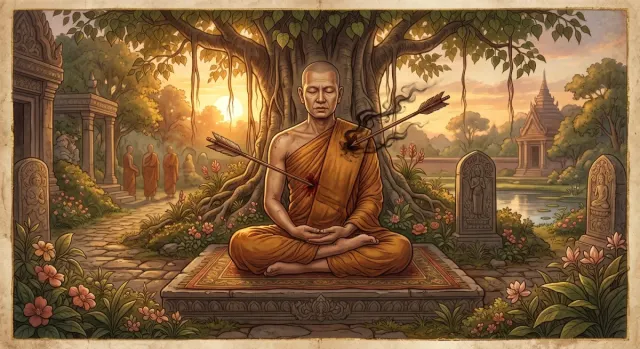
Physical pain cannot be avoided; the mental pain we add to it can. A simile that is usable every single day.

Udāyī shot crows because he disliked them, some monks knowingly used water containing living creatures and pou…