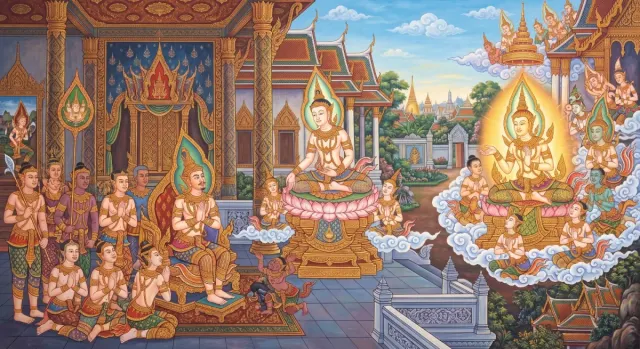
The Mahānāradakassapa Jātaka: Correcting a King's Wrong View
MahānāradakassapajātakaṃKing Aṅgati listens to a naked ascetic who teaches that good and bad deeds bear no fruit, and abandons his dut…


Dasānisaṃsā yāguyā
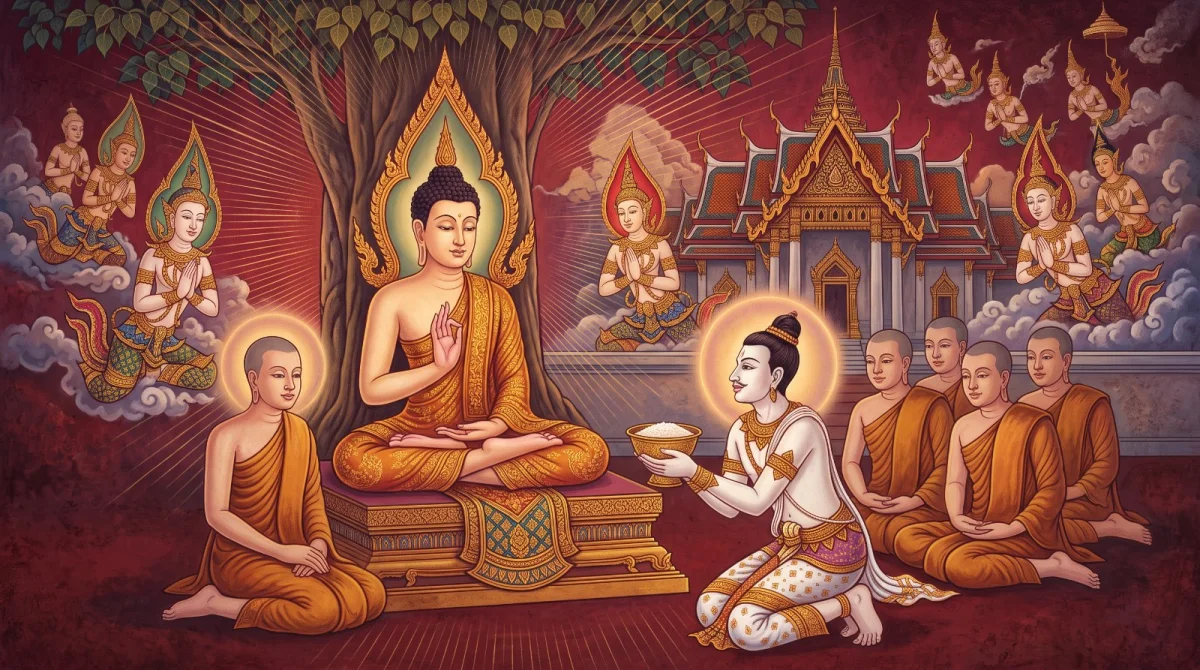
A brahmin who had followed the Saṅgha for two months without getting a turn to give a meal noticed what the refectory lacked and offered rice gruel and honey cakes. The Buddha spoke of ten benefits of gruel. Later a newly devoted official, angry that monks accepted little food, felt remorse; the Buddha reassured him and laid down a rule mindful of hosts' feelings.
In the Section on Medicines (Bhesajjakkhandhaka) of the Mahāvagga in the Vinaya Piṭaka, the Buddha travels from Bārāṇasī to Andhakavinda with about 1,250 monks. Villagers follow with carts of supplies, intending to offer a meal when their turn comes. One brahmin has followed for over two months without getting a turn; he is alone and his household affairs are suffering. He decides to look over the refectory and provide whatever is not there. Finding no rice gruel and no honey cakes, he asks through Ānanda, and the Buddha agrees.
When the brahmin brings them, the Buddha tells him to give them to the monks. The monks hesitate to accept, and the Buddha tells them to accept and eat. After the meal he speaks of ten benefits of rice gruel and gives verses of appreciation saying that gruel is praised by the Sugata as a medicine. He then allows gruel and honey cakes for monks.
Later people offer thick gruel early in the morning. A newly devoted high official invites the Saṅgha and prepares a lavish meal, but the monks ask for only a little, having already had gruel. He becomes angry and fills their bowls to the brim. After the Buddha leaves he is troubled, wondering whether he has made much merit or demerit. The Buddha tells him the invitation, and every grain of rice each monk accepted, was great merit. He then lays down that a monk who has accepted an invitation should not eat another's thick gruel.
The brahmin followed the Saṅgha for over two months, hoping to offer a meal when his turn came, but never got one. He was alone and his household affairs were suffering. He didn't give up but looked for another way.
When an opportunity doesn't come through the usual channel, don't quit or blame the system yet. Look for another way to be useful.
The brahmin decided to look over the refectory and provide whatever was not there. Finding no rice gruel and no honey cakes, he asked through Ānanda, and prepared them once the Buddha agreed.
Before donating to a temple, school or foundation, ask what they lack, instead of giving what they already have plenty of.
When the brahmin brings the gruel and cakes, the Buddha tells him to give them to the monks. The monks hesitate to accept, and the Buddha tells them to accept and eat.
When someone sincerely offers something proper and useful, accepting it gladly honours the giver.
He says one who gives gruel gives life, beauty, happiness, strength and quick wit; and gruel when drunk dispels hunger, relieves thirst, settles the wind, cleanses the bowels and helps digest what remains undigested.
When caring for the sick or elderly, simple, easily digested food made with care is worth more than lavish food that is hard to eat.
In the verses of appreciation he says that a donor who respectfully gives gruel at the right time to the restrained gives them ten things. Gruel is praised by the Sugata as a medicine, so one who wants happiness should give gruel.
A gift needn't be expensive. Give at the right time, with respect, and give what benefits the receiver's health.
The newly devoted official prepared plenty of food, but when the monks asked for only a little, having already had another's thick gruel that morning, he was angry and displeased, filled their bowls to the brim and said they could eat it or take it away.
When hosting and guests don't behave as you hoped, pause and breathe before reacting. Anger turns a heartfelt offering into something that lingers.
After the Buddha left, the official was troubled and went to ask whether he had made much merit or demerit. The Buddha said that inviting the Saṅgha, and every grain of rice each monk accepted, was great merit; he had set out on the way to heaven. The official left delighted.
When you realise you acted wrongly out of emotion, don't drown in guilt. Acknowledge it, talk about it, and also see the good you intended.
The Buddha assembled the Saṅgha, confirmed the facts, and rebuked monks who, having accepted an invitation, ate another's thick gruel, since it does not inspire faith. He laid down a rule against it. This is a monastic rule.
When you've agreed to eat at someone's home, don't fill up beforehand. Your host has prepared with care, and keeping their goodwill is good manners.
The brahmin is an example of giving guided by observation. Unable to wait for a turn like everyone else, he doesn't complain or push ahead but looks for a gap no one has filled. The same applies today to giving, volunteering and work in organisations: what helps most is often what is missing, not what others already give plenty of.
The official's story is a reminder that good intentions easily mix with anger, and the guilt that follows disturbs the mind. The Buddha doesn't rub it in but points to the good he did, while also addressing the root cause by having monks respect the feelings of a host who has invited them.
The ten benefits of gruel reflect knowledge about food in the Buddha's time. Take them as a general idea that soft, easily digested food is beneficial, not as medical advice. Anyone with a health condition should consult a doctor about diet.
Tap to read the actual passage on the page cited.
King Aṅgati listens to a naked ascetic who teaches that good and bad deeds bear no fruit, and abandons his dut…

The fruit of practice depends not on hope or wishing but on whether one is on the right path — press sand hopi…

"Hatred is never appeased by hatred" and the four victories of the Dhammapada — conquer anger with non-anger, …
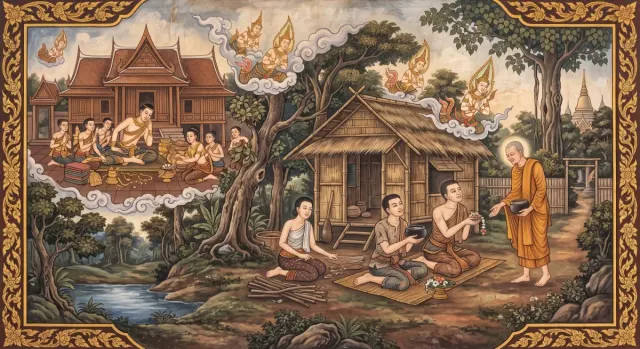
Sakka tells Visayha his wealth is gone because of his giving, and that it will return if he stops. Visayha rep…