
Daily chants
Homage to the Triple Gem
RatanattayavandanāA short homage to the Buddha, the Dhamma and the Saṅgha, chanted before other chants or before meditation.


Chants in everyday use, with the Pali, a pronunciation guide, a translation, when they are chanted, and where they come from in the Tipiṭaka
A short homage to the Buddha, the Dhamma and the Saṅgha, chanted before other chants or before meditation.

The verses praising the qualities of the Buddha, the Dhamma and the Saṅgha, in the wording found in the Dhajag…

Wishing well to oneself and to all beings — usually chanted to close a chanting session or after meditation.

The declaration of taking the Buddha, the Dhamma and the Saṅgha as refuge, repeated three times, in the wordin…

The request for the precepts from a monk, followed by the undertaking of the five training rules one by one — …

A short dedication said after making merit, offering the merit to relatives who have died, in the wording of t…

A four-line verse sharing the merit of what you have done with all beings, not only with relatives or people y…

A reflection said before eating: food is taken to keep the body going and to carry on with what matters, not f…

Three verses from the Dhammapada: all conditioned things are impermanent, all are suffering, and all things ar…

The formula for asking a monk to give a Dhamma talk, recalling how Brahmā Sahampati asked the Buddha to teach.
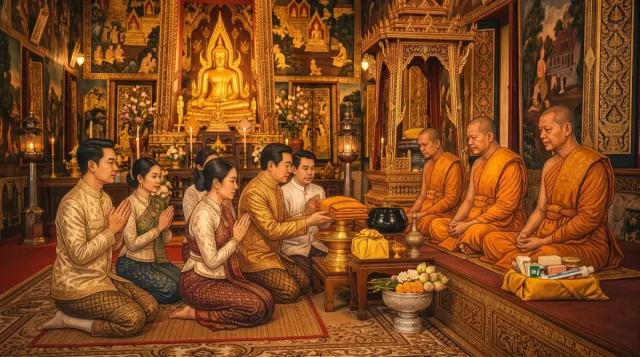
The words for offering food and requisites to the Saṅgha as a community, rather than to one particular monk.

The words a lay person says to invite the monks to begin chanting the parittas at a house blessing or other me…

The blessing monks give to those who have made an offering: freedom from misfortune, happiness, and growth tog…

The short blessing that closes almost every chanting session and merit-making: may every blessing and well-bei…
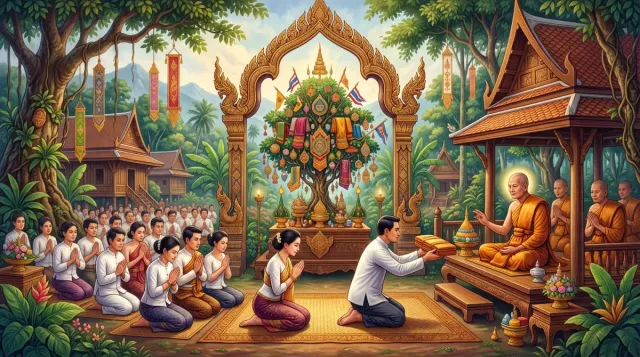
The words for offering rag-cloth robes and the goods that accompany them to the Saṅgha, at a phā pā ceremony.

The words for offering a meal to the Saṅgha at a service dedicated to parents and relatives who have died.

Spreading loving-kindness, compassion, gladness and equanimity to all beings — usually chanted to close a sess…
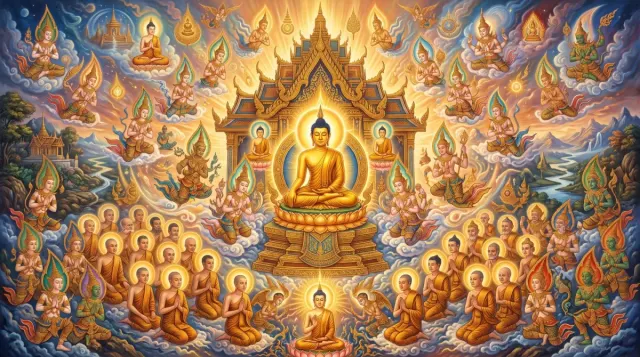
An old Thai composition, not part of the Tipiṭaka, which places the Buddhas and the great disciples around the…

Eleven verses handing on the merit just made — to parents, relatives, people one is neutral towards, even thos…

The words for offering meals that are set out in numbered portions and drawn by lot, so that no donor chooses …
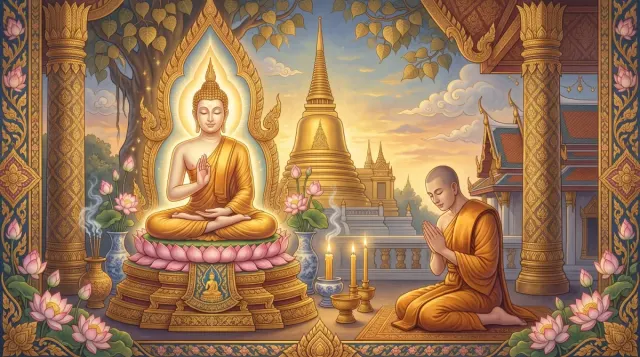
The chant that opens morning chanting: offering flowers, incense and candles to the Buddha, the Dhamma and the…

The short line of homage repeated three times before any other chant — the same sentence that opens every volu…

The morning chant in praise of the Buddha: who he was, what he came to know, and how he taught it.

The morning chant in praise of the Dhamma, stressing that it is something you can see for yourself here and no…

The morning chant in praise of the Saṅgha — the community of disciples who have practised well and seen the tr…

Four verses bowing to the Buddha, the Dhamma and the Saṅgha in images, then dedicating the merit of that homag…

The passage that closes morning chanting: a review of dukkha, the impermanence of the five aggregates, and a r…

The opening of evening chanting: offering flowers, incense and candles to the Triple Gem, then paying homage t…
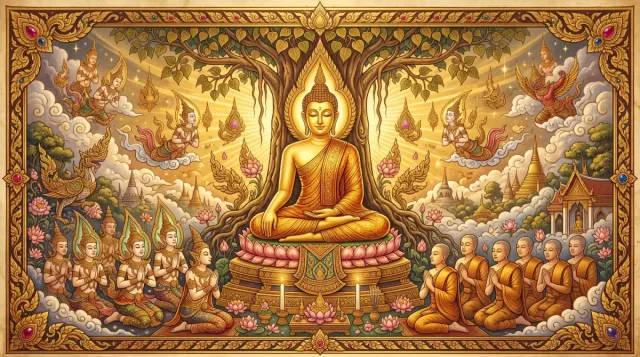
A review of the Buddha’s qualities in the wording found in the Tipiṭaka, chanted as the first of the three rec…

Verses in praise of the Buddha chanted after the recollection, ending with an admission of any offence given.

A short chant reviewing six qualities of the Dhamma, from being well proclaimed to being known for oneself.

Verses praising the Dhamma as the dispeller of darkness and a safe refuge, closing with an admission of fault.

A review of the qualities of the community of disciples who practise well and straightforwardly, the third of …

Verses praising the pure community of noble disciples, closing the recollections of evening chanting with an a…

Five reflections on ageing, illness, death, parting and one’s own actions, often chanted at the close of eveni…

The sutta in which the Buddha answers a deity by listing what really counts as a blessing, from not keeping co…

A chant that names the qualities of the Buddha, the Dhamma and the Saṅgha one by one, each verse sealed with t…
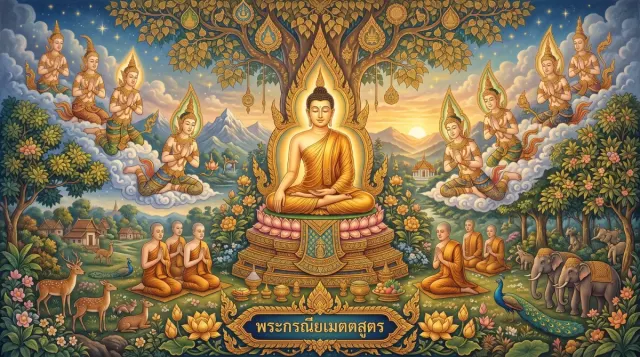
The discourse on boundless loving-kindness: it begins with the qualities of someone who trains, then teaches g…

A short chant of goodwill towards snakes and all creatures, which the Buddha allowed monks to use to look afte…
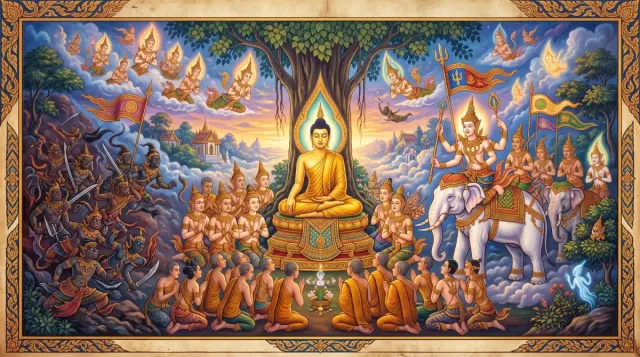
The discourse in which the Buddha tells monks to recollect the Buddha, the Dhamma or the Saṅgha when fear aris…

A chant that recites the seven factors of awakening. It is chanted at the bedside of the sick, following the G…

Homage to the seven Buddhas, an extract from the Āṭānāṭiya Sutta, commonly chanted to close the set of seven p…

The verses of the golden peacock in the Mora Jātaka: a morning verse as the sun rises, an evening verse as it …

The act of truth of a fledgling quail who could neither fly nor walk, speaking the plain truth to an oncoming …
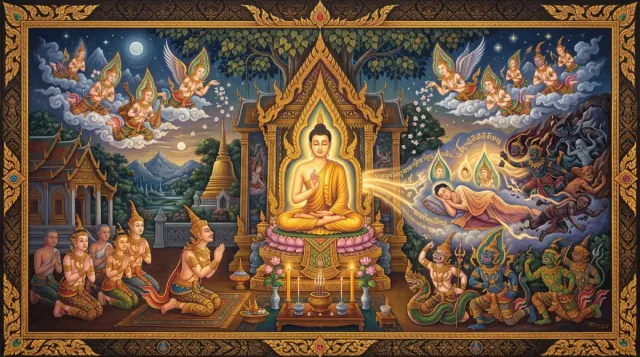
A short chant for after a bad dream or an unsettling sign, asking that the unease dissolve through the power o…

Verses of homage to the Buddha, the Dhamma and the Saṅgha in turn, each one saying why that refuge is worth bo…

Eight verses, every one of them beginning with the word namo, a compact homage to the Triple Gem before other …

Eight verses recalling eight occasions when the Buddha overcame something formidable without violence, each cl…

A closing blessing: may illness, danger, obstacles and misfortune fall away, and may long life, strength and h…

The closing verses of a ceremony: goodwill to all beings, an invitation to the devas to rejoice in the merit, …

The blessing chanted straight after the Jayamaṅgala Gāthā, closing with the verse from the Supubbaṇha Sutta: t…

The Buddha's first teaching to the five monks — the middle way and the four noble truths — chanted in full on …

The Buddha's second teaching to the five monks: the five aggregates are not a self we can command, so they sho…

The Buddha's third great teaching, given to a thousand former fire-worshippers at Gayāsīsa: eye, ear, nose, to…

The short words of truth that venerable Aṅgulimāla spoke to a woman in labour at the Buddha's suggestion, chan…

Verses from the Khuddakapāṭha on giving in memory of departed relatives, chanted at memorial merit-making and …

A short sutta on the three truths that hold whether or not a Buddha appears: all formations are impermanent, a…

The opening passages of all seven books of the Abhidhamma, chanted by monks at Thai funerals and memorial serv…

The four-line verse chanted by monks while receiving the funeral cloth: conditioned things are impermanent, an…

A Dhammapada verse — before long this body will lie on the ground — chanted as a reflection for the living.
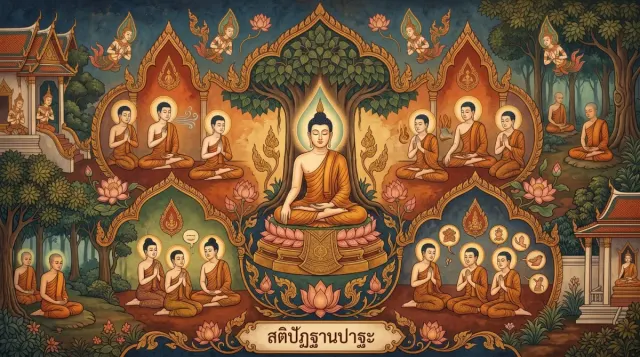
The opening of the Mahāsatipaṭṭhāna Sutta, setting out the four foundations of mindfulness — often chanted to …

The Buddha’s last words before his passing: all conditioned things wear away — complete your work with diligen…

The Buddha declares that the Dhamma has been made plain, so effort is worth making — the lazy live badly, the …

Dhammapada verses: mountains, forests and sacred trees are not a safe refuge — the safe refuge is the Triple G…
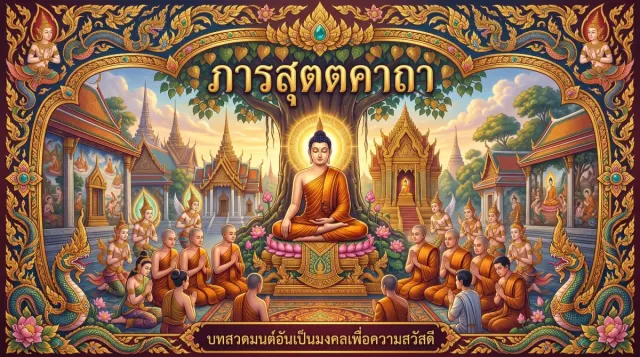
The closing verses of the Bhāra Sutta: the five aggregates are a burden, picking it up is suffering, putting i…

The verses traditionally held to be the Buddha’s first utterance after awakening, comparing craving to a house…